Gutscheinbedingungen

**Gültig bis 06.07.2026 auf fremdsprachige Bücher online auf thalia.at, in der Thalia App ab einem Mindestbestellwert von 30€ und in allen Thalia Buchhandlungen in Österreich. In den Buchhandlungen nur gültig auf lagernde Ware. Einzelne Artikel können ausgeschlossen sein. Ausgenommen sind preisgebundene Artikel & eBooks. Pro Einkauf einmal einlösbar. Nur gültig gegen Vorlage oder im Onlineshop hinterlegter Bonuscard. Infos zur Einlösung in der Buchhandlung sind auf der Bonuscard-Vorteilspreisseite zu finden. Click & Collect nur bei Onlinevorabzahlung möglich. Keine Einlösung bei Scan & Go-Bezahlung. Keine Barauszahlung. Nicht kombinierbar mit anderen Aktionen und Gutscheinen. Gutschein wird auf max. 500€ Bestellwert angerechnet. Nicht gültig für Versandkosten und Services.

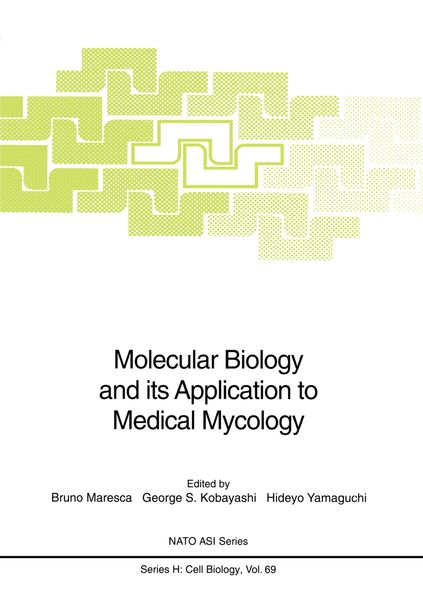
Produktbild: Molecular Biology and its Application to Medical Mycology
Band 69

Molecular Biology and its Application to Medical Mycology

Aus der Reihe Nato ASI Subseries H:

99,99 €

inkl. gesetzl. MwSt., Versandkostenfrei


Beschreibung

Produktdetails

Einband

Taschenbuch

Erscheinungsdatum

22.01.2012

Herausgeber

Bruno Maresca + weitere

Verlag

Springer Berlin

Seitenzahl

257

Maße (L/B/H)

24,2/17/1,6 cm

Gewicht

484 g

Auflage

Softcover reprint of the original 1st ed. 1993

Sprache

Englisch

ISBN

978-3-642-84627-4

Beschreibung

Produktdetails

Einband

Taschenbuch

Erscheinungsdatum

22.01.2012

Herausgeber

Verlag

Springer Berlin

Seitenzahl

257

Maße (L/B/H)

24,2/17/1,6 cm

Gewicht

484 g

Auflage

Softcover reprint of the original 1st ed. 1993

Sprache

Englisch

ISBN

978-3-642-84627-4

Herstelleradresse

Springer-Verlag KG
Sachsenplatz 4-6
1201 Wien
AT

Email: GPSR Kontakt

Noch keine Bewertungen vorhanden

Verfassen Sie die erste Bewertung zu diesem Artikel

Helfen Sie anderen Kundinnen und Kunden durch Ihre Meinung.

Kundinnen und Kunden meinen

Bewertungen (0)

  • Produktbild: Molecular Biology and its Application to Medical Mycology
  • Molecular Biology of Yeast.- Cell Cycle Regulation in Fission Yeast.- Yeast Genes Overcoming Growth Arrest Induced by 1,10-Phenanthroline.- Reverse Genetics in a Non-Conventional Yeast, Candida maltosa.- The Complement C3D-Binding Receptor (CR2) of Candida albicans: Cloning and Sequence Analysis of a Gene Fragment Homologous with a Human CR2 cDNA Clone.- Biology, Physiology, Biochemistry and Molecular Genetics of Trichosporon Yeasts.- Physiological Functions of Vacuoles in Yeast: Mechanism of Sequestration of Metabolites and Proteins into Vacuoles.- Characterization of a Candida albicans-Specific DNA Fragment.- Recent Advances in the Molecular Biology of Cryptococcus neoformans.- Molecular Biology of Kluyveromyces lactis.- Gene Regulatory Circuits in S. cerevisiae as a Tool for the Identification of Heterologous Eukaryotic Regulatory Elements.- Molecular Biology of Filamentous Fungi.- Molecular Breeding in Filamentous Fungi with Emphasis on Aspergilli.- TubB ?-Tubulin is Essential for Sexual Development in Aspergillus nidulans.- The Heat Shock Response of Neurospora crassa.- Blue Light Regulated Expression of Geranylgeranyl Pyrophosphate Synthetase (Albino-3) Gene in Neurospora crassa.- Expression of Genes for the Biosynthesis of Penicillin.- New Tools and Prospectives for Medical Mycology.- Imaging of the Yeast Killer Phenomenon.- cDNA Cloning of Candida albicans Aspartic Proteinase and Its Diagnostic Application.- Molecular Biotyping of Candida in Experimental and Clinical Studies.- Homoserine Dehydrogenase as a Selective Target Molecule for Antifungal Action.- Molecular Mechanisms of Antifungal Activity and Fungal Resistence: Focus on Inhibitors of Ergosterol Biosynthesis.- Molecular Studies on Azole Sensitivity in Fungi.- Antifungal Chemotherapy and Drug Strategies: Projected Clinical Needs.- Funding Medical Mycology: Strategies for Attracting the Private Sector.- Fungal Morphogenesis.- Chromosomal Organization of Histoplasma capsulation.- Chitin, Chitin Synthase and Chitin Synthase Conserved Region Homologues in Wangiella dermatitidis.- Heat Shock Response and Adaptation during Morphogenesis in Histoplasma capsulatum.