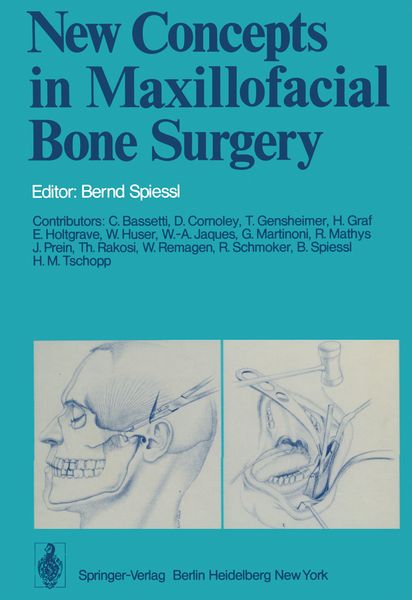
• Produktbild: New Concepts in Maxillofacial Bone Surgery
  • Produktbild: New Concepts in Maxillofacial Bone Surgery

New Concepts in Maxillofacial Bone Surgery

99,99 €

inkl. gesetzl. MwSt., Versandkostenfrei


Beschreibung

Produktdetails

Einband

Taschenbuch

Erscheinungsdatum

13.12.2011

Herausgeber

B. Spiessl

Verlag

Springer Berlin

Seitenzahl

196

Maße (L/B/H)

28/21/1,2 cm

Gewicht

541 g

Auflage

Softcover reprint of the original 1st ed. 1976

Sprache

Englisch

ISBN

978-3-642-66486-1

Beschreibung

Produktdetails

Einband

Taschenbuch

Erscheinungsdatum

13.12.2011

Herausgeber

B. Spiessl

Verlag

Springer Berlin

Seitenzahl

196

Maße (L/B/H)

28/21/1,2 cm

Gewicht

541 g

Auflage

Softcover reprint of the original 1st ed. 1976

Sprache

Englisch

ISBN

978-3-642-66486-1

Herstelleradresse

Springer-Verlag KG
Sachsenplatz 4-6
1201 Wien
AT

Email: ProductSafety@springernature.com

Kundinnen und Kunden meinen

0 Bewertungen

Informationen zu Bewertungen

Zur Abgabe einer Bewertung ist eine Anmeldung im Konto notwendig. Die Authentizität der Bewertungen wird von uns nicht überprüft. Wir behalten uns vor, Bewertungstexte, die unseren Richtlinien widersprechen, entsprechend zu kürzen oder zu löschen.

Die Bewertungen sind nach Format, Anzahl Sterne und Datum sortiert.

Verfassen Sie die erste Bewertung zu diesem Artikel

Helfen Sie anderen Kund*innen durch Ihre Meinung

Kundinnen und Kunden meinen

0 Bewertungen filtern

  • Produktbild: New Concepts in Maxillofacial Bone Surgery
  • Produktbild: New Concepts in Maxillofacial Bone Surgery
  • A. Transplantation of Autogenous Bone.- 1. Clinical Aspects of Free Autogenous Bone Transplantation.- 1.1. Architecture of the Bone Graft.- 1.1.1. Compact Cortical Bone.- 1.1.2. Cancellous Bone.- 1.2. Behavior of the Bone Graft After Free Transplantation.- 1.3. Practical Application of Bone Transplantation.- 1.3.1. Choise of the Right Bone Transplant.- 1.3.2. Vascularization at the Recipient Site.- 1.3.3. Absolute Immobilization of the Graft.- 1.4. Removal of the Bone Graft.- 1.4.1. Iliac Bone Graft.- 1.4.2. Femoral Bone Graft.- 1.4.3. Rib Graft.- 2. Osteoplastic Treatment of Large Cysts of the Jaw.- 2.1. Introduction.- 2.2. Procedure.- 2.2.1. Transplantation of Cancellous Bone.- 2.2.2. Case Histories.- 2.3. Clinical Results.- 2.4. Discussion.- 2.5. Summary.- 3. Free Composite Rib Transplantation Using Neurovascular Microsurgical Anastomoses.- 3.1. Animal Experiments.- 3.2. Results.- 3.3. Summary.- B. Traumatology and Reconstructive Surgery.- 1. Principles of Rigid Internal Fixation in Fractures of the Lower Jaw.- 1.1. Indication.- 1.2. Principles.- 1.2.1. Accurate Anatomical Reduction.- Occlusal Repositioning.- Basal Repositioning.- 1.2.2. Absolute Stability.- 1.2.3. Tension Band and Stabilization Plate.- 1.3. Plates (DCP and EDCP).- 1.4. Instrument Set.- 2. Rigid Internal Fixation of Compound Mandibular Fractures.- 2.1. Introduction.- 2.2. Case Reports.- 2.3. Conclusion.- 3. Experimental Studies on the Effect of Rigidity Using an Excentric Dynamic Compression Plate (EDCP).- 3.1. Theoretical Considerations.- 3.2. Results.- 3.3. Discussion.- 3.4. Summary.- 4. Internal Fixation of Mandibular Fractures Using an Excentric Dynamic Compression Plate (EDCP).- 4.1. Patient Population.- 4.2. Time of Treatment.- 4.3. Type of Treatment.- 4.4. Results.- 4.5. Summary.- 5. Anatomic Reconstruction in Mandibular Fractures with Loss of Bony Substance. (A Case Report).- 5.1. Introduction.- 5.2. Case Report.- 5.2.1. Treatment of the Fracture.- 5.2.2. Reconstruction of the Missing Bone.- 5.2.3. Restitution of Dentition.- 5.3. Discussion.- 5.4. Summary.- 6. Principles of Treatment in Combined Fractures of the Upper and Lower Jaw.- 6.1. Timing of Surgery.- 6.2. Preoperative Management of the Patient.- 6.2.1. Preparation of the Wound.- 6.2.2. Teeth in the Fracture Line.- 6.2.3. Occlusal Retention.- 6.3. Surgical Procedures.- 6.3.1. Fractures of the Maxilla.- 6.3.2. Fractures of the Mandible.- 7. The Surgical Approach in the Treatment of Facial Fractures.- 7.1. Fracture of the Naso-ethmoidal Region.- 7.2. Fracture at the Site of the Sutura Fronto-zygomatica.- 7.3. Fracture at the Site of the Lower Orbital Rim, Blow-out Fracture, and Fracture of the Malar Complex.- 7.4. Fracture of the Zygomatic Arch.- 7.5. Fractures of the Nose.- 7.6. Intraoral Incisions.- 7.7. Submandibular and Submental Incisions.- C. Orthopaedic Maxillofacial Surgery.- 1. Temporal Bolting Osteoplasty in the Treatment of Excessive Condylar Movement.- 1.1. Introduction.- 1.2. Technique.- 1.3. Postoperative Treatment.- 1.4. Discussion.- 2. Treatment of Ankylosis by a Condylar Prosthesis of the Mandible.- 2.1. Introduction.- 2.2. The Condylar Prosthesis.- 2.3. Technique.- 2.4. Case Report.- 2.5. Summary.- 3. Bone Transplantation for Broadening of the Apical Base (Combined Operative and Conservative Treatment of Pronounced Maxillary Protrusion).- 3.1. Introduction.- 3.2. Procedure.- 3.2.1. The Transplantation of an Autogenous Rib Graft to Broaden the Apical Base.- 3.2.2. The Transplantation of an Autogenous Cancellous Bone from the Iliac Crest to Broaden the Apical Base.- 3.3. Case History.- 3.4. Results.- 3.4.1. Radiographic Results.- 3.4.2. Clinical Results.- 3.5. Discussion.- 4. Preoperative Planning of Sagittal Split Osteotomy of the Ascending Mandibular Ramus (Simulography).- 4.1. Introduction.- 4.2. Previous Methods of Simulation.- 4.3. Theoretical Considerations.- 4.4. Principle of the Present Method.- 4.5. Description of the Simulograph.- 4.6. Summary.- 5. Results of Rigid Internal Fixation and Simulography in Sagittal Split Osteotomy of the Ascending Ramus. A Comparative Clinical Investigation.- 5.1. Introduction.- 5.2. Survey of the Literature.- 5.3. Theoretical Considerations.- 5.4. Material and Method.- 5.4.1. Diagnosis.- 5.4.2. Age and Sex.- 5.4.3. Dentition.- 5.4.4. Orthodontic Treatment.- 5.4.5. Operation.- 5.4.6. Preoperative Planning.- 5.4.7. Prophylaxis with Antibiotics.- 5.4.8. Fixation.- 5.4.9. Division into Groups.- 5.5. Results.- 5.5.1. Objects of the Study.- 5.5.2. Length of Stay in Hospital.- 5.5.3. Duration of Intermaxillary Fixation.- 5.5.4. Resumption of Normal Diet.- 5.5.5. Period of Unfitness for Work.- 5.5.6. Removal of the Arch Bars.- 5.5.7. Follow-up Treatment.- 5.5.8. Rate of Recurrence.- 5.5.9. Disturbances of Sensation.- 5.5.10. Infection.- 5.5.11. Other Complications.- 5.5.12. Subjective Statements.- 5.6. Discussion.- 5.6.1. Indication.- 5.6.2. Preoperative Planning.- 5.6.3. Length of Stay in Hospital.- 5.6.4. Intermaxillary Fixation.- 5.6.5. Resumption of Normal Diet.- 5.6.6. Unfitness for Work.- 5.6.7. Follow-up Treatment.- 5.6.8. Disturbances of Sensation.- 5.6.9. Prophylactic Treatment with Antibiotics.- 5.6.10. Recurrence.- 5.6.11. Advantages of Correct Positioning and Rigid Internal Fixation.- 5.7. Summary.- 6. Rigid Internal Fixation After Sagittal Osteotomy of the Ascending Ramus.- 6.1. Introduction.- 6.2. Technique.- 6.2.1. Osteotomy.- 6.2.2. Rigid Internal Fixation.- 6.3. Discussion.- D. Implantology.- 1. The Dynamic Compression Implant (DCI) as a Basis for Allenthetic Prosthetics. Fundamental Principles of Theory and Practice.- 1.1. Introduction.- 1.2. Principle of Construction and Fixation.- 1.2.1. Static Friction.- 1.2.2. Pretension and Transverse Compression.- 1.3. The Area of Implantation.- 1.4. Induction of Periosteal Bone Formation.- 1.5. Summary of the Principles.- 2. The Dynamic Compression Implant (DCI) — A First Evaluation of 70 Cases.- 2.1. Introduction.- 2.2. Material and Method.- 2.3. Discussion.- 2.4. Summary.- 3. Experimental Studies of the Load-Bearing Properties of Implanted Prostheses.- 3.1. Introduction.- 3.2. Theoretical Principles.- 3.3. Method of Measurement.- 3.4. Results.- 3.5. Discussion.- 3.6. Summary.- 4. Experimental Studies on the Stability of the Dynamic Compression Implant (DCI).- 4.1. Introduction.- 4.2. Theoretical Considerations.- 4.3. Method of Measurement.- 4.4. Results.- 4.5. Summary.- 5. Histologic-Morphometric Investigations into Cadaver Mandibles. The Bony Structure as a Site for an Implant Prosthesis.- 5.1. Introduction.- 5.2. Material and Method.- 5.3. Results.- 5.4. Discussion.- 6. A Total Mandibular Plate to Bridge Large Defects of the Mandible.- 6.1. Introduction.- 6.2. The New Plate.- 7. Anatomic Reconstruction and Functional Rehabilitation of Mandibular Defects after Ablative Surgery.- 7.1. Introduction.- 7.2. Case Report.- 7.3. Discussion.- 7.4. Summary.- E. Postoperative Infections and Prophylaxis.- 1. Treatment of Infected Fractures and Pseudarthrosis of the Mandible.- 1.1. Introduction.- 1.2. Case Report.- 1.3. Discussion.- 2. Preventive Antibiotics in Elective Maxillofacial Surgery.- 2.1. Introduction.- 2.2. Material and Method.- 2.3. Results.- 2.4. Discussion.- 2.5. Conclusion.- References.