
Gutscheinbedingungen

**Gültig nur für Bestellungen an die Wunsch-Poststation bis 10.06.2026 auf Spielzeug, Schreibwaren, Filme, Geschenke & Trends, Musik, tolino eReader & Zubehör, Hörbücher und Hörbuch-Downloads (außer Abo), nicht preisgebundene Bücher und Kalender online auf thalia.at und in der Thalia App. Einzelne Artikel können ausgeschlossen sein. Aufgrund der Buchpreisbindung sind deutschsprachige Bücher und eBooks ausgenommen. Zusätzlich ausgenommen sind preisgebundene Artikel, Abos & Flatrates, eBooks, Games, Geschenkkarten/-boxen, Shelfies, Software, Zeitschriften sowie einzelne Artikel von tonies®. Pro Einkauf einmal einlösbar. Kein Click & Collect möglich. Keine Barauszahlung. Nicht kombinierbar mit anderen Aktionen und Gutscheinen. Gutschein wird auf max. 500€ Bestellwert angerechnet. Nicht gültig für Versandkosten und Services.

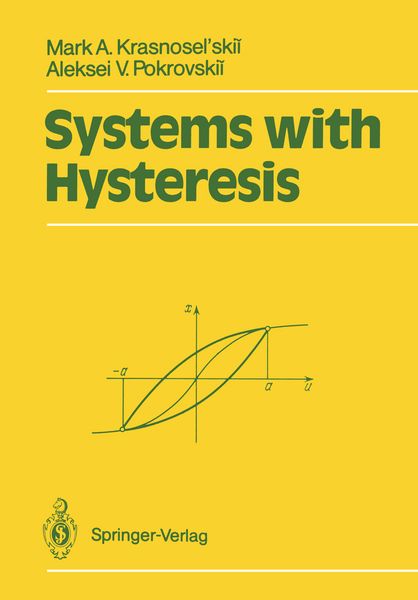
  • Produktbild: Systems with Hysteresis
  • Produktbild: Systems with Hysteresis

Systems with Hysteresis

51,99 €

inkl. gesetzl. MwSt., Versandkostenfrei


Beschreibung

Produktdetails

Einband

Taschenbuch

Erscheinungsdatum

01.11.2011

Verlag

Springer Berlin

Seitenzahl

410

Maße (L/B/H)

24,4/17/2,4 cm

Gewicht

747 g

Auflage

Softcover reprint of the original 1st ed. 1989

Übersetzt von

Marek Niezgodka

Sprache

Englisch

ISBN

978-3-642-64782-6

Beschreibung

Produktdetails

Einband

Taschenbuch

Erscheinungsdatum

01.11.2011

Verlag

Springer Berlin

Seitenzahl

410

Maße (L/B/H)

24,4/17/2,4 cm

Gewicht

747 g

Auflage

Softcover reprint of the original 1st ed. 1989

Übersetzt von

Marek Niezgodka

Sprache

Englisch

ISBN

978-3-642-64782-6

Herstelleradresse

Springer-Verlag GmbH
Tiergartenstr. 17
69121 Heidelberg
DE

Email: ProductSafety@springernature.com

Kundinnen und Kunden meinen

0 Bewertungen

Informationen zu Bewertungen

Zur Abgabe einer Bewertung ist eine Anmeldung im Konto notwendig. Die Authentizität der Bewertungen wird von uns nicht überprüft. Wir behalten uns vor, Bewertungstexte, die unseren Richtlinien widersprechen, entsprechend zu kürzen oder zu löschen.

Die Bewertungen sind nach Format, Anzahl Sterne und Datum sortiert.

Verfassen Sie die erste Bewertung zu diesem Artikel

Helfen Sie anderen Kund*innen durch Ihre Meinung

Kundinnen und Kunden meinen

0 Bewertungen filtern

  • Produktbild: Systems with Hysteresis
  • Produktbild: Systems with Hysteresis
  • 1 Static Hysteron.- 1. Short-memory transducer.- 1.1 Transducer.- 1.2 States of transducer.- 1.3 Some properties of transducers.- 1.4 Admissible inputs.- 1.5 Vibro-correctness.- 2. Generalized play.- 2.1 Ordinary play.- 2.2 Generalized play with piecewise monotone inputs.- 2.3 Estimates.- 2.4 Generalized play with continuous inputs.- 2.5 Dependence of outputs upon initial states.- 2.6 Correctness of the definition of the play.- 2.7 Monotonicity.- 2.8 Periodic inputs.- 2.9 Inputs defined on the whole real axis.- 3. Hysteron.- 3.1 Stop.- 3.2 Determining systems of curves.- 3.3 Piecewise monotone inputs.- 3.4 Passage to arbitrary continuous inputs.- 4. Canonical representation of hysteron and proof of Theorem 3.2.- 4.1 Canonical hysteron.- 4.2 Canonical representation theorem.- 4.3 Proof of Theorem 3.2.- 4.4 Properties of hysteron.- 4.5 Rectification of hysteron.- 5. Distances.- 5.1 Definition of distance.- 5.2 Estimates on differences of output signals.- 6. Various input spaces.- 6.1 Statement of the problem.- 6.2 Spaces of continuously differentiable functions.- 6.3 Play in the space S of absolutely continuous functions.- 6.4 Hysteron in the space S.- 6.5 Hysterons in spaces H?.- 6.6 Discontinuous inputs.- 6.7 Hysteron in the space of functions with bounded variation.- 6.8 Hysteron in Wiener spaces.- 2 Identification Theorem.- 7. Identification problem.- 7.1 General identification problem.- 7.2 Prehysteron.- 7.3 Basic identification theorem.- 7.4 Concluding remarks.- 8. Proof of Theorem 7.1.- 8.1 Singular points of the domain ? (V).- 8.2 Construction of curves ?(M).- 8.3 Construction of curves ?l, ?r.- 8.4 Completion of the proof of Theorem 7.1.- 9. ? - identiflability.- 9.1 Statement of the problem.- 9.2 Normal hysteron.- 9.3 Theorem on ?- identification.- 9.4 A remark.- 10. Approximate construction of hysteron.- 10.1 Distance between hysterons.- 10.2 Bounded inputs.- 10.3 Frames of hysterons.- 10.4 Approximation by operators different from hysterons.- 3 Vibro-Correct Differential Equations and Variable Hysterons.- 11. Necessary condition of vibro-correctness.- 11.1 Integrator.- 11.2 Simple examples.- 11.3 Necessary condition of vibro-correctness.- 11.4 Vibro-correctness in a point.- 12. Sufficient condition of vibro-correctness.- 12.1 Main result.- 12.2 An auxiliary equation.- 12.3 A substitution.- 12.4 Proof of Theorem 12.1.- 12.5 Lemma on differential inequalities.- 12.6 Vibro-correctness on smooth inputs.- 13. Vibro-solutions.- 13.1 Definition.- 13.2 Global vibro-correctness.- 13.3 Inputs on finite time interval.- 13.4 Inputs on infinite time interval.- 14. Equations with constraints.- 14.1 Equations with discontinuous right-hand sides.- 14.2 Arbitrary continuous constraints.- 14.3 Vibro-correct equations with constraints.- 14.4 Properties of vibro-solutions to equations with constraints.- 14.5 Vibro-solutions of parametrized equations.- 15. Variable hysteron.- 15.1 Description of hysteron by differential equations.- 15.2 Variable hysteron.- 15.3 Variable hysteron governed by differential equations.- 15.4 Infinitesimal hysteron.- 15.5 A special class of transducers.- 4 Multidimensional Hysterons.- 16. Multidimensional play and stop defined on smooth inputs.- 16.1 A simple example.- 16.2 A general notion.- 16.3 Correctness of the definitions of play and stop.- 16.4 Properties of play and stop.- 16.5 On the classical solutions of equations with discontinuous right-hand sides.- 17. Strictly convex characteristics.- 17.1 Vibro-correctness modulus.- 17.2 Holder condition.- 17.3 Passage to continuous inputs.- 17.4 Strong convergence.- 17.5 Perturbation of characteristics.- 17.6 Vibro-correctness modulus and differential inclusions.- 17.7 Lower bound for vibro-correctness moduli.- 18. Polyhedral characteristics.- 18.1 Basic theorems.- 18.2 Estimates of the Lipschitz constant.- 18.3 Proofs of Lemma 18.1 and Theorem 18.4.- 18.4 Proof of Theorem 18.3.- 18.5 Remarks.- 19. Arbitrary convex characteristics.- 19.1 Vibro-correctness of play and stop.- 19.2 Estimate for the variation of output.- 19.3 Proof of Theorem 19.1.- 20. Inputs with summable derivatives.- 20.1 Statement of the problem.- 20.2 Lipschitz condition.- 20.3 Remarks.- 21. Vibro-correct equations with vector input.- 21.1 Statement of the problem.- 21.2 Frobenius condition.- 21.3 Necessary condition of vibro-correctness.- 21.4 Sufficient condition of vibro-correctness.- 21.5 Remarks.- 22. Equations with vector inputs and smooth constraints.- 22.1 Constraints.- 22.2 Planar motion.- 22.3 Other descriptions.- 5 Discontinuous Nonlinearities.- 23. Static elements.- 23.1 Continuous characteristics.- 23.2 Elements with discontinuous characteristics.- 23.3 Estimates of outputs.- 23.4 Proper characteristics.- 23.5 Continuity on a fixed input.- 23.6 Additional remarks.- 24. Elements with monotone characteristics.- 24.1 Cones.- 24.2 Special classes of cones.- 24.3 Monotone characteristics.- 24.4 Proof of Theorem 24.1.- 24.5 Proof of Theorem 24.2.- 24.6 Remarks.- 25. Elements with multi-valued characteristics.- 25.1 Selection problem.- 25.2 General theorems on selectors.- 25.3 Monotone selectors.- 25.4 Measurable selectors.- 25.5 Input-output relations.- 26. Closures of static element.- 26.1 Closure of transducer.- 26.2 Characteristic of the closure.- 26.3 Closure modulo a negligence class.- 26.4 Comments.- 27. Weak closures and convexification procedure.- 27.1 Weak closures.- 27.2 Convexification.- 27.3 Weak closures and convexification of static element.- 27.4 Proof of Theorem 27.1.- 27.5 Proof of Theorem 27.2.- 27.6 Convexification of static element modulo negligence class.- 27.7 Examples of open nonlinear systems composed of static elements.- 28. Relay.- 28.1 Ideal relay.- 28.2 Non-ideal relay.- 28.3 Periodic inputs.- 28.4 Closure of relay.- 28.5 Convexification of relay.- 28.6 Relay and “slow” controls.- 28.7 Discontinuous inputs.- 6 Self-Magnetization Phenomenon.- 29. Madelung’s hysterons.- 29.1 Non-correct prehysteron.- 29.2 Periodic inputs.- 29.3 Madelung’s prehysteron.- 29.4 Properties of Madelung’s prehysteron.- 29.5 Madelung’s hysteron.- 29.6 Discontinuous inputs with bounded variation.- 30. Proofs of Theorems 29.1 and 29.2.- 30.1 Passage to classical solutions.- 30.2 Lemma on differential inequalities.- 30.3 Proof of Theorem 29.1.- 30.4 Proof of Theorem 29.2.- 31. Response to small perturbations of the input.- 31.1 General scheme.- 31.2 Intensities.- 31.3 Construction of ?-outputs to Madelung’s hysteron.- 31.4 Construction of ?-vibrosolutions to differential equations.- 31.5 Construction of ?-outputs for hysterons.- 32. Closure modulo sets of Wiener measure zero.- 32.1 A general scheme.- 32.2 Main theorem.- 32.3 Passage to integral equations.- 32.4 Equations with constraints.- 32.5 Implications for stochastic equations.- 7 Complex Hysteresis Nonlinearities.- 33. Parallel connections and bundles of hysterons.- 33.1 Complex nonlinearities.- 33.2 Parallel connections.- 33.3 Completely controllable restrictions.- 33.4 Periodic inputs.- 33.5 An important example.- 33.6 Remarks.- 34. Sequential connections of hysterons.- 34.1 Sequential connections and cascades.- 34.2 Sequential connections of plays and stops.- 34.3 Compensators.- 34.4 Complex connections.- 35. Ishlinskii’s material.- 35.1 Continual systems of hysterons.- 35.2 Ishlinskii’s transducer.- 35.3 Loading and unloading functions.- 35.4 Normal states of Ishlinskii’s transducer.- 35.5 Periodic inputs.- 35.6 Davidenkov’s model.- 35.7 Controllable restrictions of Ishlinskii’s bundles.- 36. Properties of Ishlinskii’s transducer.- 36.1 Continuity of Ishlinskii’s operator.- 36.2 Correctness with respect to weight functions.- 36.3 Unilateral estimates.- 37. Finite systems of relays.- 37.1 Block-diagrams with relays.- 37.2 Parallel connections and bundles of relays.- 37.3 Independent perturbations of inputs.- 37.4 General perturbation of input.- 38. Continual systems of relays.- 38.1 Bundles of relays and CRS-transducers.- 38.2 Monotonicity of CEtS-transducers.- 38.3 Demagnetization function.- 38.4 Periodic inputs.- 38.5 Evaluation of outputs.- 38.6 Vibro-correctness.- 38.7 Controllable restrictions.- 39. Rheological models.- 39.1 Construction of the model.- 39.2 Graphs.- 39.3 Transducer M.- 39.4 Properties of the transducer M.- 39.5 Transducer W.- 39.6 Remarks.- Bibliographic comments.- References.