Gutscheinbedingungen

**Gültig nur für Bestellungen an die Wunsch-Poststation bis 10.06.2026 auf Spielzeug, Schreibwaren, Filme, Geschenke & Trends, Musik, tolino eReader & Zubehör, Hörbücher und Hörbuch-Downloads (außer Abo), nicht preisgebundene Bücher und Kalender online auf thalia.at und in der Thalia App. Einzelne Artikel können ausgeschlossen sein. Aufgrund der Buchpreisbindung sind deutschsprachige Bücher und eBooks ausgenommen. Zusätzlich ausgenommen sind preisgebundene Artikel, Abos & Flatrates, eBooks, Games, Geschenkkarten/-boxen, Shelfies, Software, Zeitschriften sowie einzelne Artikel von tonies®. Pro Einkauf einmal einlösbar. Kein Click & Collect möglich. Keine Barauszahlung. Nicht kombinierbar mit anderen Aktionen und Gutscheinen. Gutschein wird auf max. 500€ Bestellwert angerechnet. Nicht gültig für Versandkosten und Services.

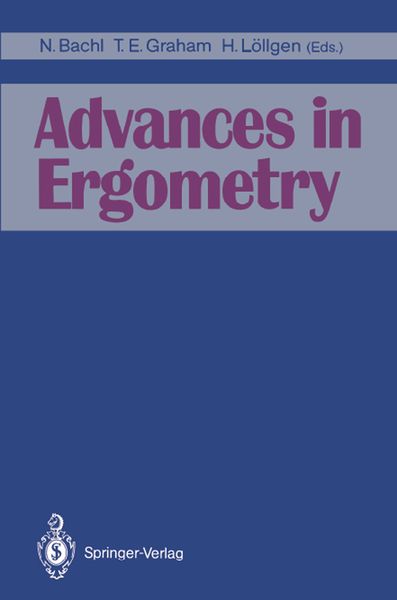
  • Produktbild: Advances in Ergometry
  • Produktbild: Advances in Ergometry

Advances in Ergometry

99,99 €

inkl. gesetzl. MwSt., Versandkostenfrei


Beschreibung

Produktdetails

Einband

Taschenbuch

Erscheinungsdatum

26.04.1991

Herausgeber

Norbert Bachl + weitere

Verlag

Springer Berlin

Seitenzahl

513

Maße (L/B/H)

23,5/15,5/2,9 cm

Gewicht

790 g

Auflage

Softcover reprint of the original 1st ed. 1991

Sprache

Englisch

ISBN

978-3-540-53684-0

Beschreibung

Produktdetails

Einband

Taschenbuch

Erscheinungsdatum

26.04.1991

Herausgeber

Verlag

Springer Berlin

Seitenzahl

513

Maße (L/B/H)

23,5/15,5/2,9 cm

Gewicht

790 g

Auflage

Softcover reprint of the original 1st ed. 1991

Sprache

Englisch

ISBN

978-3-540-53684-0

Herstelleradresse

Springer-Verlag KG
Sachsenplatz 4-6
1201 Wien
AT

Email: ProductSafety@springernature.com

Kundinnen und Kunden meinen

0 Bewertungen

Informationen zu Bewertungen

Zur Abgabe einer Bewertung ist eine Anmeldung im Konto notwendig. Die Authentizität der Bewertungen wird von uns nicht überprüft. Wir behalten uns vor, Bewertungstexte, die unseren Richtlinien widersprechen, entsprechend zu kürzen oder zu löschen.

Die Bewertungen sind nach Format, Anzahl Sterne und Datum sortiert.

Verfassen Sie die erste Bewertung zu diesem Artikel

Helfen Sie anderen Kund*innen durch Ihre Meinung

Kundinnen und Kunden meinen

0 Bewertungen filtern

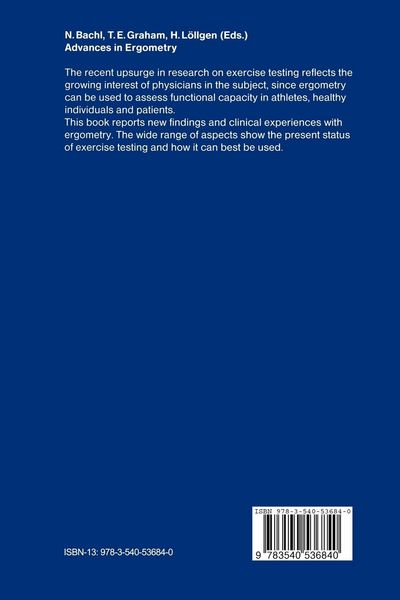
  • Produktbild: Advances in Ergometry
  • Produktbild: Advances in Ergometry
  • The Anaerobic Threshold as a Tool in Medicine.- Genetic Influences on Cardiovascular Capacity.- 1) Arrhythmia and Exercise.- Rhythm Disturbances and Exercise Testing.- Exercise Testing and Arrhythmia in Patients with Stable Angina.- Electrocardiographic Advances in Computerization.- 2) Exercise Testing Post Myocardial Infarction.- Principles of Ergometry with Patients after Myocardial Infarction.- Cardiopulmonary Exercise Testing after Myocardial Infarction.- Comparison of Bicycle Ergometer Test with other Noninvasive Tests in Dynamic Coronary Stenosis.- Stress Test Index for Evaluation of Exercise Induced Ischemia.- Asymptomatic ST-Segment Depression during Exercise Testing in Patients after Myocardial Infarction and Left Ventricular Dysfunction.- Postcapillary Pulmonary Hypertension at Rest and during Exercise in the Early Postinfarction Period in Patients without Manifestation of Left Heart Failure.- Exercise Programme of Patients with Ischaemic Disease of Lower Limbs Stage II–III-Evaluation with Holter ECG Monitorings.- Value of Exercise Testing in Evaluating the Effects of Early Posthospital Rehabilitation in Patients after Myocardial Infarction.- The Prevalence of Silent Ischemia in a Stress Test in High Risk Groups of Middle Age Males.- 3) Exercise for Special Clinical Indications.- Ergometry VS Field Test in the Evaluation of the Hypertensive Athlete.- Exercise Limitations in Patients with Pulmonary Diseases.- Physical Training and Cardiovascular Adaptation in Patients on Renal Replacement Therapy.- Spiroergometric Evaluation of Cardiac Function in Uremic Dialyzed Patients.- Respiratory Muscle Load during Physical Exercise — Reference Values.- Respiratory Muscle Load during Physical Exercise in Patients with Chronic Obstructive Lung Disease.- 4) Anaerobic Threshold.- A Review of some Issues Associated with Lactate Metabolism during Exercise.- General and Differential Characteristics of Lactate Functions.- Anaerobic Two-Phase Test in Cyclists.- The Reproducibility of the Anaerobic Threshold.- The Influence of Test Protocol on the Relative Threshold.- Individual Anaerobic Threshold for Evaluation of Competitive Athletes and Patients with Left Ventricular Dysfunction.- Selection, Analysis and Validity of Sportspecific and Ergometric Incremental Test Programmes.- Comparison between Ergometric Methods of Investigation and Field Tests.- Transcutaneous Monitoring of PCO2 for the Noninvasive Determination of the Anaerobic Threshold.- Heart Rate Threshold Standardization of the Modified Conconi Test for Sedentary Persons.- Measurement of an Individual Lactate Equilibration Point, Comparison of Constant Time and Constant Distance Step Tests.- Anaerobic Threshold and Ventilatory Sensitivity for Hypoxemia.- Treadmill Performance, Anaerobic Threshold and Marathon Running Speed.- Physiological Response to Exercise at the Anaerobic Threshold in Young Cyclists.- Influence of Nutrition on Ergometric Performance and Lactate Kinetics.- Ventilatory and Lactate Thresholds after Glycogen Depletion and Glycogen Loading.- Dependence of Maximum Oxygen Uptake and Maximum Performance on Glycogen Depletion and Glycogen Loading Regimen.- Anaerobic Threshold during Bicycle and Treadmill Ergometry in Coronary Patients in Relation to Training Heart Rate.- Lactate Concentrations during Exercise in Patients with Impaired Left Ventricular Function.- 5) Advances of Breath by Breath Method.- Advances in the Computerized Breath-by-Breath Method.- Use of a Computerized Breath-by-Breath Method in the Exercise Physiology.- Ergometry in Space and during Parabolic Flights.- 6) Systolic Time Intervals/Echocardiography, Adrenergic System.- Relationship between Spiroergometric Parameters and Resting Systolic Time Intervals.- Dopplersonographic Determination of the Systolic and Diastolic Left-Ventricular Function at Rest and during Exercise in Comparison to Invasive Methods.- Inference about Cardiac Chronotropic Innervation during Varying Levels of Physical Activity by Power Spectral Analysis of Heart Rate.- Heart Volume Performance Quotient in Athletes.- Capillary Plasma Catecholamines during Heavy Muscular Work.- 7) Exercise Testing in Children.- Aerobic Power and Selected Motor Performance Tests in Hospitalized Children.- Noninvasive Assessment of Cardiopulmonary Function in Adolescents after Successful Anthracycline Chemotherapy.- 8) Anaerobic Test Programs.- Model Based Evaluation of Test Procedures for the Assessment of the Anaerobic Capacity.- Relationship of Certain Laboratory and Field Tests in the Assessment of Anaerobic Capacity.- A Comparison of Bicycle, Running and Jumping Anaerobic, “all-out” Tests of 45 s Duration.- The CST-C: A New Cycling Strength Test.- The Relationship between Certain Anthropometric Characteristics and Parameters of Anaerobic Capacity in the Treadmill Test According to Kindermann.- Blood Ammonia and Lactate Concentration in Repeated Arm and Leg Exercise.- 9) Concentric and Eccentric Exercise Testing.- Concentric and Eccentric Exercise Testing — A New Approach to a Four Extremities Ergometer.- Metabolic Changes Following Concentric and Eccentric Exercise in Trained and Untrained Subjects.- Isokinetic Dynamometric Measurements in the Rehabilitation after Meniscectomy.- Metabolic Response of Concentric and Eccentric Musclework in Female Handball Players.- 10) Exercise Testing in Paraplegics.- Maximal Performance, Heart Rate and Arterial Lactate Concentration in Tetra- and Paraplegics.- The Anaerobic Threshold in Paraplegics.- 11) Sportspecific Exercise Tests.- Our Approach to Sport Specific Exercise Tests.- Sport Specific Testing in Rowing.- A Conversion of Load Intensity from a Bicycle Ergometer to a Treadmill.- 12) Sportspecific Exercise Tests, Free Communications.- Comparative Swingtrainer and Bicycle Spiroergometrical Examinations in Leisure Time Sportsmen.- Ventilatory Threshold and Work Efficiency on a Bicycle and Paddling Ergometer in Top Paddlers.- Armergometry in Determining Oxygen Uptake for Work from Heart Rate.- Clinical Significance of Modified and Repeated Ergometry.- Anaerobic Rowing Ergometer Tests — Test Design, Application and Interpretation.- Ergometry: A Tool for the Combined Diagnostics of Bioenergetic Potency of Athlete.- The Level of some Biochemical and Physiological Values in Special Tests of Canoe Slalom Racers.- Body Composition and Dietary Intake in Athletes of Different Age, Sex, Performance Capacity and Specialization.- Cardiac Function during Exhaustive Exercise at 5.5 ATA Hyperbaric Exposure.- Effect of Endurance Training on Anaerobic Threshold, Acid — Base Balance and Growth Hormone Levels in Modern Pentathlon Women.