Gutscheinbedingungen

**Gültig nur für Bestellungen an die Wunsch-Poststation bis 10.06.2026 auf Spielzeug, Schreibwaren, Filme, Geschenke & Trends, Musik, tolino eReader & Zubehör, Hörbücher und Hörbuch-Downloads (außer Abo), nicht preisgebundene Bücher und Kalender online auf thalia.at und in der Thalia App. Einzelne Artikel können ausgeschlossen sein. Aufgrund der Buchpreisbindung sind deutschsprachige Bücher und eBooks ausgenommen. Zusätzlich ausgenommen sind preisgebundene Artikel, Abos & Flatrates, eBooks, Games, Geschenkkarten/-boxen, Shelfies, Software, Zeitschriften sowie einzelne Artikel von tonies®. Pro Einkauf einmal einlösbar. Kein Click & Collect möglich. Keine Barauszahlung. Nicht kombinierbar mit anderen Aktionen und Gutscheinen. Gutschein wird auf max. 500€ Bestellwert angerechnet. Nicht gültig für Versandkosten und Services.

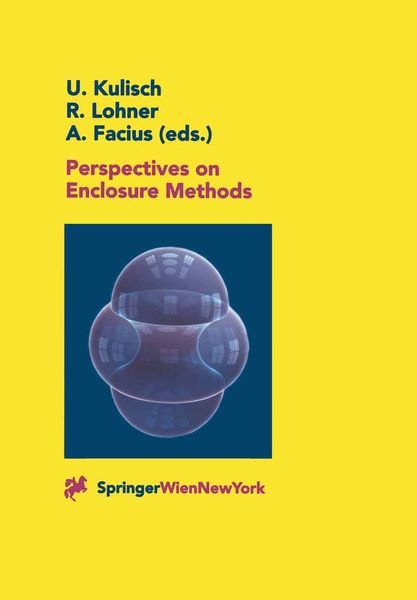
  • Produktbild: Perspectives on Enclosure Methods
  • Produktbild: Perspectives on Enclosure Methods

Perspectives on Enclosure Methods

49,99 €

inkl. gesetzl. MwSt., Versandkostenfrei


Beschreibung

Produktdetails

Einband

Taschenbuch

Erscheinungsdatum

18.06.2001

Herausgeber

Ulrich Kulisch + weitere

Verlag

Springer Wien

Seitenzahl

345

Maße (L/B/H)

24,4/17/2 cm

Gewicht

662 g

Auflage

1. Auflage

Sprache

Englisch

ISBN

978-3-211-83590-6

Beschreibung

Produktdetails

Einband

Taschenbuch

Erscheinungsdatum

18.06.2001

Herausgeber

Verlag

Springer Wien

Seitenzahl

345

Maße (L/B/H)

24,4/17/2 cm

Gewicht

662 g

Auflage

1. Auflage

Sprache

Englisch

ISBN

978-3-211-83590-6

Herstelleradresse

Springer Wien
Prinz-Eugen-Str. 8-10
1040 Wien
AT
buchhandel-buch@springer.com

Kundinnen und Kunden meinen

0 Bewertungen

Informationen zu Bewertungen

Zur Abgabe einer Bewertung ist eine Anmeldung im Konto notwendig. Die Authentizität der Bewertungen wird von uns nicht überprüft. Wir behalten uns vor, Bewertungstexte, die unseren Richtlinien widersprechen, entsprechend zu kürzen oder zu löschen.

Die Bewertungen sind nach Format, Anzahl Sterne und Datum sortiert.

Verfassen Sie die erste Bewertung zu diesem Artikel

Helfen Sie anderen Kund*innen durch Ihre Meinung

Kundinnen und Kunden meinen

0 Bewertungen filtern

  • Produktbild: Perspectives on Enclosure Methods
  • Produktbild: Perspectives on Enclosure Methods
  • Proving Conjectures by Use of Interval Arithmetic.- 1 Computer Assisted Proofs in Analysis.- 2 The Kepler Conjecture.- 3 The Double Bubble Conjecture.- 4 The Dirac-Schwinger Conjecture.- 5 ‘Chaos conjectures’.- References.- Advanced Arithmetic for the Digital Computer Interval Arithmetic Revisited.- 1 Introduction and Historical Remarks.- 2 Interval Arithmetic, a Powerful Calculus to Deal with Inequalities.- 3 Interval Arithmetic as Executable Set Operations.- 4 Enclosing the Range of Function Values.- 5 The Interval Newton Method.- 6 Extended Interval Arithmetic.- 7 The Extended Interval Newton Method.- 8 Differentiation Arithmetic, Enclosures of Derivatives.- 9 Interval Arithmetic on the Computer.- 10 Hardware Support for Interval Arithmetic.- References.- Highly Accurate Verified Error Bounds for Krylov Type Linear System Solvers.- 1 Introduction.- 2 Iterative Solvers and Finite Precision.- 3 Krylov Subspace Methods.- 4 Improved Arithmetic.- 5 Verified Error Bounds.- 6 Computational Results.- References.- Elements of Scientific Computing.- 1 Hardware Requirements.- 2 Software Requirements.- 3 Modelling Requirements.- 4 Conclusion.- References.- Biography.- The Mainstreaming of Interval Arithmetic.- 1 Introduction.- 2 Moore’s Law and Precision.- 3 Interval Physics.- 4 Summary.- References.- Bounds for Eigenvalues with the Use of Finite Elements.- 1 Introduction.- 2 Setting for the Problem.- 3 Calculation of Bounds.- 4 Verified Computation.- 5 Application: the Membrane Problem.- 6 Numerical Examples.- References.- Algorithmic Differencing.- 1 Algorithmic Representation of Functions.- 2 Transformation of Algorithms.- 3 Finite Precision Calculations.- 4 First Order Difference Operators.- 5 Differences of Inverse Functions.- 6 Higher Order Divided Differences.- References.- A Comparison of Techniques for Evaluating Centered Forms.- 1 Introduction.- 2 Methods for Computing Slope Vectors.- 3 A Numerical Example.- 4 Summary and Recommendations.- References.- On the Limit of the Total Step Method in Interval Analysis.- 1 Introduction.- 2 Notations.- 3 Results.- References.- How Fast can Moore’ Interval Integration Method Really be?.- 1 Introduction.- 2 Moore’s Algorithm.- 3 Estimation of the Integration Error.- 4 Conclusions.- References.- Numerical Verification and Validation of Kinematics and Dynamical Models for Flexible Robots in Complex Environments.- 1 Introduction.- 2 Error Propagation Control and Reliable Numerical Algorithms in MOBILE.- 3 Verified Calculation of the Solution of Discrete-Time Algebraic Riccati Equation.- 4 Accurate Distance Calculation Algorithms.- 5 Accurate Robot Reliability Estimation.- 6 Further Work.- 7 Acknowledgement.- References.- On the Ubiquity of the Wrapping Effect in the Computation of Error Bounds.- 1 Introduction or What is the Wrapping Effect?.- 2 Where does the Wrapping Effect appear?.- 3 How can we Reduce the Wrapping Effect?.- 4 Conclusion.- References.- A New Perspective on the Wrapping Effect in Interval Methods for Initial Value Problems for Ordinary Differential Equations.- 1 Introduction.- 2 Preliminaries.- 3 How the Wrapping Effect Arises in Interval Methods for IVPs for ODEs: A Traditional Explanation.- 4 The Wrapping Effect as a Source of Instability in Interval Methods for IVPs for ODEs.- 5 The Parallelepiped and Lohner’s QR-Factorization Methods.- 6 Why the Parallelepiped Method Often Fails.- 7 When Does the Parallelepiped Method Work Well.- 8 How the QR Method Improves Stability.- 9 Conclusions.- A Lemmas.- References.- A Guaranteed Bound of the Optimal Constant in the Error Estimates for Linear Triangular Elements.- 1 Introduction.- 2 Strategy.- 3 The Method to Calculate a Rigorous Solution.- 4 Checking the Condition.- 5 Some Computational Techniques for Efficient Enclosure Methods.- 6 Numerical Results.- References.- Nonsmooth Global Optimization.- 1 Introduction.- 2 Preliminaries.- 3 A Pruning Technique for Global Optimizationx.- 4 Multidimensional Pruning Techniques for Global Optimization.- References.