Gutscheinbedingungen

**Gültig bis 22.07.2026 ab einem Mindestbestellwert von 40€ auf Spielzeug, Schreibwaren, Filme, Geschenke & Trends, Musik, tolino eReader & Zubehör, Hörbücher und Hörbuch-Downloads (außer Abo), nicht preisgebundene Bücher und Kalender online auf thalia.at und in der Thalia App. Einzelne Artikel können ausgeschlossen sein. Aufgrund der Buchpreisbindung sind deutschsprachige Bücher und eBooks ausgenommen. Zusätzlich ausgenommen sind preisgebundene Artikel, Abos & Flatrates, eBooks, Games, Geschenkkarten/-boxen, Shelfies, Software, Zeitschriften sowie einzelne Artikel von tonies®. Pro Einkauf einmal einlösbar. Click & Collect nur bei Onlinevorabzahlung möglich. Keine Barauszahlung. Nicht kombinierbar mit anderen Aktionen und Gutscheinen. Gutschein wird auf max. 500€ Bestellwert angerechnet. Nicht gültig für Versandkosten und Services. Preisgebundene Artikel sind vom Mindestbestellwert ausgeschlossen.

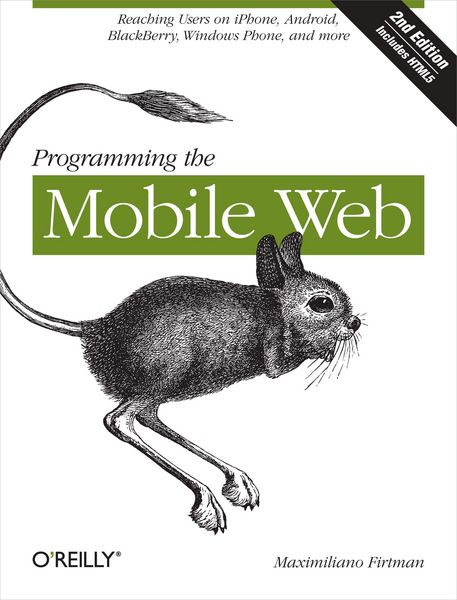
Produktbild: Programming the Mobile Web

Programming the Mobile Web Reaching Users on iPhone, Android, BlackBerry, Windows Phone, and more. Includes HTML5

47,99 €

inkl. gesetzl. MwSt., Versandkostenfrei


Beschreibung

Produktdetails

Einband

Taschenbuch

Erscheinungsdatum

07.05.2013

Verlag

O'Reilly Media

Seitenzahl

774

Maße (L/B/H)

23,2/17,9/4,6 cm

Gewicht

1244 g

Auflage

2nd edition

Sprache

Englisch

ISBN

978-1-4493-3497-0

Beschreibung

Produktdetails

Einband

Taschenbuch

Erscheinungsdatum

07.05.2013

Verlag

O'Reilly Media

Seitenzahl

774

Maße (L/B/H)

23,2/17,9/4,6 cm

Gewicht

1244 g

Auflage

2nd edition

Sprache

Englisch

ISBN

978-1-4493-3497-0

Herstelleradresse

Libri GmbH
Europaallee 1
36244 Bad Hersfeld
DE

Email: GPSR Kontakt

Noch keine Bewertungen vorhanden

Verfassen Sie die erste Bewertung zu diesem Artikel

Helfen Sie anderen Kundinnen und Kunden durch Ihre Meinung.

Kundinnen und Kunden meinen

Bewertungen (0)

Die Leseprobe wird geladen.
  • Produktbild: Programming the Mobile Web
  • Preface;
    Who This Book Is For;
    Who This Book Is Not For;
    What You'll Learn;
    Other Options;
    If You Like (or Don't Like) This Book;
    Conventions Used in This Book;
    Using Code Examples;
    Safari® Books Online;
    How to Contact Us;
    Acknowledgments;
    Chapter 1: The Mobile Jungle;
    1.1 The Mobile Ecosystem;
    1.2 Brands, Models, and Platforms;
    1.3 Technical Information;
    Chapter 2: Understanding the Mobile Web;
    2.1 Myths of the Mobile Web;
    2.2 What Is the Mobile Web?;
    2.3 Mobile Web Eras;
    2.4 The Mobile Browsing Experience;
    2.5 Fragmentation;
    2.6 Market Statistics;
    Chapter 3: Browsers and Web Platforms;
    3.1 Web Platforms That Are Not Browsers;
    3.2 Mobile Browsers;
    Chapter 4: Tools for Mobile Web Development;
    4.1 Working with Code;
    4.2 Testing;
    4.3 Production Environment;
    Chapter 5: Architecture and Design;
    5.1 Mobile Strategy;
    5.2 Navigation;
    5.3 Design and User Experience;
    Chapter 6: Markups and Standards;
    6.1 First, the Very Old Ones;
    6.2 Current Standards;
    6.3 XHTML Mobile Profile and Basic;
    6.4 Mobile HTML5;
    6.5 CSS for Mobile;
    6.6 HTML5 Compatibility Levels;
    Chapter 7: Basics of Mobile HTML5;
    7.1 The Document Head;
    7.2 The Document Body;
    7.3 HTML5 Mobile Boilerplate;
    7.4 The Content;
    Chapter 8: HTML5 Forms;
    8.1 Form Design;
    8.2 Form Elements;
    8.3 Form Control Attributes;
    8.4 Form Validation;
    Chapter 9: Feature and Device Detection;
    9.1 Possible Problems;
    9.2 Informational Websites;
    9.3 Client-Side Detection;
    9.4 Server-Side Detection;
    Chapter 10: Images and Media;
    10.1 Images;
    10.2 Dealing with Multiple Screen Densities;
    10.3 Adobe Flash;
    10.4 Video;
    10.5 Audio;
    Chapter 11: CSS for Mobile Browsers;
    11.1 Where to Insert the CSS;
    11.2 Media Queries;
    11.3 Selectors;
    11.4 CSS Techniques;
    11.5 Common Patterns;
    11.6 CSS Sprites;
    11.7 CSS3 Modules;
    Chapter 12: JavaScript Mobile;
    12.1 Coding for Mobile Browsers;
    12.2 JavaScript Debugging and Profiling;
    12.3 Battery Consumption;
    12.4 Background Execution;
    12.5 Supported Technologies;
    12.6 Standard JavaScript Behavior;
    12.7 JavaScript Libraries;
    12.8 UI Frameworks;
    Chapter 13: Offline Apps, Storage, and Networks;
    13.1 Offline Web Apps;
    13.2 Client-Side Storage;
    13.3 Network Communication;
    Chapter 14: Geolocation and Maps;
    14.1 Location Techniques;
    14.2 Detecting the Location;
    14.3 Maps/Navigation App Integration;
    14.4 Showing a Map;
    Chapter 15: Device Interaction;
    15.1 Mobile-Specific URIs;
    15.2 JavaScript APIs;
    Chapter 16: Native and Installed Web Apps;
    16.1 Web App Pros and Cons;
    16.2 Architecture of a Web App;
    16.3 Standards;
    16.4 Official Platforms;
    16.5 Apache Cordova/PhoneGap Apps;
    16.6 Distribution;
    16.7 Full-Screen App Patterns;
    Chapter 17: Content Delivery;
    17.1 MIME Types;
    17.2 File Delivery;
    17.3 Application and Games Delivery;
    Chapter 18: Debugging and Performance;
    18.1 Debugging;
    18.2 Performance Optimization;
    Chapter 19: Distribution and Social Web 2.0;
    19.1 Mobile SEO;
    19.2 How Users Find You;
    19.3 User Fidelizing;
    19.4 Mobile Web Statistics;
    19.5 Monetizing Your Website;
    19.6 Mobile Web Social Features;
    MIME Types for Mobile Content;
    Markup and Script MIME Types;
    Image MIME Types;
    Mobile Content MIME Types;
    Audio and Video MIME Types;
    Webapp MIME Types;
    Colophon;