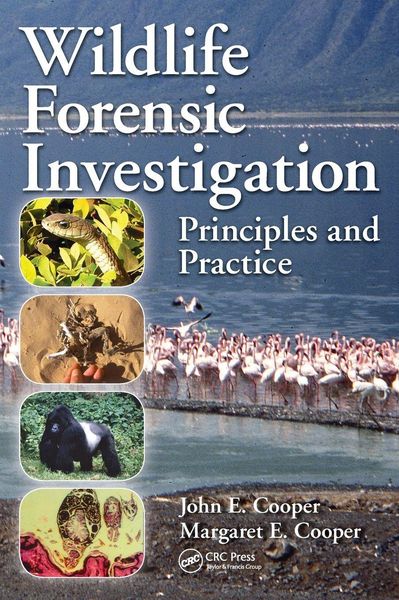
Wildlife Forensic Investigation Principles and Practice
-
- Hardcover ausgewählt
- Taschenbuch
- eBook
-
Sprache:Englisch
352,99 €
inkl. gesetzl. MwSt.,
Beschreibung
Produktdetails
Einband
Gebundene Ausgabe
Erscheinungsdatum
23.05.2013
Abbildungen
farbige Illustrationen, Tabellen, schwarz-weiss
Verlag
Taylor and FrancisSeitenzahl
772
Maße (L/B/H)
26/18,3/4,6 cm
Gewicht
1620 g
Sprache
Englisch
ISBN
978-1-4398-1374-4
Providing an in-depth introduction to the rapidly evolving field of wildlife forensics, this volume also chronicles aspects of the history of management, conservation, and environmental protection, with an emphasis on their global importance in the twenty-first century. The book examines the crucial role of wildlife forensic investigation with regard to live animals, dead animals, and samples and covers national, regional, and international legislation. The book discusses animal welfare as well as the damage that can be inflicted on humans and property by wildlife. Case studies are included from experts who describe some of their own work.
Noch keine Bewertungen vorhanden
Verfassen Sie die erste Bewertung zu diesem Artikel
Helfen Sie anderen Kundinnen und Kunden durch Ihre Meinung.
Kurze Frage zu unserer Seite
Vielen Dank für Ihr Feedback
Wir nutzen Ihr Feedback, um unsere Produktseiten zu verbessern. Bitte haben Sie Verständnis, dass wir Ihnen keine Rückmeldung geben können. Falls Sie Kontakt mit uns aufnehmen möchten, können Sie sich aber gerne an unseren Kund*innenservice wenden.
zum Kundenservice