Gutscheinbedingungen

**Gültig bis 06.07.2026 auf fremdsprachige Bücher online auf thalia.at, in der Thalia App ab einem Mindestbestellwert von 30€ und in allen Thalia Buchhandlungen in Österreich. In den Buchhandlungen nur gültig auf lagernde Ware. Einzelne Artikel können ausgeschlossen sein. Ausgenommen sind preisgebundene Artikel & eBooks. Pro Einkauf einmal einlösbar. Nur gültig gegen Vorlage oder im Onlineshop hinterlegter Bonuscard. Infos zur Einlösung in der Buchhandlung sind auf der Bonuscard-Vorteilspreisseite zu finden. Click & Collect nur bei Onlinevorabzahlung möglich. Keine Einlösung bei Scan & Go-Bezahlung. Keine Barauszahlung. Nicht kombinierbar mit anderen Aktionen und Gutscheinen. Gutschein wird auf max. 500€ Bestellwert angerechnet. Nicht gültig für Versandkosten und Services.

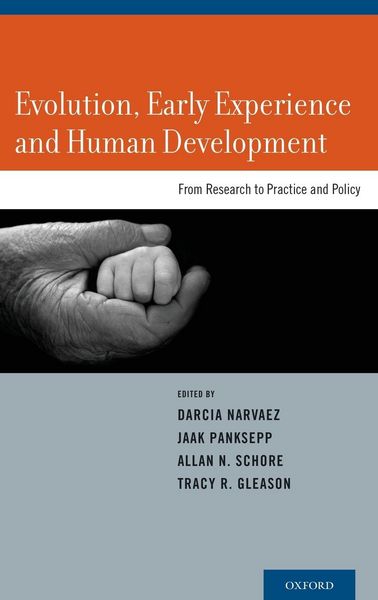
Produktbild: Evolution, Early Experience and Human Development

Evolution, Early Experience and Human Development From Research to Practice and Policy

186,99 €

inkl. gesetzl. MwSt., Versandkostenfrei


Beschreibung

Produktdetails

Einband

Gebundene Ausgabe

Erscheinungsdatum

06.11.2012

Herausgeber

Narvaez Darcia + weitere

Verlag

Oxford University Press

Seitenzahl

508

Maße (L/B/H)

24/16,1/3,2 cm

Gewicht

880 g

Sprache

Englisch

ISBN

978-0-19-975505-9

Beschreibung

Produktdetails

Einband

Gebundene Ausgabe

Erscheinungsdatum

06.11.2012

Herausgeber

Verlag

Oxford University Press

Seitenzahl

508

Maße (L/B/H)

24/16,1/3,2 cm

Gewicht

880 g

Sprache

Englisch

ISBN

978-0-19-975505-9

Herstelleradresse

Libri GmbH
Europaallee 1
36244 Bad Hersfeld
DE

Email: gpsr@libri.de

Noch keine Bewertungen vorhanden

Verfassen Sie die erste Bewertung zu diesem Artikel

Helfen Sie anderen Kundinnen und Kunden durch Ihre Meinung.

Kundinnen und Kunden meinen

Bewertungen (0)

  • Produktbild: Evolution, Early Experience and Human Development
    • Contributors

    • Editors

    • SECTION I HUMAN NATURE: THE EFFECTS OF EVOLUTION AND ENVIRONMENT

    • Chapter 1. The Value of the Environment of Evolutionary Adaptedness for gauging children's well-being

    • Darcia Narvaez, Jaak Panksepp, Allan Schore, Tracy Gleason

    • Chapter 2. Bowlby's "Environment of evolutionary adaptedness": Recent studies on the interpersonal neurobiology of attachment and emotional development

    • Allan Schore

    • Commentary: Early experience, neurobiology, plasticity, vulnerability and resilience by Michael Lamb

    • Chapter 3. How primary-process emotional systems guide child development: Ancestral regulators of human happiness, thriving and suffering

    • Jaak Panksepp

    • Commentary: The integrative meaning of emotion by Daniel Siegel

    • Chapter 4. Epigenetics and the environmental regulation of the genome and its function

    • Michael Meaney

    • Commentary: The messages of epigenetic research by Jerome Kagan

    • Chapter 5. Neurobiology and the evolution of mammalian social behavior

    • C. Sue Carter and Stephen W. Porges

    • Chapter 6. Dopamine: Another 'magic bullet' for caregiver responsiveness?

    • Alison Fleming, Viara Mileva-Seitz, Veronica M. Afonso

    • Chapter 7. The Neurobiological basis of empathy and its development in the environment of evolutionary adaptedness

    • Eric E. Nelson

    • Commentary: The Death of Empathy? by Bruce Perry

    • SECTION COMMENTARY: Born For Art, and the Joyful Companionship of Fiction by Colwyn Trevarthen

    • SECTION II: EARLY EXPERIENCE: THE EFFECTS OF CULTURAL PRACTICE

    • Chapter 8. Birth and the first postnatal hour

    • Wenda R. Trevathan

    • Chapter 9. Night-time nurturing: an evolutionary perspective on breastfeeding and sleep

    • Helen Ball and Charlotte Russell

    • Chapter 10. Touch and pain perception in infants

    • Tiffany Field and Maria Hernandez-Reif

    • Chapter 11. Infant feeding practices: rates, risks of not breastfeeding and factors influencing breastfeeding

    • Zaharah Sulaiman, Lisa H. Amir and Pranee Liamputtong

    • Commentary: Short term and long term effects of oxytocin released by suckling and of skin to skin contact in mothers and infants by Kerstin Uvnäs Moberg

    • Chapter 12. Developmental optimization

    • Darcia Narvaez and Tracy Gleason

    • Commentary: Darwin et al. on developmental optimization by David Loye

    • SECTION COMMENTARY: Adaptations and Adaptations by Ross Thompson

    • SECTION III: THEMES IN HUMAN EVOLUTION

    • Chapter 13. Play, plasticity, and ontogeny in childhood

    • Anthony D. Pellegrini and Adam F. A. Pellegrini

    • Chapter 14. The Value of a play-filled childhood in development of the hunter-gatherer individual

    • Peter Gray

    • Chapter 15. Rough-and-tumble play and the cooperation-competition dilemma: Evolutionary and developmental perspectives on the development of social competence

    • Joseph L. Flanders, Khalisa N. Herman, and Daniel Paquette

    • Commentary: Play in Hunter-Gatherers by Barry Hewlett and Adam H. Boyette

    • SECTION IV: PERSPECTIVES AND COUNTERPERSPECTIVES

    • Chapter 16. Perspective 1: Why would natural selection craft an organism whose future functioning is influenced by its earlier experiences?

    • Jay Belsky

    • Chapter 17. Perspective 2: Play, Plasticity, and the Perils of Conflict: 'Problematizing' Sociobiology

    • Melvin Konner

    • Chapter 18. Perspective 3: The Emergent Organism: A New Paradigm

    • William Mason

    • Chapter 19. Perspective 4: Can science progress to a revitalized past?

    • Gay Bradshaw

    • Chapter 20. Perspective 5: Earliest experiences and attachment processes

    • Howard Steele

    • Chapter 21. Perspective 6: Nurturant vs. non-nurturant environments and the failure of the Environment of Evolutionary Adaptedness

    • James W. Prescott

    • Chapter 22. Perspective 7: It's dangerous to be an infant: on-going relevance of John Bowlby's Environment of Evolutionary Adaptedness (the EEA) in promoting healthier births, safer maternal-infant sleep, and breastfeeding in a contemporary western industrial context

    • James J. McKenna and Lee T. Gettler

    • SECTION V: CONCLUSION

    • Chapter 23. The Future of human nature: Implications for research, policy, and ethics

    • Darcia Narvaez, Jaak Panksepp, Allan Schore and Tracy Gleason

    • Subject Index

    • Author Index