• Produktbild: Your Undergraduate Psychology Project
  • Produktbild: Your Undergraduate Psychology Project

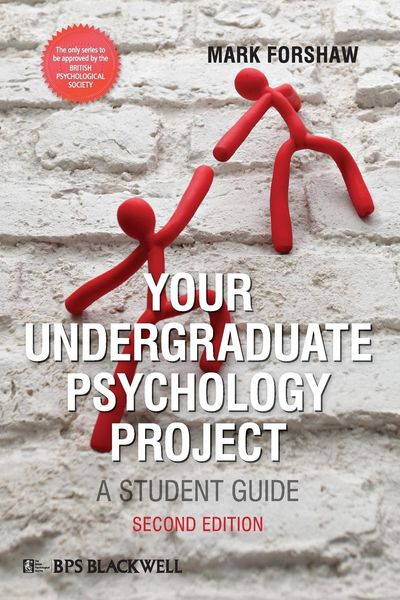
Your Undergraduate Psychology Project A Student Guide

79,99 €

inkl. gesetzl. MwSt., Versandkostenfrei


Beschreibung

Produktdetails

Einband

Taschenbuch

Erscheinungsdatum

19.04.2013

Verlag

John Wiley & Sons

Seitenzahl

176

Maße (L/B/H)

22,9/15,2/1 cm

Gewicht

272 g

Auflage

1. Auflage

Sprache

Englisch

ISBN

978-0-470-66998-3

Beschreibung

Produktdetails

Einband

Taschenbuch

Erscheinungsdatum

19.04.2013

Verlag

John Wiley & Sons

Seitenzahl

176

Maße (L/B/H)

22,9/15,2/1 cm

Gewicht

272 g

Auflage

1. Auflage

Sprache

Englisch

ISBN

978-0-470-66998-3

Kundinnen und Kunden meinen

0 Bewertungen

Informationen zu Bewertungen

Zur Abgabe einer Bewertung ist eine Anmeldung im Konto notwendig. Die Authentizität der Bewertungen wird von uns nicht überprüft. Wir behalten uns vor, Bewertungstexte, die unseren Richtlinien widersprechen, entsprechend zu kürzen oder zu löschen.

Die Bewertungen sind nach Format, Anzahl Sterne und Datum sortiert.

Verfassen Sie die erste Bewertung zu diesem Artikel

Helfen Sie anderen Kund*innen durch Ihre Meinung

Kundinnen und Kunden meinen

0 Bewertungen filtern

Die Leseprobe wird geladen.
  • Produktbild: Your Undergraduate Psychology Project
  • Produktbild: Your Undergraduate Psychology Project
  • Preface xi

    Acknowledgements xiii

    1. Planning Research 1

    Choosing a Research Topic 1

    The textbook method 2

    The television method 3

    The pub chat or coffee bar method 4

    The internet method 5

    The lecturer method 5

    Think again! 5

    Self-interest 6

    Replication versus Novelty 7

    Pure versus Applied Research 8

    Researching the Project: Finding Literature 9

    Using internet search engines 10

    Snowballing and searching via citations 10

    Using electronic databases 12

    Boolean operators 12

    Narrowing searches 13

    How many references? 15

    Statistics on the internet 16

    Choosing a Method 16

    Single-case designs 17

    Case studies 17

    Choosing qualitative methods 18

    Differences or relationships? 21

    Primary or secondary data? 22

    Observational methods 23

    Protocol analysis 24

    Multiple methods 25

    Control Groups 25

    Matching Methods to Analysis 26

    Power Analysis 27

    To Pilot or Not to Pilot 28

    Developing Materials 29

    Experimental stimuli 29

    Questionnaires 31

    Looking professional 35

    Interviews 36

    Cross-cultural studies and translation of materials 39

    'Borrowing' Materials 40

    The Internet as a Research Tool 40

    Managing Time: Keeping on Track 42

    Start early 42

    Match the project to the time available 42

    Overplanning 43

    Plan B 43

    Response rates 45

    Your supervisor's time 46

    Project milestones 46

    Tips on managing time 47

    Writing a Proposal 51

    Research Ethics 52

    Informed consent 53

    Undue pressure 55

    Deception 55

    Protection of participants from harm and 'acceptable' risk 55

    Incentives 56

    Withdrawal 56

    Confidentiality 56

    Debriefing 57

    Personal safety 57

    Obtaining Ethical Clearance 58

    Getting Started 59

    2. Doing Research: Collecting Data 61

    Student-Supervisor Relations 62

    Pilot Studies 65

    Dealing with People 66

    Being an ambassador 67

    Working with participants 70

    When participants don't understand or make mistakes 75

    Conducting Interviews: The Practicalities 76

    Focus Groups 77

    Observational Studies 78

    Relying on Equipment 81

    Making Back-ups 81

    Adjusting Your Project Milestones 82

    Taking Part Yourself 82

    Revisiting Data 83

    Transcribing Interviews 84

    The Paper Trail 85

    Knowing When to Stop 86

    Data Preparation 86

    Conducting Statistical Analyses 87

    3. Writing Up Research 91

    An Overview 92

    Notes on Style 93

    A Note on Plagiarism 94

    Section by Section 96

    Title 96

    Abstract 99

    Introduction 100

    Method 103

    Replicability 112

    Results 113

    Discussion 120

    Generalising your findings 123

    References 124

    Appendices 128

    Qualitative Reports 129

    The first person 129

    Introduction 130

    Methods 130

    Results/Analysis/Discussion 131

    First, Second and Third Drafts 132

    Common Mistakes 133

    Affect and effect 134

    Data 134

    Experiment and study 134

    Joining words together 134

    Incorrect apostrophes 135

    Incorrect sentences 136

    Latin phrases and other borrowings 137

    Non-significant 137

    Number and amount 137

    Prefixes 138

    Presenting numbers 139

    Proof 139

    Reporting probabilities 140

    Separating words 140

    Significant diff erences 141

    Spelling IV and DV 141

    When It's All Over 143

    4. How To Lose Marks Instantly 145

    List of Things NOT to do! 145

    Go it alone and ignore your supervisor's advice 145

    Be precious about your work 146

    Ignore the required format 146

    Conduct research with no point to it 146

    Bite off more than you can chew 147

    Ignore relevant literature, or fail to look hard enough for it 147

    Run out of time 147

    Use the wrong reference format 148

    Argue yourself out of a perfectly good result 148

    Plagiarise 149

    Conduct the wrong analysis 149

    Collect data without ethical approval 149

    Set out the entire project with a massive design flaw in it 150

    The Moral of the Tale 150

    References 151

    Further Reading 153

    Index 155