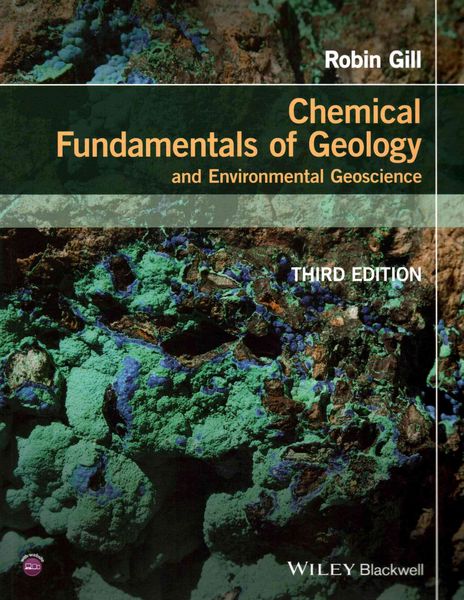
Produktbild: Chemical Fundamentals of Geology and Environmental Geoscience

Chemical Fundamentals of Geology and Environmental Geoscience

55,99 €

inkl. gesetzl. MwSt., Versandkostenfrei


Beschreibung

Produktdetails

Einband

Taschenbuch

Erscheinungsdatum

30.01.2015

Verlag

John Wiley & Sons

Seitenzahl

288

Maße (L/B/H)

28/21,6/1,6 cm

Gewicht

731 g

Auflage

3. Auflage

Sprache

Englisch

ISBN

978-0-470-65665-5

Beschreibung

Produktdetails

Einband

Taschenbuch

Erscheinungsdatum

30.01.2015

Verlag

John Wiley & Sons

Seitenzahl

288

Maße (L/B/H)

28/21,6/1,6 cm

Gewicht

731 g

Auflage

3. Auflage

Sprache

Englisch

ISBN

978-0-470-65665-5

Herstelleradresse

Libri GmbH
Europaallee 1
36244 Bad Hersfeld
DE

Email: gpsr@libri.de

Noch keine Bewertungen vorhanden

Verfassen Sie die erste Bewertung zu diesem Artikel

Helfen Sie anderen Kundinnen und Kunden durch Ihre Meinung.

Kundinnen und Kunden meinen

Bewertungen (0)

Die Leseprobe wird geladen.
  • Produktbild: Chemical Fundamentals of Geology and Environmental Geoscience
  • PREFACE TO THE THIRD EDITION ix

    PREFACE TO THE SECOND EDITION x

    PREFACE TO THE FIRST EDITION xi

    ACKNOWLEDGEMENTS xiii

    ABOUT THE COMPANION WEBSITE xiv

    1 ENERGY IN GEOCHEMICAL PROCESSES 1

    Introduction 1

    Energy in mechanical systems 4

    Energy in chemical and mineral systems: free energy 5

    Stable, unstable and metastable minerals 10

    Further reading 13

    2 EQUILIBRIUM IN GEOLOGICAL SYSTEMS 14

    The significance of mineral stability 14

    Systems, phases and components 16

    Equilibrium 18

    Phase diagrams in P-T space 20

    Phase diagrams in T-X space 26

    Ternary phase diagrams 36

    Review 41

    Further reading 41

    Sources of thermodynamic data for minerals 42

    Exercises 42

    3 KINETICS OF EARTH PROCESSES 43

    Defining the rate of a reaction 44

    Temperature-dependence of reaction rate 47

    Diffusion 52

    Melt viscosity 55

    Persistence of metastable minerals: closure temperature 57

    Review 58

    Further reading 58

    Exercises 59

    4 AQUEOUS SOLUTIONS AND THE HYDROSPHERE 60

    Ways of expressing the concentrations of major constituents 61

    Equilibrium constant 63

    Non-ideal solutions: activity coefficient 69

    Natural waters 70

    Oxidation and reduction: Eh-pH diagrams 75

    Further reading 81

    Exercises 81

    5 ELECTRONS IN ATOMS 82

    Why does a geologist need to understand atoms? 82

    The atom 83

    Stationary waves 85

    Electron waves in atoms 88

    The shapes of electron orbitals 90

    Electron energy levels 93

    Review 98

    Further reading 98

    Exercises 98

    6 WHAT WE CAN LEARN FROM THE PERIODIC TABLE 99

    Ionization energy 99

    The Periodic Table 102

    Electronegativity 103

    Valency 104

    Atomic spectra 105

    Review 109

    Further reading 110

    Exercises 110

    7 CHEMICAL BONDING AND THE PROPERTIES OF MINERALS 111

    The ionic model of bonding 111

    The covalent model of bonding 118

    Bonding in minerals 126

    Other types of atomic and molecular interaction 129

    Review 132

    Further reading 132

    Exercises 132

    8 SILICATE CRYSTALS AND MELTS 133

    Silicate polymers 133

    Cation sites in silicates 140

    Optical properties of crystals 146

    Defects in crystals 148

    Further reading 151

    Exercises 151

    9 SOME GEOLOGICALLY IMPORTANT ELEMENTS 153

    Major and trace elements 153

    Alkali metals 154

    Hydrogen 156

    Alkaline earth metals 156

    Aluminium 157

    Carbon 159

    Silicon 166

    Nitrogen and phosphorus 166

    Oxygen 167

    Sulfur 168

    Fluorine 170

    Noble gases 171

    Transition metals 171

    Rare earth elements 175

    Actinides 176

    Further reading 177

    Exercise 177

    10 WHAT CAN WE LEARN FROM ISOTOPES? 178

    Isotope systems 179

    Radiogenic isotope systems 181

    Stable isotope systems 195

    Cosmogenic radioisotope systems 203

    Review 204

    Further reading 204

    Exercises 204

    11 THE ELEMENTS IN THE UNIVERSE 206

    The significance of element abundance 206

    Measuring cosmic and Solar System abundances 206

    The composite abundance curve 210

    Cosmic element production 211

    Elements in the Solar System 215

    Chemical evolution of the Earth 219

    Review 224

    Further reading 225

    Exercises 225

    ANSWERS TO EXERCISES 226

    APPENDIX A: Mathematics revision 234

    APPENDIX B: Simple solution chemistry 240

    APPENDIX C: Alphabetical list of chemical abbreviations and element names, with atomic number and relative atomic mass 243

    APPENDIX D: Symbols, units, constants and abbreviations used in this book 245

    Glossary 248

    REFERENCES 258

    INDEX 261