Gutscheinbedingungen

**Gültig bis 06.07.2026 auf fremdsprachige Bücher online auf thalia.at, in der Thalia App ab einem Mindestbestellwert von 30€ und in allen Thalia Buchhandlungen in Österreich. In den Buchhandlungen nur gültig auf lagernde Ware. Einzelne Artikel können ausgeschlossen sein. Ausgenommen sind preisgebundene Artikel & eBooks. Pro Einkauf einmal einlösbar. Nur gültig gegen Vorlage oder im Onlineshop hinterlegter Bonuscard. Infos zur Einlösung in der Buchhandlung sind auf der Bonuscard-Vorteilspreisseite zu finden. Click & Collect nur bei Onlinevorabzahlung möglich. Keine Einlösung bei Scan & Go-Bezahlung. Keine Barauszahlung. Nicht kombinierbar mit anderen Aktionen und Gutscheinen. Gutschein wird auf max. 500€ Bestellwert angerechnet. Nicht gültig für Versandkosten und Services.

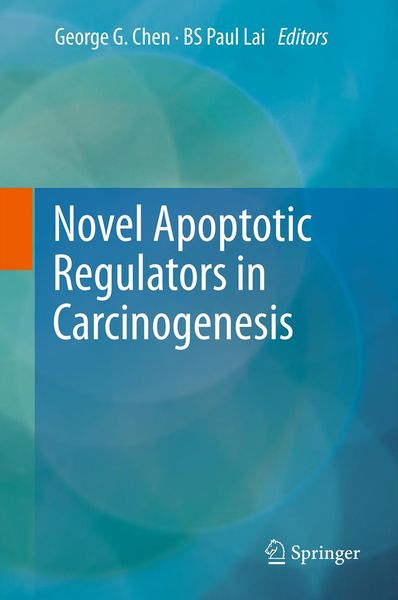
  • Produktbild: Novel Apoptotic Regulators in Carcinogenesis
  • Produktbild: Novel Apoptotic Regulators in Carcinogenesis
- 12%

Novel Apoptotic Regulators in Carcinogenesis

12% sparen

144,99 € UVP 164,99 €

inkl. gesetzl. MwSt., Versandkostenfrei


Beschreibung

Produktdetails

Einband

Gebundene Ausgabe

Erscheinungsdatum

21.08.2012

Herausgeber

George G. Chen + weitere

Verlag

Springer Netherland

Seitenzahl

300

Maße (L/B/H)

24,1/16/2,2 cm

Gewicht

635 g

Auflage

1. Auflage

Sprache

Englisch

ISBN

978-94-007-4916-0

Beschreibung

Rezension

From the reviews:

“This book is appropriate for scientific professionals in the field of basic cancer research, drug development, and cancer medicine, as well as professionals in the pharmaceutical and pharmacological industries. … This book provides well-summarized information on interesting anticancer agents which have been substantially studied recently on their ability to induce apoptosis in cancer cells. … The book is a good source of information for the scientific community and medicinal industries who are interested in development of anticancer drugs.” (Qi Chen, Doody’s Review Service, January, 2013)

Zitat

From the reviews:
"This book is appropriate for scientific professionals in the field of basic cancer research, drug development, and cancer medicine, as well as professionals in the pharmaceutical and pharmacological industries. ... This book provides well-summarized information on interesting anticancer agents which have been substantially studied recently on their ability to induce apoptosis in cancer cells. ... The book is a good source of information for the scientific community and medicinal industries who are interested in development of anticancer drugs." (Qi Chen, Doody's Review Service, January, 2013)

Produktdetails

Einband

Gebundene Ausgabe

Erscheinungsdatum

21.08.2012

Herausgeber

Verlag

Springer Netherland

Seitenzahl

300

Maße (L/B/H)

24,1/16/2,2 cm

Gewicht

635 g

Auflage

1. Auflage

Sprache

Englisch

ISBN

978-94-007-4916-0

Herstelleradresse

Springer-Verlag KG
Sachsenplatz 4-6
1201 Wien
AT

Email: GPSR Kontakt

Noch keine Bewertungen vorhanden

Verfassen Sie die erste Bewertung zu diesem Artikel

Helfen Sie anderen Kundinnen und Kunden durch Ihre Meinung.

Kundinnen und Kunden meinen

Bewertungen (0)

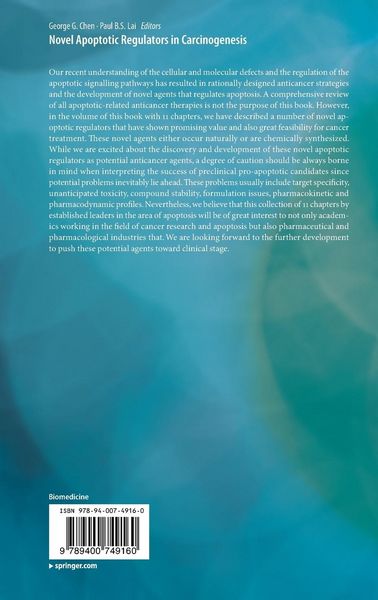
  • Produktbild: Novel Apoptotic Regulators in Carcinogenesis
  • Produktbild: Novel Apoptotic Regulators in Carcinogenesis
  • Preface.   
     1. Apoptosis Inducer from Streblus asper Extracts for Cancer Chemoprevention.
    2. Apoptosis Induction by Nimbolide, a Limonoid from Azadirachta indica: Molecular Targets and Signaling Networks.    
    3. Heterocyclics as inducers of apoptosis.
    4. Anthocyanins as Apoptotic Agents.
    5. Apoptosis as a mechanism involved in the anticancer effect of dietary n-3 polyunsaturated fatty acids.
    6. Apoptotic Pathways Upon Arsenite Treatment.  
    7. Flavokawains in Cancer Prevention and Treatment: Potentials and Challenges.
    8. Progesterone Receptor Modulators Induce Apoptosis in Mammary Tumors and Uterine Leiomyomas.
    9. Apoptotic regulators and its clinical implication in mammary carcinoma.
    10. Curcumin analogs as inhibitors of the Jak-STAT signal transduction pathway
    11. Targeting cancer by betulin and betulinic acid. 
     Abbreviations
     Subject index