KI-Beratung Beta

Gutscheinbedingungen

**Gültig am 27.11.2026 auf Spielzeug, Schreibwaren, Filme, Geschenke & Trends, Musik, tolino eReader & Zubehör, Hörbücher und Hörbuch-Downloads, nicht preisgebundene Bücher und Kalender online auf thalia.at und in der Thalia App. Einzelne Artikel können ausgeschlossen sein. Aufgrund der Buchpreisbindung sind deutschsprachige Bücher und eBooks ausgenommen. Zusätzlich ausgenommen sind Abos & Flatrates, Games, Geschenkkarten/-boxen, Shelfies, Software, Zeitschriften sowie einzelne Artikel von tonies®. Pro Einkauf einmal einlösbar. Click & Collect nur bei Onlinevorabzahlung möglich. Keine Barauszahlung. Nicht kombinierbar mit anderen Aktionen und Gutscheinen. Gutschein wird auf max. 500€ Bestellwert angerechnet. Nicht gültig für Versandkosten und Services.

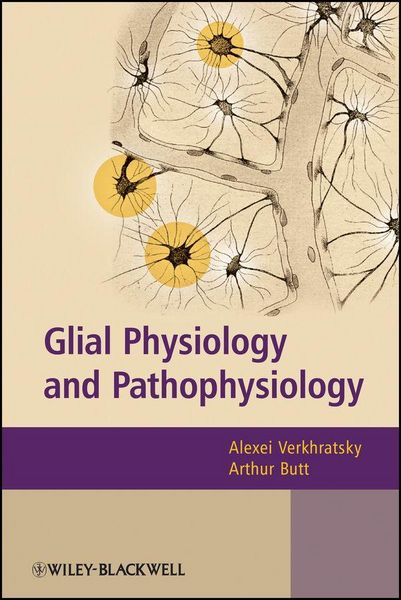
Produktbild: Glial Physiology and Pathophysiology

Glial Physiology and Pathophysiology

109,99 €

inkl. gesetzl. MwSt., Versandkostenfrei


Beschreibung

Glial Physiology and Pathophysiology provides a comprehensive, advanced text on the biology and pathology of glial cells.   Coverae includes: * the morphology and interrelationships between glial cells and neurones in different parts of the nervous systems * the cellular physiology of the different kinds...

Beschreibung

Glial Physiology and Pathophysiology provides a comprehensive, advanced text on the biology and pathology of glial cells.
 
Coverae includes:
* the morphology and interrelationships between glial cells and neurones in different parts of the nervous systems
* the cellular physiology of the different kinds of glial cells
* the mechanisms of intra- and inter-cellular signalling in glial networks
* the mechanisms of glial-neuronal communications
* the role of glial cells in synaptic plasticity, neuronal survival and development of nervous system
* the cellular and molecular mechanisms of metabolic neuronal-glial interactions
* the role of glia in nervous system pathology, including pathology of glial cells and associated diseases - for example, multiple sclerosis, Alzheimer's, Alexander disease and Parkinson's
Neuroglia oversee the birth and development of neurones, the establishment of interneuronal connections (the 'connectome'), the maintenance and removal of these inter-neuronal connections, writing of the nervous system components, adult neurogenesis, the energetics of nervous tissue, metabolism of neurotransmitters, regulation of ion composition of the interstitial space and many, many more homeostatic functions. This book primes the reader towards the notion that nervous tissue is not divided into more important and less important cells. The nervous tissue functions because of the coherent and concerted action of many different cell types, each contributing to an ultimate output. This reaches its zenith in humans, with the creation of thoughts, underlying acquisition of knowledge, its analysis and synthesis, and contemplating the Universe and our place in it.
* An up-to-date and fully referenced text on the most numerous cells in the human brain
* Detailed coverage of the morphology and interrelationships between glial cells and neurones in different parts of the nervous system
* Describes the role og glial cells in neuropathology
* Focus boxes highlight key points and summarise important facts
* Companion website with downloadable figures and slides

Produktdetails

Einband

Taschenbuch

Erscheinungsdatum

22.04.2013

Herausgeber Alexei Verkhratsky + weitere
Verlag John Wiley & Sons Inc

Produktdetails

Einband

Taschenbuch

Erscheinungsdatum

22.04.2013

Herausgeber
Verlag John Wiley & Sons Inc
Seitenzahl

560

Maße (L/B/H)

24,4/16,7/2,7 cm

Gewicht

856 g

Auflage

1. Auflage

Sprache

Englisch

ISBN

978-0-470-97853-5

Herstelleradresse

Libri GmbH
Europaallee 1
36244 Bad Hersfeld
DE

Email: gpsr@libri.de

Noch keine Bewertungen vorhanden

Verfassen Sie die erste Bewertung zu diesem Artikel

Helfen Sie anderen Kundinnen und Kunden durch Ihre Meinung.

Kundinnen und Kunden meinen

Bewertungen (0)

Die Leseprobe wird geladen.
  • Produktbild: Glial Physiology and Pathophysiology
  • Preface xvii
     
    About the Authors xxi
     
    Abbreviations xxv
     
    About the Companion Website xxxii
     
    1 History of Neuroscience and the Dawn of Research in Neuroglia 1
     
    1.1 The miraculous human brain: localising the brain functions 1
     
    1.2 Cellular organisation of the brain 10
     
    1.3 Mechanisms of communications in neural networks 14
     
    1.4 The concept of neuroglia 27
     
    1.5 Beginning of the modern era 47
     
    1.6 Concluding remarks 49
     
    References 49
     
    2 General Overview of Signalling in the Nervous System 59
     
    2.1 Intercellular signalling: wiring and volume modes of transmission 59
     
    2.2 Cellular signalling: receptors 62
     
    2.3 Intracellular signalling: second messengers 67
     
    2.4 Calcium signalling 67
     
    2.5 Concluding remarks 72
     
    3 Neuroglia: Definition, Classification, Evolution, Numbers, Development 73
     
    3.1 Definition of neuroglia as homeostatic cells of the nervous system 74
     
    3.2 Classification 75
     
    3.3 Evolution of neuroglia 76
     
    3.4 Numbers: how many glial cells are in the brain? 93
     
    3.5 Embryogenesis and development of neuroglia in mammals 96
     
    3.6 Concluding remarks 99
     
    References 100
     
    4 Astroglia 105
     
    4.1 Definition and heterogeneity 107
     
    4.2 Morphology of the main types of astroglia 113
     
    4.3 How to identify astrocytes in the nervous tissue 119
     
    4.4 Astroglial syncytial networks 120
     
    4.5 Physiology of astroglia 125
     
    4.6 Functions of astroglia 175
     
    4.7 Concluding remarks 231
     
    References 231
     
    5 Oligodendrocytes 245
     
    5.1 Oligodendrocyte anatomy 247
     
    5.2 Myelin structure and function 252
     
    5.3 Physiology of oligodendrocytes 266
     
    5.4 Oligodendrocyte development 283
     
    5.5 Concluding remarks 299
     
    References 299
     
    6 NG2-glial Cells 321
     
    6.1 Definition of NG2-glia 321
     
    6.2 Structure of NG2-glia 324
     
    6.3 Physiology of NG2-glia 327
     
    6.4 Proliferation of NG2-glia and generation of oligodendrocytes 332
     
    6.5 Relationship between NG2-glia and CNS pericytes 333
     
    6.6 Evolution of NG2-glia 336
     
    6.7 Concluding remarks 337
     
    References 337
     
    7 Microglia 343
     
    7.1 Definition of microglia 344
     
    7.2 Microglial origin and development 345
     
    7.3 Morphology of microglia 345
     
    7.4 General physiology of microglia 351
     
    7.5 Microglial migration and motility 372
     
    7.6 Physiological functions of microglia: role in synaptic transmission and plasticity 373
     
    7.7 Microglia in ageing 375
     
    7.8 Concluding remarks 375
     
    References 376
     
    8 Peripheral Glial Cells 381
     
    8.1 Peripheral nervous system 382
     
    8.2 Schwann cells 390
     
    8.3 Satellite glial cells 407
     
    8.4 Enteric glia 412
     
    8.5 Olfactory ensheathing cells (OECs) 418
     
    8.6 Concluding remarks 422
     
    References 423
     
    9 General Pathophysiology of Neuroglia 431
     
    9.1 Neurological disorders as gliopathologies 431
     
    9.2 Reactive astrogliosis 433
     
    9.3 Wallerian degeneration 439
     
    9.4 Excitotoxic vulnerability of oligodendrocytes: the death of white matter 442
     
    9.5 Activation of microglia 444
     
    9.6 Concluding remarks 449
     
    References 450
     
    10 Neuroglia in Neurological Diseases 453
     
    10.1 Introduction 454
     
    10.2 Genetic astrogliopathology: Alexander disease 456
     
    10.3 Stroke and ischaemia 458
     
    10.4 Migraine and spreadin