Gutscheinbedingungen

**Gültig am 28.09.2026 auf fremdsprachige Bücher online auf thalia.at und in der Thalia App. Einzelne Artikel können ausgeschlossen sein. Ausgenommen sind preisgebundene Artikel & eBooks. Pro Einkauf einmal einlösbar. Click & Collect nur bei Onlinevorabzahlung möglich. Keine Barauszahlung. Nicht kombinierbar mit anderen Aktionen und Gutscheinen. Gutschein wird auf max. 500€ Bestellwert angerechnet. Nicht gültig für Geschenkkarten, Versandkosten und Services.

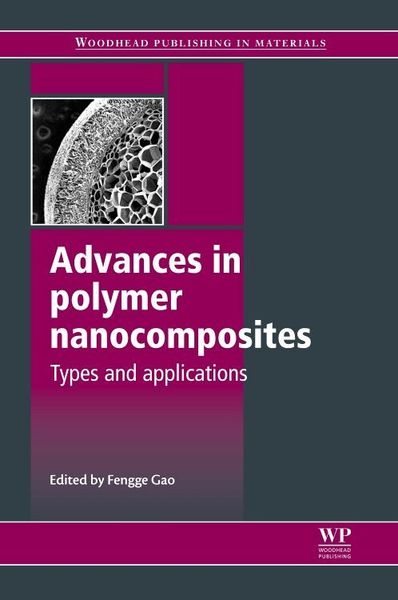
Produktbild: ADVANCES IN POLYMER NANOCOMPOS

ADVANCES IN POLYMER NANOCOMPOS

235,99 €

inkl. gesetzl. MwSt., Versandkostenfrei


Beschreibung

Produktdetails

Einband

Gebundene Ausgabe

Erscheinungsdatum

19.10.2012

Herausgeber

Gao Fengge

Verlag

Woodhead Pub

Seitenzahl

680

Maße (L/B/H)

23,4/15,5/23,3 cm

Gewicht

1150 g

Sprache

Englisch

ISBN

978-1-84569-940-6

Beschreibung

Produktdetails

Einband

Gebundene Ausgabe

Erscheinungsdatum

19.10.2012

Herausgeber

Gao Fengge

Verlag

Woodhead Pub

Seitenzahl

680

Maße (L/B/H)

23,4/15,5/23,3 cm

Gewicht

1150 g

Sprache

Englisch

ISBN

978-1-84569-940-6

EU-Ansprechpartner

Elsevier B.V.
Radarweg 29
1043 NX Amsterdam
NL
productsafety@elsevier.com

Herstelleradresse

Elsevier Science & Technology
London Wall 125
EC2Y 5AS London
GB
tradeorders@elsevier.com

Noch keine Bewertungen vorhanden

Verfassen Sie die erste Bewertung zu diesem Artikel

Helfen Sie anderen Kundinnen und Kunden durch Ihre Meinung.

Kundinnen und Kunden meinen

Bewertungen (0)

Die Leseprobe wird geladen.
  • Produktbild: ADVANCES IN POLYMER NANOCOMPOS
  • Contributor contact details

    Preface

    Part I: Types of polymer nanocomposites according to fillers

    Chapter 1: Processing of nanotube-based nanocomposites

    Abstract:

    1.1 Introduction

    1.2 Structure of carbon nanotubes

    1.3 Processing methods for nanotube-based polymer nanocomposites

    1.4 Nanotube alignment

    1.5 Properties and characteristics

    1.6 Future trends

    Chapter 2: Environmental life-cycle assessment of polymer nanocomposites

    Abstract:

    2.1 Introduction

    2.2 The life-cycle assessment (LCA) approach to nanotechnology

    2.3 The environmental LCA of polymer nanocomposites

    2.4 Future trends and alternate approaches for evaluating emerging technologies

    2.5 Conclusions

    Chapter 3: Calcium carbonate nanocomposites

    Abstract:

    3.1 Introduction: applications of calcium carbonate nanoparticles

    3.2 Calcium carbonate as filler material

    3.3 The toughening mechanisms of polymers filled with precipitated calcium carbonate (PCC) nanoparticles

    3.4 Conclusions

    Chapter 4: Layered double hydroxides (LDHs) as functional fillers in polymer nanocomposites

    Abstract:

    4.1 Introduction: the role of layered double hydroxides (LDHs) as reinforcements

    4.2 Preparation of hybrid LDHs for polymer nanocomposites

    4.3 Nanocomposite preparation routes

    4.4 Structure of polymer-LDH nanocomposites

    4.5 Properties

    4.6 Applications and future trends

    4.7 Conclusions

    4.8 Sources of further information and advice

    Chapter 5: Cellulose nanoparticles as reinforcement in polymer nanocomposites

    Abstract:

    5.1 Introduction

    5.2 Preparation of cellulose nanoparticles

    5.3 Preparation of cellulose nanocomposites from different processes and polymeric matrices

    5.4 Properties and applications of nanocomposites reinforced with cellulose nanoparticles

    5.5 Conclusions and future trends

    5.6 Sources of further information and advice

    5.7 Acknowledgements

    Chapter 6: Metal-polymer nanocomposites

    Abstract:

    6.1 Introduction: the role of nanoparticles as reinforcement

    6.2 Techniques for reinforcement

    6.3 Properties of polymer composites reinforced with metal nanoparticles

    6.4 Alternative applications of metal-polymer nanocomposites

    6.5 Future trends

    6.6 Sources of further information and advice

    Part II: Types of polymer nanocomposites according to base

    Chapter 7: Polyolefin-based polymer nanocomposites

    Abstract:

    7.1 Introduction

    7.2 Preparation of polymer nanocomposites

    7.3 Different kinds of nanofillers used in the preparation of polymer nanocomposites

    7.4 Characterization of polymer nanocomposites

    7.5 Properties of polymer nanocomposites

    7.6 Application of polyolefin nanocomposites

    7.7 Conclusions and future trends

    Chapter 8: Poly(vinyl chloride)(PVC)-based nanocomposites

    Abstract:

    8.1 Introduction

    8.2 Poly(vinyl chloride) (PVC)

    8.3 Manufacturing techniques

    8.4 Nanofillers

    8.5 Effects of nanofillers

    8.6 Opportunities and problems

    8.7 Future trends

    8.8 Sources of further information and advice

    Chapter 9: Nylon-based polymer nanocomposites

    Abstract:

    9.1 Introduction

    9.2 Types of nanoparticle and their modification

    9.3 Current manufacturing techniques

    9.4 Structures and properties

    9.5 Applications of nylon-based polymers

    9.6 Future trends

    9.7 Acknowledgements

    Chapter 10: Clay-containing poly(ethylene terephthalate) (PET)-based polymer nanocomposites

    Abstract:

    10.1 Introduction: the importance of poly(ethylene terephthalate) (PET)-based nanocomposites

    10.2 Types of PET-based nanocomposite

    10.3 Preparative methods

    10.4 St