KI-Beratung Beta

Gutscheinbedingungen

**Gültig am 27.11.2026 auf Spielzeug, Schreibwaren, Filme, Geschenke & Trends, Musik, tolino eReader & Zubehör, Hörbücher und Hörbuch-Downloads, nicht preisgebundene Bücher und Kalender online auf thalia.at und in der Thalia App. Einzelne Artikel können ausgeschlossen sein. Aufgrund der Buchpreisbindung sind deutschsprachige Bücher und eBooks ausgenommen. Zusätzlich ausgenommen sind Abos & Flatrates, Games, Geschenkkarten/-boxen, Shelfies, Software, Zeitschriften sowie einzelne Artikel von tonies®. Pro Einkauf einmal einlösbar. Click & Collect nur bei Onlinevorabzahlung möglich. Keine Barauszahlung. Nicht kombinierbar mit anderen Aktionen und Gutscheinen. Gutschein wird auf max. 500€ Bestellwert angerechnet. Nicht gültig für Versandkosten und Services.

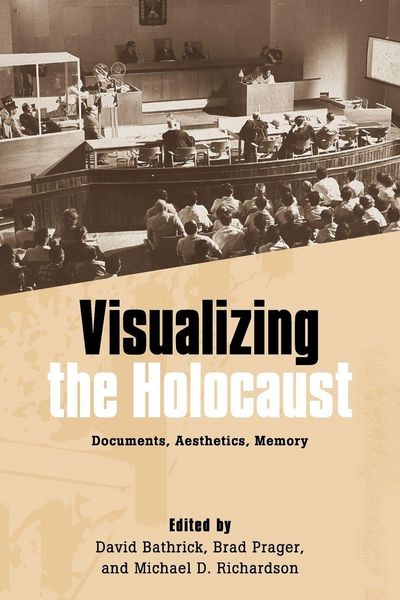
  • Produktbild: Visualizing the Holocaust
  • Produktbild: Visualizing the Holocaust

Visualizing the Holocaust Documents, Aesthetics, Memory

46,99 €

inkl. gesetzl. MwSt., Versandkostenfrei


Beschreibung

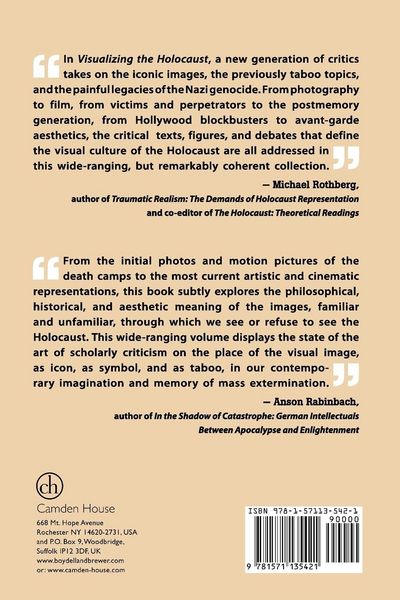
Collection of essays exploring the controversies surrounding images of the Holocaust. Visual representations are an essential but highly contested means of understanding and remembering the Holocaust. Photographs taken in the camps in early 1945 provided proof of and visceral access to the atrocities....

Beschreibung

Collection of essays exploring the controversies surrounding images of the Holocaust. Visual representations are an essential but highly contested means of understanding and remembering the Holocaust. Photographs taken in the camps in early 1945 provided proof of and visceral access to the atrocities. Later visualrepresentations such as films, paintings, and art installations attempted to represent this extreme trauma. While photographs from the camps and later aesthetic reconstructions differ in origin, they share goals and have raised similar concerns: the former are questioned not as to veracity but due to their potential inadequacy in portraying the magnitude of events; the latter are criticized on the grounds that the mediation they entail is unacceptable. Some have even questioned any attempt to represent the Holocaust as inappropriate and dangerous to historical understanding. This book explores the taboos that structure the production and reception of Holocaust images and the possibilities that result from the transgression of those taboos. Essays consider the uses of various visual media, aesthetic styles, and genres in representations of the Holocaust; the uses of perpetrator photography; the role of trauma in memory; aesthetic problems of mimesis and memory in the work of Lanzmann, Celan, and others; and questions about mass-cultural representations of the Holocaust. David Bathrick is Emeritus Professor of German at Cornell University, Brad Prager is Associate Professor of German at the University of Missouri, and Michael D. Richardson is Associate Professor of German at Ithaca College.

Portrait

David Bathrick, Brad Prager, Michael D. Richardson

Produktdetails

Einband

Taschenbuch

Erscheinungsdatum

02.07.2012

Abbildungen

26 b/w illus.

Herausgeber David Bathrick + weitere

Produktdetails

Einband

Taschenbuch

Erscheinungsdatum

02.07.2012

Abbildungen

26 b/w illus.

Herausgeber
Verlag Boydell & Brewer
Seitenzahl

348

Maße (L/B/H)

22,8/15,4/2 cm

Gewicht

512 g

Sprache

Englisch

ISBN

978-1-57113-542-1

Herstelleradresse

Libri GmbH
Europaallee 1
36244 Bad Hersfeld
DE

Email: gpsr@libri.de

Noch keine Bewertungen vorhanden

Verfassen Sie die erste Bewertung zu diesem Artikel

Helfen Sie anderen Kundinnen und Kunden durch Ihre Meinung.

Kundinnen und Kunden meinen

Bewertungen (0)

  • Produktbild: Visualizing the Holocaust
  • Produktbild: Visualizing the Holocaust
  • Introduction: Seeing Against the Grain: Re-visualizing the Holocaust - David Bathrick On the Liberation of Perpetrator Photographs in Holocaust Narratives - Brad Prager The Interpreter's Dilemma: Heinrich Jöst's Warsaw Ghetto Photographs - Daniel H. Magilow Whose Trauma Is It? Identification and Secondary Witnessing in the Age of Postmemory - Elke Heckner No Child Left Behind: Anne Frank Exhibits, American Abduction Narratives, and Nazi Bogeymen - Lisa J. Nicoletti Auschwitz as Hermeneutic Rupture, Differend, and Image malgré tout: Jameson, Lyotard, Didi-Huberman - Sven-Erik Rose Claude Lanzmann's Shoah and the Internionality of the Image - Michael D'Arcy For and Against the Bilderverbot: The Rhetoric of "Unrepresentability" and Remediated "Authenticity" in the German Reception of Steven Spielberg's Schindler's List Reception of Steven Spielberg's Schindler's List - Karyn Ball Celan's Cinematic: Anxiety of the Gaze in Night and Fog and "Engführung" - Eric Kligerman Affect in the Archive: Arendt, Eichmann and The Specialist - Darcy C. Buerkle Home-Movies, Film Diaries, and Mass Bodies: Péter Forgác's Free Fall Into the Holocaust - Jaimey Fisher Laughter and Catastrophe: Train of Life and Tragicomic Holocaust Cinema - David Brenner "Heil Myself!": Impersonation and Identity in the Comedic Representation of Hitler - Michael D. Richardson