KI-Beratung Beta

Gutscheinbedingungen

**Gültig am 20.11.2026 ab einem Mindestbestellwert von 30€ auf Spielzeug, Schreibwaren, Filme, Geschenke & Trends, Musik, tolino eReader & Zubehör, Hörbücher und Hörbuch-Downloads, nicht preisgebundene Bücher und Kalender online auf thalia.at und in der Thalia App. Einzelne Artikel können ausgeschlossen sein. Aufgrund der Buchpreisbindung sind deutschsprachige Bücher und eBooks ausgenommen. Zusätzlich ausgenommen sind Abos & Flatrates, Games, Geschenkkarten/-boxen, Shelfies, Software, Zeitschriften sowie einzelne Artikel von tonies®. Pro Einkauf einmal einlösbar. Click & Collect nur bei Onlinevorabzahlung möglich. Keine Barauszahlung. Nicht kombinierbar mit anderen Aktionen und Gutscheinen. Gutschein wird auf max. 500€ Bestellwert angerechnet. Nicht gültig für Versandkosten und Services. Preisgebundene Artikel sind vom Mindestbestellwert ausgeschlossen.

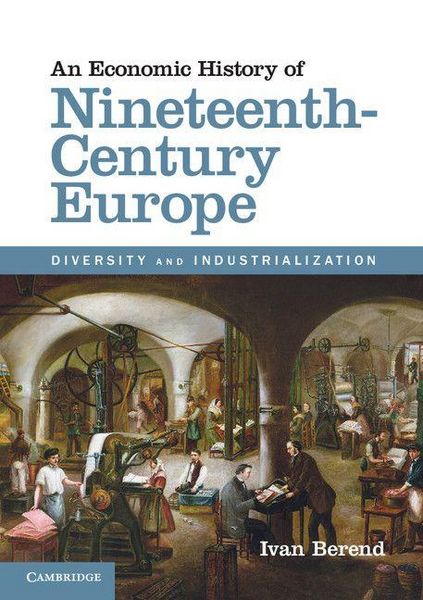
  • Produktbild: An Economic History of Nineteenth-Century Europe
  • Produktbild: An Economic History of Nineteenth-Century Europe

An Economic History of Nineteenth-Century Europe

61,99 €

inkl. gesetzl. MwSt., Versandkostenfrei


Beschreibung

This new transnational survey explores the regional differences which shaped the economic trajectory of European nations. Presenting a clear explanation of the historical causes of advancement and backwardness, Ivan Berend integrates social, political, institutional and cultural factors, engaging in...

Beschreibung

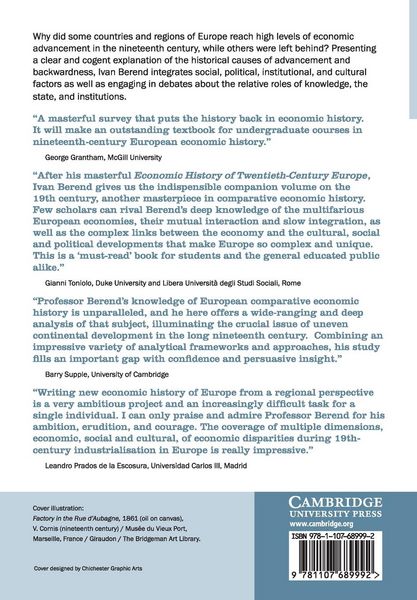
This new transnational survey explores the regional differences which shaped the economic trajectory of European nations. Presenting a clear explanation of the historical causes of advancement and backwardness, Ivan Berend integrates social, political, institutional and cultural factors, engaging in debates about the relative roles of knowledge, the state and institutions. Why did some countries and regions of Europe reach high levels of economic advancement in the nineteenth century, while others were left behind? This new transnational survey of the continent's economic development highlights the role of regional differences in shaping each country's economic path and outcome. Presenting a clear and cogent explanation of the historical causes of advancement and backwardness, Ivan Berend integrates social, political, institutional and cultural factors as well as engaging in debates about the relative roles of knowledge, the state and institutions. Featuring boxed essays on key personalities including Adam Smith, Friedrich List, Gustave Eiffel and the Krupp family, as well as brief histories of innovations such as the steam engine, vaccinations and the co-operative system, the book helps to explain the theories and macro-economic trends that dominated the century and their impact on the subsequent development of the European economy right up to the present day.

Rezension

'A masterful survey that puts the history back in economic history. It will make an outstanding textbook for undergraduate courses in nineteenth-century European economic history.' George Grantham, McGill University

Produktdetails

Einband

Taschenbuch

Erscheinungsdatum

15.11.2012

Abbildungen

26 b/w illus. 5 maps 47 tables

Verlag Cambridge University Press

Produktdetails

Einband

Taschenbuch

Erscheinungsdatum

15.11.2012

Abbildungen

26 b/w illus. 5 maps 47 tables

Verlag Cambridge University Press
Seitenzahl

540

Maße (L/B/H)

24,4/17/2,9 cm

Gewicht

921 g

Sprache

Englisch

ISBN

978-1-107-68999-2

Herstelleradresse

Libri GmbH
Europaallee 1
36244 Bad Hersfeld
DE

Email: gpsr@libri.de

Noch keine Bewertungen vorhanden

Verfassen Sie die erste Bewertung zu diesem Artikel

Helfen Sie anderen Kundinnen und Kunden durch Ihre Meinung.

Kundinnen und Kunden meinen

Bewertungen (0)

Weitere Artikel finden Sie in

Die Leseprobe wird geladen.
  • Produktbild: An Economic History of Nineteenth-Century Europe
  • Produktbild: An Economic History of Nineteenth-Century Europe
  • Introduction; Part I. Gradual Revolution: 1. From merchant to industrial capitalism in Northwestern Europe; Part II. Successful Industrial Transformation of the West: 2. Knowledge and the entrepreneurial state; 3. Agriculture, transportation, and communication; 4. The organisation of business and finance; 5. Three versions of successful industrialization; 6. The miracle of knowledge and the state: Scandinavia; 7. Demographic revolution, transformation of life and standard of living; 8. The Europeanization of Europe; Part III. The Peripheries: Semi-Success or Failure of Modern Transformation: 9. The 'sleeping' peripheries, traditional institutions and values; 10. The Western sparks that ignite modernization; 11. Advantage from dependence: Central Europe, the Baltic Area, Finland and Ireland; 12. Profiting from foreign interests: the Mediterranean and Russia; 13. The predator Leviathan in peasant societies: the Balkans and the borderlands of Austria-Hungary; Epilogue: economic disparity - and alternative postwar economic regimes; References.