Gutscheinbedingungen

**Gültig bis 17.08.2026 auf Schreibwaren & Office-Artikel online auf thalia.at, in der Thalia App und in teilnehmenden Thalia Buchhandlungen in Österreich mit Schulsortiment. In den Buchhandlungen nur gültig auf lagernde Ware. Einzelne Artikel können ausgeschlossen sein. Ausgenommen sind preisgebundene Artikel. Pro Einkauf einmal einlösbar. Nur gültig gegen Vorlage oder im Onlineshop hinterlegter Bonuscard. Infos zur Einlösung in der Buchhandlung sind auf der Bonuscard-Vorteilspreisseite zu finden. Click & Collect nur bei Onlinevorabzahlung möglich. Keine Einlösung bei Scan & Go-Bezahlung. Keine Barauszahlung. Nicht kombinierbar mit anderen Aktionen und Gutscheinen. Gutschein wird auf max. 500€ Bestellwert angerechnet. Nicht gültig für Geschenkkarten, Versandkosten und Services.

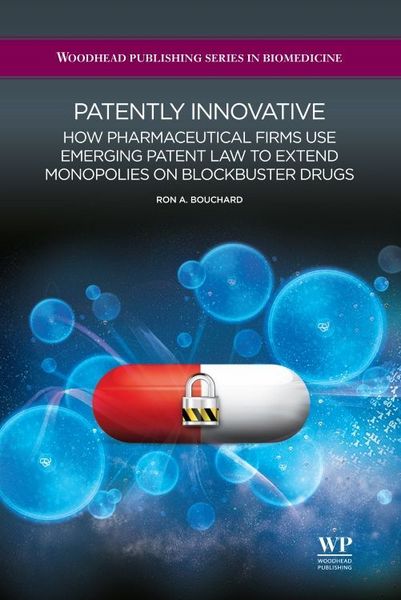
Produktbild: Patently Innovative

Patently Innovative How Pharmaceutical Firms Use Emerging Patent Law to Extend Monopolies on Blockbuster Drugs

185,99 €

inkl. gesetzl. MwSt., Versandkostenfrei


Beschreibung

Produktdetails

Einband

Gebundene Ausgabe

Erscheinungsdatum

01.01.2012

Verlag

Woodhead Pub

Seitenzahl

296

Maße (L/B/H)

23,8/16,2/2,2 cm

Gewicht

780 g

Sprache

Englisch

ISBN

978-1-907568-12-1

Beschreibung

Produktdetails

Einband

Gebundene Ausgabe

Erscheinungsdatum

01.01.2012

Verlag

Woodhead Pub

Seitenzahl

296

Maße (L/B/H)

23,8/16,2/2,2 cm

Gewicht

780 g

Sprache

Englisch

ISBN

978-1-907568-12-1

EU-Ansprechpartner

Zeitfracht Medien GmbH
Ferdinand-Jühlke-Straße 7
99095 Erfurt
DE
produktsicherheit@zeitfracht.de

Herstelleradresse

Elsevier Science & Technology
125 London Wall
EC2Y 5AS London
GB
tradeorders@elsevier.com

Noch keine Bewertungen vorhanden

Verfassen Sie die erste Bewertung zu diesem Artikel

Helfen Sie anderen Kundinnen und Kunden durch Ihre Meinung.

Kundinnen und Kunden meinen

Bewertungen (0)

Die Leseprobe wird geladen.
  • Produktbild: Patently Innovative
  • Dedication

    Acknowledgements

    List of figures and tables

    List of abbreviations

    About the author

    Chapter 1: Introduction

    Abstract:

    1.1 The emergence of global pharmaceutical linkage

    1.2 Canadian pharmaceutical linkage regulations

    1.3 Organization

    Chapter 2: Background: drug approval, drug patenting, pharmaceutical linkage, and public health policy

    Abstract:

    2.1 Drug approval

    2.2 Patents

    2.3 Linkage regulations

    2.4 IPR rights and innovation policy

    Chapter 3: Empirical analysis of drug approval

    Abstract:

    3.1 Introduction

    3.2 Analysis

    3.3 Results

    3.4 Discussion

    3.5 Interpretation of data

    3.6 Study limitations

    3.7 Assessing the lifecycle approach: the long view

    3.8 Government as representative public agent

    3.9 Summary and conclusions

    Chapter 4: Empirical analysis of pharmaceutical innovation and drug approval-drug patenting linkage

    Abstract:

    4.1 Introduction

    4.2 Methods

    4.3 Results

    4.4 Discussion

    Chapter 5: Empirical analysis of drug patenting in multiple high-value cohorts

    Abstract:

    5.1 Introduction

    5.2 Methods

    5.3 Results

    5.4 Discussion

    5.5 Summary and conclusions

    Chapter 6: Implications of empirical data: are pharmaceutical linkage regulations a success?

    Abstract:

    6.1 Introduction

    6.2 Debate preceding Bill C-91

    6.3 'Original policy intent'

    6.4 'Patent-specific' analysis

    6.5 Statutory interpretation

    6.6 Revisiting the empirical data

    6.7 Summary and conclusions

    Chapter 7: Future directions: testable hypotheses and evolution toward global pharmaceutical linkage

    Abstract:

    7.1 Hypotheses regarding cluster-based drug development

    7.2 Globalization of pharmaceutical linkage

    Index