KI-Beratung Beta

Produktbild: Electric Vehicle Technology Explained

Electric Vehicle Technology Explained

158,99 €

inkl. gesetzl. MwSt., Versandkostenfrei


Beschreibung

Fully updated throughout, Electric Vehicle Technology, Second Edition, is a complete guide to the principles, design and applications of electric vehicle technology. Including all the latest advances, it presents clear and comprehensive coverage of the major aspects of electric vehicle development and...

Beschreibung

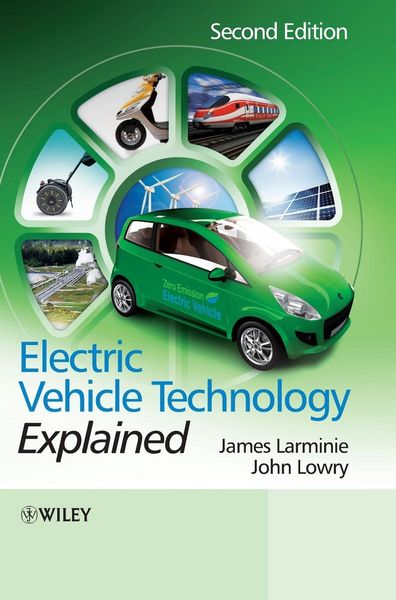
Fully updated throughout, Electric Vehicle Technology, Second Edition, is a complete guide to the principles, design and applications of electric vehicle technology. Including all the latest advances, it presents clear and comprehensive coverage of the major aspects of electric vehicle development and offers an engineering-based evaluation of electric motor scooters, cars, buses and trains.
This new edition includes:
* important new chapters on types of electric vehicles, including pickup and linear motors, overall efficiencies and energy consumption, and power generation, particularly for zero carbon emissions
* expanded chapters updating the latest types of EV, types of batteries, battery technology and other rechargeable devices, fuel cells, hydrogen supply, controllers, EV modeling, ancillary system design, and EV and the environment
* brand new practical examples and case studies illustrating how electric vehicles can be used to substantially reduce carbon emissions and cut down reliance on fossil fuels
* futuristic concept models, electric and high-speed trains and developments in magnetic levitation and linear motors
* an examination of EV efficiencies, energy consumption and sustainable power generation.
Explaining the underpinning science and technology, this book is essential for practicing electrical, automotive, power, control and instrumentation engineers working in EV research and development. It is also a valuable reference for academics and students in automotive, mechanical, power and electrical engineering.

Produktdetails

Einband

Gebundene Ausgabe

Erscheinungsdatum

24.09.2012

Verlag John Wiley & Sons Inc
Seitenzahl

344

Produktdetails

Einband

Gebundene Ausgabe

Erscheinungsdatum

24.09.2012

Verlag John Wiley & Sons Inc
Seitenzahl

344

Maße (L/B/H)

25/17,5/2,3 cm

Gewicht

772 g

Auflage

2nd Secondtion edition

Sprache

Englisch

ISBN

978-1-119-94273-3

Herstelleradresse

Libri GmbH
Europaallee 1
36244 Bad Hersfeld
DE

Email: gpsr@libri.de

Noch keine Bewertungen vorhanden

Verfassen Sie die erste Bewertung zu diesem Artikel

Helfen Sie anderen Kundinnen und Kunden durch Ihre Meinung.

Kundinnen und Kunden meinen

Bewertungen (0)

Die Leseprobe wird geladen.
  • Produktbild: Electric Vehicle Technology Explained
  • About the Author xiii
     
    Preface xv
     
    Acknowledgments xvii
     
    Abbreviations xix
     
    Symbols xxiii
     
    1 Introduction 1
     
    1.1 A Brief History 2
     
    1.2 Electric Vehicles and the Environment 13
     
    1.3 Usage Patterns for Electric Road Vehicles 15
     
    Further Reading 17
     
    2 Types of Electric Vehicles - EV Architecture 19
     
    2.1 Battery Electric Vehicles 19
     
    2.2 The IC Engine/Electric Hybrid Vehicle 19
     
    2.3 Fuelled EVs 24
     
    2.4 EVs using Supply Lines 25
     
    2.5 EVs which use Flywheels or Supercapacitors 25
     
    2.6 Solar-Powered Vehicles 26
     
    2.7 Vehicles using Linear Motors 27
     
    2.8 EVs for the Future 27
     
    Further Reading 27
     
    3 Batteries, Flywheels and Supercapacitors 29
     
    3.1 Introduction 29
     
    3.2 Battery Parameters 30
     
    3.3 Lead Acid Batteries 36
     
    3.4 Nickel-Based Batteries 41
     
    3.5 Sodium-Based Batteries 46
     
    3.6 Lithium Batteries 50
     
    3.7 Metal-Air Batteries 52
     
    3.8 Supercapacitors and Flywheels 54
     
    3.9 Battery Charging 59
     
    3.10 The Designer's Choice of Battery 63
     
    3.11 Use of Batteries in Hybrid Vehicles 64
     
    3.12 Battery Modelling 65
     
    3.13 In Conclusion 77
     
    References 78
     
    4 Electricity Supply 79
     
    4.1 Normal Existing Domestic and Industrial Electricity Supply 79
     
    4.2 Infrastructure Needed for Charging Electric Vehicles 80
     
    4.3 Electricity Supply Rails 81
     
    4.4 Inductive Power Transfer for Moving Vehicles 82

    4.5 Battery Swapping 84
     
    Further Reading 85
     
    5 Fuel Cells 87
     
    5.1 Fuel Cells - A Real Option? 87
     
    5.2 Hydrogen Fuel Cells - Basic Principles 89
     
    5.3 Fuel Cell Thermodynamics - An Introduction 95
     
    5.4 Connecting Cells in Series - The Bipolar Plate 102
     
    5.5 Water Management in the PEMFC 106
     
    5.6 Thermal Management of the PEMFC 110
     
    5.7 A Complete Fuel Cell System 111
     
    5.8 Practical Efficiency of Fuel Cells 114
     
    References 114
     
    6 Hydrogen as a Fuel - Its Production and Storage 115
     
    6.1 Introduction 115
     
    6.2 Hydrogen as a Fuel 117
     
    6.3 Fuel Reforming 118
     
    6.4 Energy Efficiency of Reforming 124
     
    6.5 Hydrogen Storage I - Storage as Hydrogen 124
     
    6.6 Hydrogen Storage II - Chemical Methods 132
     
    References 143
     
    7 Electric Machines and their Controllers 145
     
    7.1 The 'Brushed' DC Electric Motor 145
     
    7.2 DC Regulation and Voltage Conversion 159
     
    7.3 Brushless Electric Motors 169
     
    7.4 Motor Cooling, Efficiency, Size and Mass 179
     
    7.5 Electric Machines for Hybrid Vehicles 182
     
    7.6 Linear Motors 185
     
    References 185
     
    8 Electric Vehicle Modelling 187
     
    8.1 Introduction 187
     
    8.2 Tractive Effort 188
     
    8.3 Modelling Vehicle Acceleration 191
     
    8.4 Modelling Electric Vehicle Range 198
     
    8.5 Simulations - A Summary 215
     
    References 216
     
    9 Design Considerations 217
     
    9.1 Introduction 217
     
    9.2 Aerodynamic Considerations 217
     
    9.3 Consideration of Rolling Resistance 222
     
    9.4 Transmission Efficiency 223
     
    9.5 Consideration of Vehicle Mass 227
     
    9.6 Electric Vehicle Chassis and Body Design 229
     
    9.7 General Issues in Design 237
     
    10 Design of Ancillary Systems 239
     
    10.1 Introduction 239
     
    10.2 Heating and Cooling Systems 239
     
    10.3 Design of the Controls 242
     
    10.4 Power Steer