KI-Beratung Beta

Gutscheinbedingungen

**Gültig bis 30.11.2026 auf Spielzeug, Schreibwaren, Filme, Geschenke & Trends, Musik, tolino eReader & Zubehör, Hörbücher und Hörbuch-Downloads, nicht preisgebundene Bücher und Kalender online auf thalia.at und in der Thalia App. Einzelne Artikel können ausgeschlossen sein. Aufgrund der Buchpreisbindung sind deutschsprachige Bücher und eBooks ausgenommen. Zusätzlich ausgenommen sind Abos & Flatrates, Games, Geschenkkarten/-boxen, Shelfies, Software, Zeitschriften sowie einzelne Artikel von tonies®. Pro Einkauf einmal einlösbar. Nur gültig mit im Onlineshop hinterlegter Bonuscard. Click & Collect nur bei Onlinevorabzahlung möglich. Keine Barauszahlung. Nicht kombinierbar mit anderen Aktionen und Gutscheinen. Gutschein wird auf max. 500€ Bestellwert angerechnet. Nicht gültig für Versandkosten und Services.

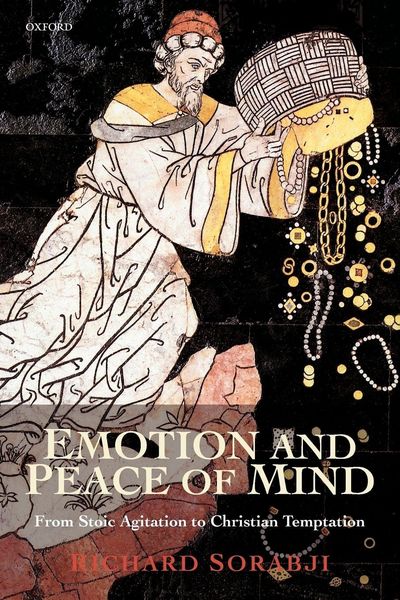
Produktbild: Emotion and Peace of Mind

Emotion and Peace of Mind From Stoic Agitation to Christian Temptation

95,99 €

inkl. gesetzl. MwSt., Versandkostenfrei


Beschreibung

Richard Sorabji presents a ground-breaking study of ancient Greek views of the emotions and their influence on subsequent theories and attitudes, pagan and Christian. The central focus of the book is the Stoics, but Sorabji draws on a vast range of texts to give a rich historical survey of how Western...

Beschreibung

Richard Sorabji presents a ground-breaking study of ancient Greek views of the emotions and their influence on subsequent theories and attitudes, pagan and Christian. The central focus of the book is the Stoics, but Sorabji draws on a vast range of texts to give a rich historical survey of how Western thinking about this central aspect of human nature developed. Stoicism is not, Sorabji makes clear, about gritting your teeth. It can successfully banish stress by showing you how to assess your situation differently. But there were rival views, that emotional stress depends on irrational forces in the mind, or, as modern brain research explains, physical forces in the body, so that changing your assessment is only sometimes effective. The debate also concerns the different roles of philosophy, music, and the arts in calming stress. Orthodox Stoics marginalized as mere side-effects the initial agitations which they could not treat. In Christianity we see how one culture can transform another. Sorabji shows how the Christians turned the Stoic theory of initial agitations into a theory of initial temptations and devised new techniques to combat what came to be called the seven cardinal sins. Emotion and Peace of Mind is a magisterial work of scholarship which will be fascinating for anyone with an interest in the emotions from a historical or contemporary perspective.

Produktdetails

Einband

Taschenbuch

Erscheinungsdatum

05.09.2002

Verlag Oxford University Press
Seitenzahl

512

Produktdetails

Einband

Taschenbuch

Erscheinungsdatum

05.09.2002

Verlag Oxford University Press
Seitenzahl

512

Maße (L/B/H)

23,4/15,6/2,8 cm

Gewicht

769 g

Sprache

Englisch

ISBN

978-0-19-925660-0

Herstelleradresse

Libri GmbH
Europaallee 1
36244 Bad Hersfeld
DE

Email: gpsr@libri.de

Noch keine Bewertungen vorhanden

Verfassen Sie die erste Bewertung zu diesem Artikel

Helfen Sie anderen Kundinnen und Kunden durch Ihre Meinung.

Kundinnen und Kunden meinen

Bewertungen (0)

  • Produktbild: Emotion and Peace of Mind
    • Introduction
    • Emotions as Judgements Versus Irrational Forces
    • 2: The Emotions as Value Judgements in Chrysippus
    • 3: Seneca's Defence: Third Movements as Harmonizing Chrysippus and Zeno
    • 4: Seneca's Defence: First Movements as Answering Posidonius
    • 5: The Arts: First Movements and Controversies on Drama and Music. Aristotle, Philodemus, and the Stoics
    • 6: Posidonius on the Irrational Forces in Emotion: Galen's Report
    • 7: Posidonius: Judgements Insufficient for Emotion. Exhaustion and Lack of Imagination
    • 8: Posidonius: Judgements Not Necessary for Emotion. Disowned Judgements, Animals, and Music
    • 9: Aspasius and Other Objections to Chrysippus
    • 10: What is Missing from the Judgemental Analysis? Brain Research and Limitations on Stoic Cognitive Therapy
    • Value of the Emotions, Cognitive Therapy, and the Role of Philosophy
    • 12: Stoic Indifference: A Barrier to Therapy?
    • 13: The Case for and against Eradication of Emotion
    • 14: The Traditions of Moderation and Eradication
    • 15: How the Ancient Exercises Work
    • 16: Exercises Concerned with Time and the Self
    • 17: Physiology and the Non-Cognitive: Galen's Alternative Approach to Emotion
    • 18: Sex, Love, and Marriage in Pagan Philosophy and the Use of Catharsis
    • 19: Catharsis and the Classification of Therapies
    • Emotional Conflict and Structure of the Mind
    • 21: The Concept of Will
    • From Stoic Agitations to Christian Temptations
    • 23: From First Movements to the Seven Cardinal Sins: Evagrius
    • 24: First Movements in Augustine: Adaptation and Misunderstanding
    • 25: Christians on Moderation versus Eradication
    • 26: Augustine on Lust and the Will
    • Bibliography of Secondary Sources Mentioned
    • Index of Ancient Thinkers
    • Index Locorum
    • Subject and Name Index