KI-Beratung Beta

Gutscheinbedingungen

**Gültig bis 30.11.2026 auf Spielzeug, Schreibwaren, Filme, Geschenke & Trends, Musik, tolino eReader & Zubehör, Hörbücher und Hörbuch-Downloads, nicht preisgebundene Bücher und Kalender online auf thalia.at und in der Thalia App. Einzelne Artikel können ausgeschlossen sein. Aufgrund der Buchpreisbindung sind deutschsprachige Bücher und eBooks ausgenommen. Zusätzlich ausgenommen sind Abos & Flatrates, Games, Geschenkkarten/-boxen, Shelfies, Software, Zeitschriften sowie einzelne Artikel von tonies®. Pro Einkauf einmal einlösbar. Nur gültig mit im Onlineshop hinterlegter Bonuscard. Click & Collect nur bei Onlinevorabzahlung möglich. Keine Barauszahlung. Nicht kombinierbar mit anderen Aktionen und Gutscheinen. Gutschein wird auf max. 500€ Bestellwert angerechnet. Nicht gültig für Versandkosten und Services.

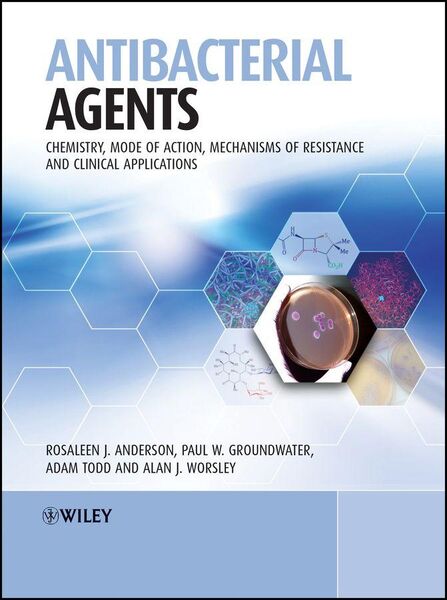
Produktbild: Antibacterial Agents

Antibacterial Agents Chemistry, Mode of Action, Mechanisms of Resistance and Clinical Applications

66,99 €

inkl. gesetzl. MwSt., Versandkostenfrei


Beschreibung

Antibacterial agents act against bacterial infection either by killing the bacterium or by arresting its growth. They do this by targeting bacterial DNA and its associated processes, attacking bacterial metabolic processes including protein synthesis, or interfering with bacterial cell wall synthesis...

Beschreibung

Antibacterial agents act against bacterial infection either by killing the bacterium or by arresting its growth. They do this by targeting bacterial DNA and its associated processes, attacking bacterial metabolic processes including protein synthesis, or interfering with bacterial cell wall synthesis and function.
 
Antibacterial Agents is an essential guide to this important class of chemotherapeutic drugs. Compounds are organised according to their target, which helps the reader understand the mechanism of action of these drugs and how resistance can arise. The book uses an integrated "lab-to-clinic" approach which covers drug discovery, source or synthesis, mode of action, mechanisms of resistance, clinical aspects (including links to current guidelines, significant drug interactions, cautions and contraindications), prodrugs and future improvements. Agents covered include:
 
* agents targeting DNA - quinolone, rifamycin, and nitroimidazole antibacterial agents
* agents targeting metabolic processes - sulfonamide antibacterial agents and trimethoprim
* agents targeting protein synthesis - aminoglycoside, macrolide and tetracycline antibiotics, chloramphenicol, and oxazolidinones
* agents targeting cell wall synthesis - ß-Lactam and glycopeptide antibiotics, cycloserine, isonaizid, and daptomycin
 
Antibacterial Agents will find a place on the bookshelves of students of pharmacy, pharmacology, pharmaceutical sciences, drug design/discovery, and medicinal chemistry, and as a bench reference for pharmacists and pharmaceutical researchers in academia and industry.

Produktdetails

Einband

Taschenbuch

Erscheinungsdatum

30.07.2012

Verlag John Wiley & Sons Inc
Seitenzahl

378

Produktdetails

Einband

Taschenbuch

Erscheinungsdatum

30.07.2012

Verlag John Wiley & Sons Inc
Seitenzahl

378

Maße (L/B/H)

24,6/18,9/2,2 cm

Gewicht

823 g

Auflage

1. Auflage

Sprache

Englisch

ISBN

978-0-470-97245-8

Herstelleradresse

Libri GmbH
Europaallee 1
36244 Bad Hersfeld
DE

Email: gpsr@libri.de

Noch keine Bewertungen vorhanden

Verfassen Sie die erste Bewertung zu diesem Artikel

Helfen Sie anderen Kundinnen und Kunden durch Ihre Meinung.

Kundinnen und Kunden meinen

Bewertungen (0)

Die Leseprobe wird geladen.
  • Produktbild: Antibacterial Agents
  • Preface xiii
     
    SECTION 1 INTRODUCTION TO MICROORGANISMS AND ANTIBACTERIAL CHEMOTHERAPY 1
     
    1.1 Microorganisms 3
     
    Key points 3
     
    1.1.1 Classification 3
     
    1.1.2 Structure 4
     
    1.1.3 Antibacterial targets 6
     
    1.1.4 Bacterial detection and identification 17
     
    1.1.5 Other than its mode of action, what factors determine the antibacterial activity of a drug? 25
     
    1.1.6 Bacterial resistance 27
     
    1.1.7 The 'post-antibiotic age'? 29
     
    References 31
     
    Questions 33
     
    SECTION 2 AGENTS TARGETING DNA 35
     
    2.1 Quinolone antibacterial agents 37
     
    Key points 37
     
    2.1.1 Discovery 37
     
    2.1.2 Synthesis 39
     
    2.1.3 Bioavailability 41
     
    2.1.4 Mode of action and selectivity 44
     
    2.1.5 Bacterial resistance 45
     
    2.1.6 Clinical applications 47
     
    2.1.7 Adverse drug reactions 50
     
    2.1.8 Drug interactions 55
     
    2.1.9 Recent developments 56
     
    References 60
     
    2.2 Rifamycin antibacterial agents 63
     
    Key points 63
     
    2.2.1 Discovery 63
     
    2.2.2 Synthesis 65
     
    2.2.3 Bioavailability 68
     
    2.2.4 Mode of action and selectivity 69
     
    2.2.5 Bacterial resistance 71
     
    2.2.6 Clinical applications 71
     
    2.2.7 Adverse drug reactions 77
     
    2.2.8 Drug interactions 78
     
    2.2.9 Recent developments 81
     
    References 81
     
    2.3 Nitroimidazole antibacterial agents 85
     
    Key points 85
     
    2.3.1 Discovery 85
     
    2.3.2 Synthesis 86
     
    2.3.3 Bioavailability 86
     
    2.3.4 Mode of action and selectivity 87
     
    2.3.5 Mechanisms of resistance 89
     
    2.3.6 Clinical applications 90
     
    2.3.7 Adverse drug reactions 94
     
    2.3.8 Drug interactions 95
     
    2.3.9 Recent developments 96
     
    References 97
     
    Questions 101
     
    SECTION 3 AGENTS TARGETING METABOLIC PROCESSES 103
     
    3.1 Sulfonamide antibacterial agents 105
     
    Key points 105
     
    3.1.1 Discovery 105
     
    3.1.2 Synthesis 107
     
    3.1.3 Bioavailability 108
     
    3.1.4 Mode of action and selectivity 111
     
    3.1.5 Bacterial resistance 114
     
    3.1.6 Clinical applications 115
     
    3.1.7 Adverse drug reactions 119
     
    3.1.8 Drug interactions 121
     
    3.1.9 Recent developments 123
     
    References 124
     
    3.2 Trimethoprim 127
     
    Key points 127
     
    3.2.1 Discovery 127
     
    3.2.2 Synthesis 128
     
    3.2.3 Bioavailability 130
     
    3.2.4 Mode of action and selectivity 130
     
    3.2.5 Bacterial resistance 136
     
    3.2.6 Clinical applications 136
     
    3.2.7 Adverse drug reactions 138
     
    3.2.8 Drug interactions 138
     
    3.2.9 Recent developments 139
     
    References 140
     
    Questions 145
     
    SECTION 4 AGENTS TARGETING PROTEIN SYNTHESIS 147
     
    4.1 Aminoglycoside antibiotics 149
     
    Key points 149
     
    4.1.1 Discovery 149
     
    4.1.2 Synthesis 152
     
    4.1.3 Bioavailability 156
     
    4.1.4 Mode of action and selectivity 158
     
    4.1.5 Bacterial resistance 160
     
    4.1.6 Clinical applications 161
     
    4.1.7 Adverse drug reactions 165
     
    4.1.8 Drug interactions 167
     
    4.1.9 Recent developments 168
     
    References 168
     
    4.2 Macrolide antibiotics 173
     
    Key points 173
     
    4.2.1 Discovery 173
     
    4.2.2 Synthesis 175
     
    4.2.3 Bioavailability 177
     
    4.2.4 Mode of action and selectivity 180
     
    4.2.5 Bacterial resistance 181
     
    4.2.6 Clinical applications