KI-Beratung Beta

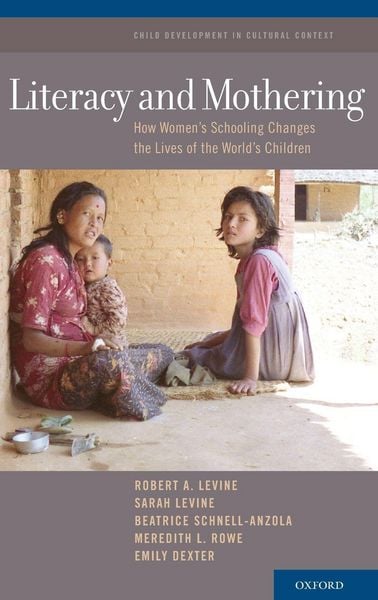
  • Produktbild: Literacy and Mothering
  • Produktbild: Literacy and Mothering

Literacy and Mothering

132,99 €

inkl. gesetzl. MwSt., Versandkostenfrei


Beschreibung

Women's schooling is strongly related to child survival and other outcomes beneficial to children throughout the developing world, but the reasons behind these statistical connections have been unclear. In Literacy and Mothering, the authors show, for the first time, how communicative change plays a...

Beschreibung

Women's schooling is strongly related to child survival and other outcomes beneficial to children throughout the developing world, but the reasons behind these statistical connections have been unclear. In Literacy and Mothering, the authors show, for the first time, how communicative change plays a key role: Girls acquire academic literacy skills, even in low-quality schools, which enable them, as mothers, to understand public health messages in the mass media and to navigate bureaucratic health services effectively, reducing risks to their children's health. With the acquisition of academic literacy, their health literacy and health navigation skills are enhanced, thereby reducing risks to children and altering interactions between mother and child. Assessments of these maternal skills in four diverse countries - Mexico, Nepal, Venezuela, and Zambia - support this model and are presented in the book.
Chapter 1 provides a brief history of mass schooling, including the development of a bureaucratic Western form of schooling. Along with the bureaucratic organization of healthcare services and other institutions, this form of mass schooling spread across the globe, setting new standards for effective communication - standards that are, in effect, taught in school. Chapter 2 reviews the demographic and epidemiological evidence concerning the effects of mothers' education on survival, health, and fertility. In this chapter, the authors propose a model that shows how women's schooling, together with urbanization and changes in income and social status, reduce child mortality and improve health. In Chapter 3, the authors examine the concept of literacy and discuss how its meanings and measurements have been changed by educational research of the last few decades. Chapter 4 introduces the four-country study of maternal literacy. Chapters 5, 6, and 7 present the findings, focusing on academic literacy and its retention (Chapter 5), its impact on maternal health literacy and navigation skills (Chapter 6), and changes in mother-child interaction and child literacy skills (Chapter 7). Chapter 8 presents a new analysis of school experience, explores policy implications, and recommends further research.

Produktdetails

Einband

Gebundene Ausgabe

Erscheinungsdatum

30.11.2011

Abbildungen

5 B/W HT, 5 B/W Line

Verlag Oxford University Press

Produktdetails

Einband

Gebundene Ausgabe

Erscheinungsdatum

30.11.2011

Abbildungen

5 B/W HT, 5 B/W Line

Verlag Oxford University Press
Seitenzahl

224

Maße (L/B/H)

24/16,1/1,7 cm

Gewicht

505 g

Sprache

Englisch

ISBN

978-0-19-530982-9

Herstelleradresse

Libri GmbH
Europaallee 1
36244 Bad Hersfeld
DE

Email: gpsr@libri.de

Noch keine Bewertungen vorhanden

Verfassen Sie die erste Bewertung zu diesem Artikel

Helfen Sie anderen Kundinnen und Kunden durch Ihre Meinung.

Kundinnen und Kunden meinen

Bewertungen (0)

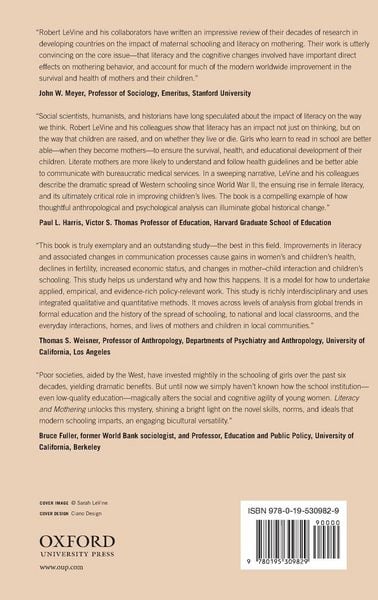
  • Produktbild: Literacy and Mothering
  • Produktbild: Literacy and Mothering
    • Foreword

    • By Michael Cole

    • Part I. Theoretical Background: Historical and Sociological Perspectives

    • Chapter 1

    • The Rise and Spread of Western Schooling

    • Chapter 2

    • Women's Schooling and Social Change in the Developing World after 1950

    • Chapter 3

    • Re-Defining Literacy: A Theory of Bureaucratic Schooling

    • Part II. Maternal Literacy in Less Developed Countries

    • Chapter 4

    • Contexts of Mothers' Lives: The Four-Country Study

    • Chapter 5

    • Retention of Academic Literacy Skills

    • Chapter 6

    • Mothers as Pupils in Health Care Settings

    • Chapter 7

    • Mothers as Teachers at Home

    • Part III. Conclusions: The Processes of Global Change

    • Chapter 8

    • Communicative Processes: Schooling, Literacy and Maternal Behavior

    • Appendix A: Literacy Assessment Methods

    • Appendix B: Statistical Data