Gutscheinbedingungen

**Gültig von 22.06.2026 ab 19 Uhr bis 23.06.2026 24 Uhr auf Spielzeug, Schreibwaren, Filme, Geschenke & Trends, Musik, tolino eReader & Zubehör, Hörbücher und Hörbuch-Downloads (außer Abo), nicht preisgebundene Bücher und Kalender online auf thalia.at und in der Thalia App. Einzelne Artikel können ausgeschlossen sein. Aufgrund der Buchpreisbindung sind deutschsprachige Bücher und eBooks ausgenommen. Zusätzlich ausgenommen sind preisgebundene Artikel, Abos & Flatrates, eBooks, Games, Geschenkkarten/-boxen, Shelfies, Software, Zeitschriften sowie einzelne Artikel von tonies®. Pro Einkauf einmal einlösbar. Click & Collect nur bei Onlinevorabzahlung möglich. Keine Barauszahlung. Nicht kombinierbar mit anderen Aktionen und Gutscheinen. Gutschein wird auf max. 500€ Bestellwert angerechnet. Nicht gültig für Versandkosten und Services.

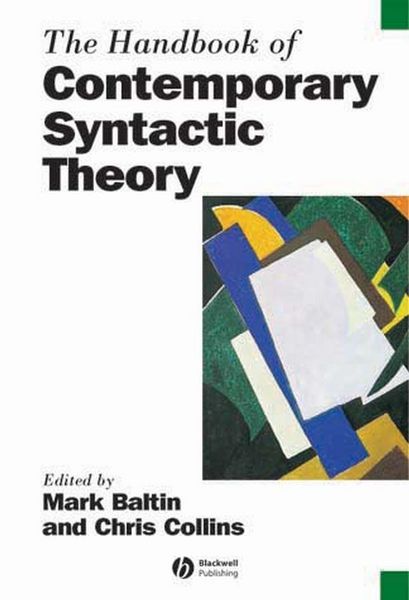
Produktbild: The Handbook of Contemporary Syntactic Theory

The Handbook of Contemporary Syntactic Theory

121,99 €

inkl. gesetzl. MwSt., Versandkostenfrei


Beschreibung

Produktdetails

Einband

Taschenbuch

Erscheinungsdatum

24.02.2003

Herausgeber

Mark Baltin + weitere

Verlag

John Wiley & Sons Inc

Seitenzahl

880

Maße (L/B/H)

24,5/16,9/5 cm

Gewicht

1494 g

Sprache

Englisch

ISBN

978-1-4051-0253-7

Beschreibung

Rezension

" The Handbook of Contemporary Syntactic Theory is an extraordinary accomplishment. Baltin and Collins have succeeded in assembling a sizeable number of the world s leading syntacticians, each of whom has produced a readable overview of the issues in his or her area of specialization. It is to the credit of the editors that this book is valuable both as a reference work and as a critical evaluation of current thinking. All linguists, not just syntacticians, stand to benefit from having a copy within reach." Frederick J. Newmeyer, University of Washington

"Here is yet another impressive addition to Blackwell s series of Handbooks in Linguistics" Canadian Journal of Linguistics

Produktdetails

Einband

Taschenbuch

Erscheinungsdatum

24.02.2003

Herausgeber

Verlag

John Wiley & Sons Inc

Seitenzahl

880

Maße (L/B/H)

24,5/16,9/5 cm

Gewicht

1494 g

Sprache

Englisch

ISBN

978-1-4051-0253-7

Kundinnen und Kunden meinen

0 Bewertungen

Informationen zu Bewertungen

Zur Abgabe einer Bewertung ist eine Anmeldung im Konto notwendig. Die Authentizität der Bewertungen wird von uns nicht überprüft. Wir behalten uns vor, Bewertungstexte, die unseren Richtlinien widersprechen, entsprechend zu kürzen oder zu löschen.

Die Bewertungen sind nach Format, Anzahl Sterne und Datum sortiert.

Verfassen Sie die erste Bewertung zu diesem Artikel

Helfen Sie anderen Kund*innen durch Ihre Meinung

Kundinnen und Kunden meinen

0 Bewertungen filtern

  • Produktbild: The Handbook of Contemporary Syntactic Theory
  • Contributors.

    Introduction.

    Part I: Derivation Versus Representation:.

    1. Explaining Morphosyntactic Competition: Joan Bresnan (Stanford University).

    2. Economy Conditions in Syntax: Chris Collins (Cornell University).

    3. Derivation and Representation in Modern Transformational Syntax: Howard Lasnik (University of Connecticut).

    4. Relativized Minimality Effects: Luigi Rizzi (Université de Geneve).

    Part II: Movement:.

    5. Head Movement: Ian Roberts (University of Stuttgart).

    6. Object Shift and Scrambling: Höskuldur Thráinsson (University of Iceland).

    7. Wh-in-situ Languages: Akira Watanabe (University of Tokyo).

    8. A-Movements: Mark Baltin (New York University).

    Part III: Argument Structure and Phrase Structure:.

    9. Thematic Relations in Syntax: Jeffrey S. Gruber (independent scholar).

    10. Predication: John Bowers (Cornell University).

    11. Case: Hiroyuki Ura.

    12. Phrase Structure: Naoki Fukui (University of California).

    13. The Natures of Nonconfigurationality: Mark C. Baker (McGill University).

    14. What VP Ellipsis Can Do, and What it Can't, but not Why: Kyle Johnson (University of Massachusetts at Amherst).

    Part IV: Functional Projections:.

    15. Agreement Projections: Adriana Belletti (Universitá di Siena).

    16. Sentential Negation: Raffaella Zanuttini (Georgetown University).

    17. The DP Hypothesis: Identifying Clausal Properties in the Nominal Domain: Judy B. Bernstein (Syracuse University).

    18. The Structure of DPs: Some Principles, Parameters and Problems: Giuseppe Longobardi (University of Trieste).

    Part V: Interface With Interpretation:.

    19. The Syntax of Scope: Anna Szabolcsi (New York University).

    20. Deconstructing Binding: Eric Reuland and Martin Everaert (both Utrecht Institute of Linguistics).

    21. Syntactic Reconstruction Effects: Andrew Barss (University of Arizona).

    Part VI: External Evaluation of Syntax:.

    22. Syntactic Change: Anthony S. Kroch (University of Pennsylvania).

    23. Setting Syntactic Parameters: Janet Dean Fodor (City University of New York).

    Bibliography.

    Index.