
KI-Beratung Beta

Gutscheinbedingungen

**Gültig am 01.10.2026 ab einem Mindestbestellwert von 30€ auf Spielzeug, Schreibwaren, Filme, Geschenke & Trends, Musik, tolino eReader & Zubehör, Hörbücher und Hörbuch-Downloads, nicht preisgebundene Bücher und Kalender online auf thalia.at und in der Thalia App. Einzelne Artikel können ausgeschlossen sein. Aufgrund der Buchpreisbindung sind deutschsprachige Bücher und eBooks ausgenommen. Zusätzlich ausgenommen sind Abos & Flatrates, Games, Geschenkkarten/-boxen, Shelfies, Software, Zeitschriften sowie einzelne Artikel von tonies®. Pro Einkauf einmal einlösbar. Click & Collect nur bei Onlinevorabzahlung möglich. Keine Barauszahlung. Nicht kombinierbar mit anderen Aktionen und Gutscheinen. Gutschein wird auf max. 500€ Bestellwert angerechnet. Nicht gültig für Versandkosten und Services. Preisgebundene Artikel sind vom Mindestbestellwert ausgeschlossen.

  • Produktbild: Organic Chemistry in Colour
  • Produktbild: Organic Chemistry in Colour

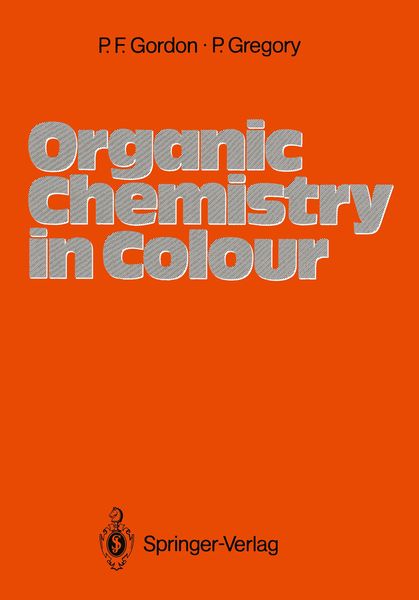
Organic Chemistry in Colour

Aus der Reihe Springer Study Edition

49,99 €

inkl. gesetzl. MwSt., Versandkostenfrei


Beschreibung

Produktdetails

Einband

Taschenbuch

Erscheinungsdatum

01.12.1986

Abbildungen

XI, 322 p.

Verlag

Springer Berlin

Seitenzahl

322

Maße (L/B/H)

24,4/17/1,9 cm

Gewicht

588 g

Auflage

1987

Sprache

Englisch

ISBN

978-3-540-17260-4

Beschreibung

Produktdetails

Einband

Taschenbuch

Erscheinungsdatum

01.12.1986

Abbildungen

XI, 322 p.

Verlag

Springer Berlin

Seitenzahl

322

Maße (L/B/H)

24,4/17/1,9 cm

Gewicht

588 g

Auflage

1987

Sprache

Englisch

ISBN

978-3-540-17260-4

Herstelleradresse

Springer-Verlag GmbH
Tiergartenstr. 17
69121 Heidelberg
DE

Email: ProductSafety@springernature.com

Noch keine Bewertungen vorhanden

Verfassen Sie die erste Bewertung zu diesem Artikel

Helfen Sie anderen Kundinnen und Kunden durch Ihre Meinung.

Kundinnen und Kunden meinen

Bewertungen (0)

  • Produktbild: Organic Chemistry in Colour
  • Produktbild: Organic Chemistry in Colour
  • 1 The Development of Dyes.- 1.1 Introduction.- 1.2 Pre-Perkin Era — The Natural Dyes.- 1.3 Perkin and Beyond — The Synthetic Dyes.- 1.4 Future Trends.- 1.5 Summary.- 1.6 Bibliography.- 2 Classification and Synthesis of Dyes.- 2.1 Introduction.- 2.2 Classification of Dyes.- 2.3 Synthesis of Dye Intermediates.- 2.4 Synthesis of Dyes.- 2.5 Summary.- 2.6 Bibliography.- 3 Azo Dyes.- 3.1 Introduction.- 3.2 Basic Structure of Azo Dyes.- 3.3 Tautomerism.- 3.4 Metal Complex Azo Dyes.- 3.5 Colour and Constitution.- 3.6 Summary.- 3.7 Bibliography.- 4 Anthraquinone Dyes.- 4.1 Introduction.- 4.2 Structure of Anthraquinone Dyes.- 4.3 Tautomerism.- 4.4 Protonated and Ionised Anthraquinone Dyes.- 4.5 Metal Complexed Anthraquinone Dyes.- 4.6 Colour and Constitution.- 4.7 Summary.- 4.8 Bibliography.- 5 Miscellaneous Dyes.- 5.1 Introduction.- 5.2 Vat Dyes.- 5.3 Indigoid Dyes.- 5.4 The Phthalocyanines.- 5.5 Polymethine Dyes.- 5.6 Di- and Tri-aryl Carbonium Dyes and their Derivatives.- 5.7 Nitro (and Nitroso) Dyes.- 5.8 Summary.- 5.9 Bibliography.- 6 Application and Fastness Properties of Dyes.- 6.1 Introduction.- 6.2 Textile Fibres — Types and Structures.- 6.3 Application and Wet Fastness of Dyes.- 6.4 Light Fastness of Dyes.- 6.5 Photochromism.- 6.6 Heat Fastness of Dyes.- 6.7 Bleach Fastness of Dyes.- 6.8 Metamerism.- 6.9 Solvatochromism.- 6.10 Summary.- 6.11 Bibliography.- Appendix I.- Appendix II.- Author Index.