Gutscheinbedingungen

**Gültig von 22.06.2026 ab 19 Uhr bis 23.06.2026 24 Uhr auf Spielzeug, Schreibwaren, Filme, Geschenke & Trends, Musik, tolino eReader & Zubehör, Hörbücher und Hörbuch-Downloads (außer Abo), nicht preisgebundene Bücher und Kalender online auf thalia.at und in der Thalia App. Einzelne Artikel können ausgeschlossen sein. Aufgrund der Buchpreisbindung sind deutschsprachige Bücher und eBooks ausgenommen. Zusätzlich ausgenommen sind preisgebundene Artikel, Abos & Flatrates, eBooks, Games, Geschenkkarten/-boxen, Shelfies, Software, Zeitschriften sowie einzelne Artikel von tonies®. Pro Einkauf einmal einlösbar. Click & Collect nur bei Onlinevorabzahlung möglich. Keine Barauszahlung. Nicht kombinierbar mit anderen Aktionen und Gutscheinen. Gutschein wird auf max. 500€ Bestellwert angerechnet. Nicht gültig für Versandkosten und Services.

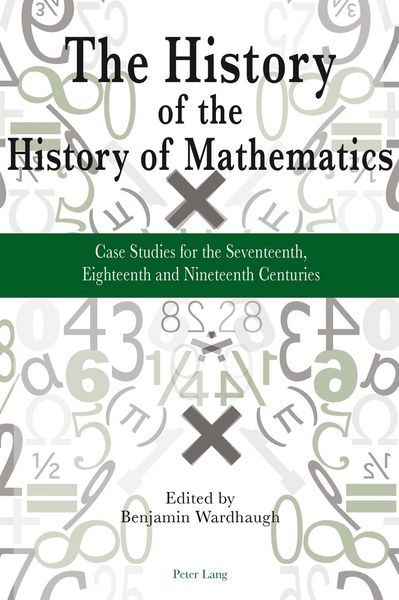
  • Produktbild: The History of the History of Mathematics
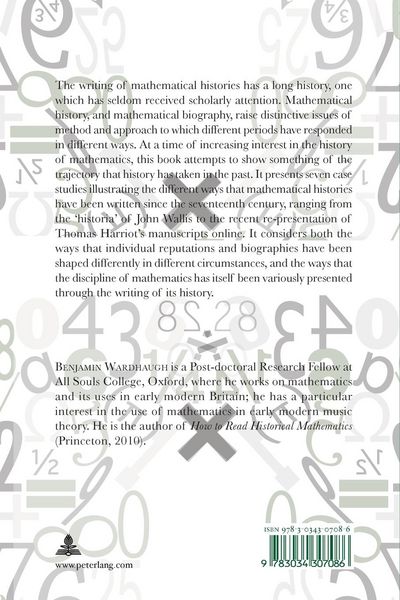
  • Produktbild: The History of the History of Mathematics

The History of the History of Mathematics Case Studies for the Seventeenth, Eighteenth and Nineteenth Centuries

53,50 €

inkl. gesetzl. MwSt., Versandkostenfrei


Beschreibung

Produktdetails

Einband

Taschenbuch

Erscheinungsdatum

18.01.2012

Herausgeber

Benjamin Wardhaugh

Verlag

Peter Lang Group AG, International Academic Publishers

Seitenzahl

187

Maße (L/B/H)

22,5/15/1,1 cm

Gewicht

281 g

Auflage

1. Auflage

Sprache

Englisch

ISBN

978-3-0343-0708-6

Beschreibung

Rezension

«Benjamin Wardhaugh's collection of case studies ranging over two centuries does a fine job of bringing to life this complex history. It also, implicitly, suggests a way forward at a time of renewed interest in the field: to overcome the insularity that has caused one leading member to refer to it as a 'ghetto discipline' the field must once again make itself relevant to studies of human life and culture.» (Amir Alexander, Metascience 05/2013)

Portrait

Benjamin Wardhaugh is a Post-doctoral Research Fellow at All Souls College, Oxford, where he works on mathematics and its uses in early modern Britain; he has a particular interest in the use of mathematics in early modern music theory. He is the author of How to Read Historical Mathematics (2010).

Zitat

«Benjamin Wardhaugh’s collection of case studies ranging over two centuries does a fine job of bringing to life this complex history. It also, implicitly, suggests a way forward at a time of renewed interest in the field: to overcome the insularity that has caused one leading member to refer to it as a ‘ghetto discipline’ the field must once again make itself relevant to studies of human life and culture.» (Amir Alexander, Metascience 05/2013)

Produktdetails

Einband

Taschenbuch

Erscheinungsdatum

18.01.2012

Herausgeber

Benjamin Wardhaugh

Verlag

Peter Lang Group AG, International Academic Publishers

Seitenzahl

187

Maße (L/B/H)

22,5/15/1,1 cm

Gewicht

281 g

Auflage

1. Auflage

Sprache

Englisch

ISBN

978-3-0343-0708-6

EU-Ansprechpartner

Zeitfracht Medien GmbH
Ferdinand-Jühlke-Straße 7|99095|Erfurt|DE
produktsicherheit@zeitfracht.de

Herstelleradresse

Peter Lang
Avenue du Théâtre 7|1005|Lausanne|CH
orders@peterlang.com

Kundinnen und Kunden meinen

0 Bewertungen

Informationen zu Bewertungen

Zur Abgabe einer Bewertung ist eine Anmeldung im Konto notwendig. Die Authentizität der Bewertungen wird von uns nicht überprüft. Wir behalten uns vor, Bewertungstexte, die unseren Richtlinien widersprechen, entsprechend zu kürzen oder zu löschen.

Die Bewertungen sind nach Format, Anzahl Sterne und Datum sortiert.

Verfassen Sie die erste Bewertung zu diesem Artikel

Helfen Sie anderen Kund*innen durch Ihre Meinung

Kundinnen und Kunden meinen

0 Bewertungen filtern

  • Produktbild: The History of the History of Mathematics
  • Produktbild: The History of the History of Mathematics
  • Contents: Philip Beeley: The progress of Mathematick Learning: John Wallis as historian of mathematics – Benjamin Wardhaugh: ‘It must have commenced with mankind’: some ancient histories of arithmetic in eighteenth-century Britain – Rebekah Higgitt: The ‘epitome of intellectual sagacity’: Biographical treatments of Newton as a mathematician – Niccolò Guicciardini: The Quarrel on the Invention of the Calculus in Jean E. Montucla and Joseph Jérôme de Lalande, Histoire des Mathématiques (1758/1799-1802) – Adrian Rice: Vindicating Leibniz in the calculus priority dispute: The role of Augustus De Morgan – Henrik Kragh Sørensen: Reading Mittag-Leffler’s biography of Abel as an act of mathematical self-fashioning – Jacqueline Stedall: Thomas Harriot (1560-1621): history and historiography.