Gutscheinbedingungen

**Gültig bis 25.06.2026 auf fremdsprachige Bücher online auf thalia.at und in der Thalia App. Einzelne Artikel können ausgeschlossen sein. Ausgenommen sind preisgebundene Artikel & eBooks. Pro Einkauf einmal einlösbar. Click & Collect nur bei Onlinevorabzahlung möglich. Keine Barauszahlung. Nicht kombinierbar mit anderen Aktionen und Gutscheinen. Gutschein wird auf max. 500€ Bestellwert angerechnet. Nicht gültig für Geschenkkarten, Versandkosten und Services.

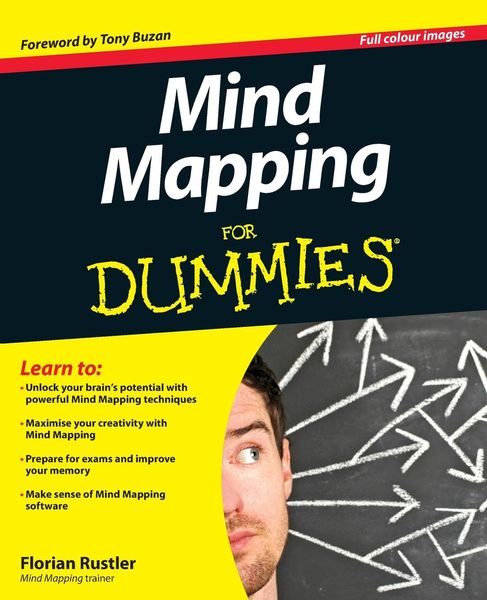
Produktbild: Mind Mapping For Dummies

Mind Mapping For Dummies

22,99 €

inkl. gesetzl. MwSt., zzgl. Versandkosten


  • Kostenlose Lieferung ab 30 € Einkaufswert
  • Versandkostenfrei für Bonuscard-Kund*innen

Beschreibung

Produktdetails

Einband

Taschenbuch

Erscheinungsdatum

05.06.2012

Verlag

Wiley

Seitenzahl

272

Maße (L/B/H)

23,5/19,1/1,5 cm

Gewicht

703 g

Sprache

Englisch

ISBN

978-1-119-96915-0

Beschreibung

Produktdetails

Einband

Taschenbuch

Erscheinungsdatum

05.06.2012

Verlag

Wiley

Seitenzahl

272

Maße (L/B/H)

23,5/19,1/1,5 cm

Gewicht

703 g

Sprache

Englisch

ISBN

978-1-119-96915-0

Herstelleradresse

Libri GmbH
Europaallee 1
36244 Bad Hersfeld
DE

Email: Libri GmbH

Kundinnen und Kunden meinen

0 Bewertungen

Informationen zu Bewertungen

Zur Abgabe einer Bewertung ist eine Anmeldung im Konto notwendig. Die Authentizität der Bewertungen wird von uns nicht überprüft. Wir behalten uns vor, Bewertungstexte, die unseren Richtlinien widersprechen, entsprechend zu kürzen oder zu löschen.

Die Bewertungen sind nach Format, Anzahl Sterne und Datum sortiert.

Verfassen Sie die erste Bewertung zu diesem Artikel

Helfen Sie anderen Kund*innen durch Ihre Meinung

Kundinnen und Kunden meinen

0 Bewertungen filtern

Die Leseprobe wird geladen.
  • Produktbild: Mind Mapping For Dummies
  • Foreword xvii

    Introduction 1

    About This Book 1

    Conventions Used in This Book 2

    Foolish Assumptions 2

    How This Book is Organised 2

    Part I: Mind Mapping: The Swiss Army Knife for the Brain 3

    Part II: Traditional Mind Mapping in Practice 3

    Part III: Mind Mapping Software 3

    Part IV: Advanced Strategies for Mind Mapping 3

    Part V: The Part of Tens 4

    Icons Used in This Book 4

    Where to Go from Here 4

    Part I: Mind Mapping: The Swiss Army Knife for the Brain 7

    Chapter 1: Introducing Mind Mapping 9

    Presenting Information Visually 9

    Give it a try! 10

    Taking the Mind Map a stage further 12

    A little reflection please 13

    A Simple Technique with Many Applications 14

    'Cribs' for lectures and presentations 15

    Taking notes from texts and books 15

    Taking notes from presentations and discussions 15

    Project management 16

    Knowledge management 16

    Pen and Paper or Computer? 17

    Revising Mind Maps 18

    Advanced Strategies Using Mind Mapping 19

    Chapter 2: Visualising Information 21

    How and Why Visualisation Can Help You 21

    Text as a form of visual information 22

    Reducing complexity and presenting information in a different way 22

    Two examples 22

    Visualising Information as a Core Skill 24

    What science has to say 25

    The visualisation method used for Mind Mapping 27

    Chapter 3: Generating Mind Maps 29

    The Basic Rules: Helping You to Use Mind Mapping Effectively 30

    Branches - it's all connected 30

    Keywords instead of phrases 32

    The exception proves the rule 34

    A Picture Says More Than a Thousand Words 35

    Colours - not just pretty to look at 35

    Your personal set of symbols 36

    Boxes and clouds - highlighting what's important 38

    Making arrow connections quite clear 39

    Chapter 4: Why Mind Mapping Works 41

    Different Routes to Information 42

    Pictures: Unique and unforgettable 43

    A picture says more than a thousand words 44

    How we think 45

    Mind Mapping as a Brain-Friendly Technique 46

    More Than Just the Sum of its Parts 48

    The big picture and details 48

    More information dimensions and greater information density 48

    Part II: Traditional Mind Mapping in Practice 51

    Chapter 5: Preparing Talks and Lectures Using Mind Maps 53

    Freedom and Flexibility with Mind Maps at All Times 53

    Preparing Lectures: Step by Step 55

    Step 1: Marshalling your initial thoughts 55

    Step 2: Determining the main themes 57

    Step 3: Adding detail 58

    Step 4: Testing the Mind Map 59

    And Now for an Example 59

    Chapter 6: Handling Text with Mind Mapping 61

    Converting Text and Sentences into a Mind Map 61

    Example: Motivation 62

    Example: Email guideline 65

    Interlude: Scientific Definitions as a Mind Map 67

    Processing Whole Books with Mind Mapping 68

    The best way of dealing with the text 70

    Chapter 7: Note-Taking in Talks, Lectures and Meetings 73

    Block Text or Mind Map 73

    Characteristics of talks, lectures and meetings 75

    Give it a try! 77

    Colour and symbol codes 79

    Informative Conversations 80

    Just Write It Out - Using Your Wandering Thoughts 80

    Mind Mapping = in - out to the power of ten 81

    Part III: Mind Mapping Software 83

    Chapter 8: Software versus Traditional Mind Mapping 85

    Software versus Pen and Paper - The Main Differences 86

    The advantages of Mind-Mapping software over pen and paper 88

    Mind-Mapping Software = Mind Mapping Reloaded 91

    Chapter 9: Taking a Tour of Mind-Mapping Software 93

    Suggested Programs - Genuine Mind Mapping 93

    Overview of Desktop Programs 94

    Aviz Thoughtmapper 95

    Concept Draw MindMap 96

    EMINEC MYmap 97

    freemind - really free 98

    iMindMap - from the inventor of Mind Mapping 99

    Inspiration - recommended for schools 100

    MindGenius 101

    Mindjet MindManager - the market leader 102

    MindVisualizer - particularly simple 103

    MindMapper 104

    Novamind 105

    Matchware MindView 3 106

    XMind - the basic version is free 107

    Web-Based Mind-Mapping Programs 108

    Mapmyself 108

    Mind42 - simple and free of charge 109

    MindMeister 109

    Mindomo 110

    Comparing Software Packages 111

    Chapter 10: Introducing Mindjet MindManager 113

    The Basics: Finding Your Way Around 114

    Important control keys 115

    Keeping it neat and tidy: Formatting options 115

    Quick notes within branches 116

    Hyperlinks - Integrating More Information into a Mind Map 118

    Inserting hyperlinks - how it works 119

    Less is More: Filter Functions 120

    Simple but useful: Fading branches in and out 121

    Power filter: Filtering by specific criteria 122

    Project Management with GANTT Diagrams 124

    Adding task information to branches 124

    Exporting and Processing 126

    Sharing your Mind Map 127

    Mindjet Player - interactive pdf document 128

    pdf - easy and practical 128

    Image fi les for integration into other documents 128

    Pack&Go - and all the links work 128

    Word - presenting a Mind Map as a linear document 129

    PowerPoint - from branches to bullet points 129

    Presentation Mode: From Mind Map to Presentation in a Single Click 131

    Chapter 11: Exploring ThinkBuzan's iMindMap 133

    Basic Use - Finding Your Way Around 134

    Branches 135

    Three kinds of branch 137

    Two Input Methods: Mind Mapping and Speed Mind Mapping 138

    Speed Mind Mapping - how it works 138

    Formatting with iMindMap 138

    SmartLayout: From linear to radial Mind Maps 140

    Project-management mode: GANTT view 142

    Project Management with iMindMap, Step by Step 143

    Step 1: Select the branches concerned 143

    Step 2: Inputting task details 144

    Step 3: Adjusting views 145

    Presenting the Mind Map 145

    Really quite presentable: Presentation mode 145

    An alternative: Exporting as a PowerPoint presentation 147

    Part IV: Advanced Strategies for Mind Mapping 149

    Chapter 12: Mind Mapping Reading Techniques 151

    Appreciating the Fine Art of Preparation 152

    Step 1: Skimming the text 152

    Step 2: Recalling background knowledge 153

    Step 3: Setting questions and aims 153

    Honing the Reading Process 154

    Step 1: Skim reading 155

    Step 2: Preview 155

    Step 3: Immersion 156

    Step 4: Difficult passages 156

    For Advanced Students: Generating a Mind Map from Different Sources 159

    Chapter 13: Learning and Preparing for Exams with Mind Mapping 161

    Preparing for Exams 161

    Step 1: Taking Mind-Mapping notes 162

    Generating special Study Mind Maps 163

    Step 2: Entering your own thoughts 163

    Step 3: Revising regularly 164

    Step 4: Explaining it to others 165

    Especially for Students: Generating Study Mind Maps from Different Sources 165

    Chapter 14: Project Management with Mind Mapping 169

    'One Page Management': Everything on a Single Page 169

    Software is Sensible 170

    Projects You Can Plan and Control with Mind Maps 172

    Structuring projects with Mind Mapping 172

    Further Examples of Mind Mapping in Project Management 177

    Planning a business trip 177

    Managing distance learning 179

    Chapter 15: Knowledge Management with Mind Mapping 181

    Keeping Your Eye on the Ball 181

    Assembling Digital Information in a Mind Map 182

    Example: Personal start centre 183

    Multi-Level Mind Maps 185

    Managing scientific work with Mind Maps 186

    More Ways of Using and Applying Mind Maps 188

    Chapter 16: Mind Mapping for Creativity 189

    The 4P Creativity Model 190

    Creativity yields results 190

    It's a personal thing 191

    Modelling the creative process 191

    Principles of creativity - two-stage thinking 193

    Example: Publishing an eye-catching book 193

    Mind Mapping as a Support in the Creative Process 194

    Me on my own (no groups) 194

    Using Mind Mapping in the second stage 196

    Developing and Ordering Ideas with MindManager: A Step-by-Step Approach 196

    Step 1: Formulating an issue 197

    Step 2: Inputting ideas 198

    Step 3: Evaluating ideas 198

    Step 4: Structuring ideas 201

    Part V: The Part of Tens 203

    Chapter 17: Ten Tips for Working Efficiently with Mind Mapping 205

    Using the Right Paper 205

    Having the Right Equipment Ready 206

    Using the One-Word Rule 207

    Working with Symbols 207

    Perfection Not Required! 208

    Writing in Block Capitals 209

    On Paper: Organic Mind Maps 209

    Writing in Reading Order 210

    Developing Mind Maps Outwards and Not Writing Vertically 211

    Storing Your Mind Maps 212

    Filing away hand-drawn Mind Maps 212

    Generating master copies 213

    Using tablet PCs 213

    Chapter 18: (Almost) Ten Tips on How to Make Mind Mapping Your Everyday Working Tool 215

    Practise, Practise and Practise Again! 215

    Start Small and Take It From There 216

    Trying It in Non-Critical Situations 218

    Don't Make Mixed Notes 218

    Having Materials Always to Hand 219

    Making Mind Maps Visually Appealing 220

    Have Fun! 220

    Drawing Maps by Hand and with Software 221

    Choosing Your Software 221

    Index 223