
KI-Beratung Beta

Gutscheinbedingungen

**Gültig bis 09.11.2026 auf tolino shine color (4016621130473), tolino vision color (4016621130183) und tolino vision color weiß (4016621131456) online auf thalia.at, in der Thalia App und in allen Thalia Buchhandlungen in Österreich. In den Buchhandlungen nur gültig auf lagernde Ware. Pro Einkauf einmal einlösbar. Nur gültig gegen Vorlage oder im Onlineshop hinterlegter Bonuscard. Infos zur Einlösung in der Buchhandlung sind auf der Bonuscard-Vorteilspreisseite zu finden. Click & Collect nur bei Onlinevorabzahlung möglich. Keine Einlösung bei Scan & Go-Bezahlung. Keine Barauszahlung. Nicht kombinierbar mit anderen Aktionen und Gutscheinen. Nicht gültig für Geschenkkarten, Versandkosten und Services. Nur solange der Vorrat reicht.

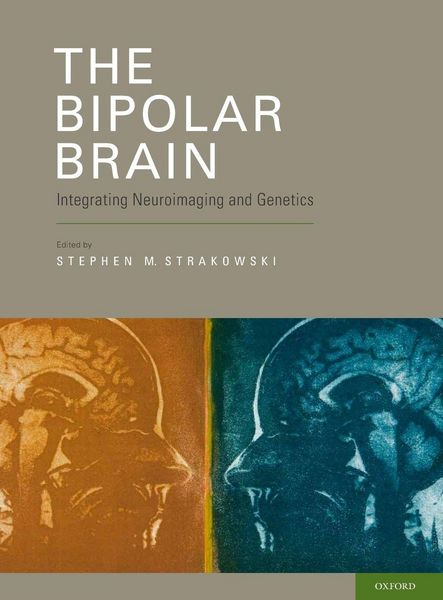
  • Produktbild: The Bipolar Brain
  • Produktbild: The Bipolar Brain

The Bipolar Brain Integrating Neuroimaging and Genetics

269,99 €

inkl. gesetzl. MwSt., Versandkostenfrei


Beschreibung

Produktdetails

Einband

Gebundene Ausgabe

Erscheinungsdatum

01.07.2012

Abbildungen

66 illustrations

Herausgeber

Stephen Strakowski

Verlag

Oxford Academic

Seitenzahl

296

Maße (L/B/H)

28,6/22,1/2,1 cm

Gewicht

1010 g

Sprache

Englisch

ISBN

978-0-19-979760-8

Beschreibung

Produktdetails

Einband

Gebundene Ausgabe

Erscheinungsdatum

01.07.2012

Abbildungen

66 illustrations

Herausgeber

Stephen Strakowski

Verlag

Oxford Academic

Seitenzahl

296

Maße (L/B/H)

28,6/22,1/2,1 cm

Gewicht

1010 g

Sprache

Englisch

ISBN

978-0-19-979760-8

Herstelleradresse

Libri GmbH
Europaallee 1
36244 Bad Hersfeld
DE

Email: gpsr@libri.de

Noch keine Bewertungen vorhanden

Verfassen Sie die erste Bewertung zu diesem Artikel

Helfen Sie anderen Kundinnen und Kunden durch Ihre Meinung.

Kundinnen und Kunden meinen

Bewertungen (0)

Die Leseprobe wird geladen.
  • Produktbild: The Bipolar Brain
  • Produktbild: The Bipolar Brain
    • Section I: How neuroimaging informs models of bipolar disorder.
    • Chapter 1. Brain imaging techniques and their application to bipolar disorder.
    • by Caleb M. Adler and Michael Cerullo
    • Chapter 2. Structural brain abnormalities in bipolar disorder.
    • by Koji Matsuo, Marsal Sanches, Paolo Brambilla, and Jair C. Soares
    • Chapter 3. Functional brain imaging in bipolar disorder
    • by Lori L. Altshuler and Jennifer Townsend
    • Chapter 4. Neurochemical and metabolic imaging in bipolar disorder
    • by Jieun E Kim, In Kyoon Lyoo, and Perry F Renshaw,
    • Chapter 5. Neuroimaging studies of bipolar disorder in youth.
    • by Manpreet K. Singh, Melissa P. DelBello, and Kiki D. Chang
    • Chapter 6. Neuroimaging difference between bipolar and unipolar depression.
    • by Amelia Versace, Jorge R.C. Almeida, and Mary L. Phillips
    • Chapter 7. Neuroimaging in bipolar disorder and schizophrenia.
    • by Heather Whalley, Jessika Sussman, and Andrew M. McIntosh
    • Section II: How genetic research informs models of bipolar disorder.
    • Chapter 8. Genetic techniques and their application to bipolar disorder.
    • by Aaron C. Vederman and Melvin G. McInnis
    • Chapter 9. General genetic findings in bipolar disorder.
    • by John I. Nurnberger, Jr.
    • Chapter 10. Genetics of bipolar disorder and schizophrenia.
    • by Michael E. Talkowski, Kodavali V Chowdari, Hader Mansour, K M Prasad, Joel Wood, and Vishwajit L Nimgaonkar
    • Chapter 11. Mitochondrial genetics and bipolar disorder.
    • by Hayley B. Clay, Satoshi Fuke, Tadafumi Kato, and Christine Konradi
    • Section III: Integration and future directions.
    • Chapter 12. Personalized medicine - can genetics and imaging inform treatment
    • by Roy H. Perlis and Hilary P. Blumberg
    • Chapter 13. Integration and consolidation - a neurophysiological model of bipolar disorder.
    • by Stephen M. Strakowski