Gutscheinbedingungen

**Gültig nur für Bestellungen an die Wunsch-Poststation bis 10.06.2026 auf Spielzeug, Schreibwaren, Filme, Geschenke & Trends, Musik, tolino eReader & Zubehör, Hörbücher und Hörbuch-Downloads (außer Abo), nicht preisgebundene Bücher und Kalender online auf thalia.at und in der Thalia App. Einzelne Artikel können ausgeschlossen sein. Aufgrund der Buchpreisbindung sind deutschsprachige Bücher und eBooks ausgenommen. Zusätzlich ausgenommen sind preisgebundene Artikel, Abos & Flatrates, eBooks, Games, Geschenkkarten/-boxen, Shelfies, Software, Zeitschriften sowie einzelne Artikel von tonies®. Pro Einkauf einmal einlösbar. Kein Click & Collect möglich. Keine Barauszahlung. Nicht kombinierbar mit anderen Aktionen und Gutscheinen. Gutschein wird auf max. 500€ Bestellwert angerechnet. Nicht gültig für Versandkosten und Services.

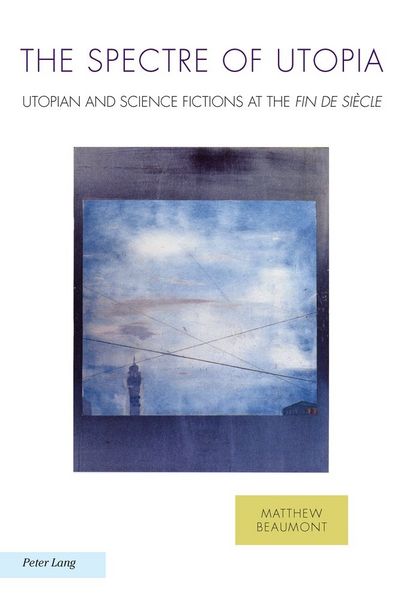
Produktbild: The Spectre of Utopia
Band 12

The Spectre of Utopia Utopian and Science Fictions at the "Fin de Siècle"

Aus der Reihe Ralahine Utopian Studies

66,60 €

inkl. gesetzl. MwSt., Versandkostenfrei


Beschreibung

Produktdetails

Einband

Taschenbuch

Erscheinungsdatum

28.11.2011

Verlag

Peter Lang Group AG, International Academic Publishers

Seitenzahl

307

Maße (L/B/H)

22,5/15/1,8 cm

Gewicht

450 g

Auflage

1. Auflage

Sprache

Englisch

ISBN

978-3-0343-0725-3

Beschreibung

Rezension

«Matthew Beaumont is one of the most brilliant of the younger generation of English critics. His work on late Victorian culture puts him among the most suggestive and original scholars of the period. While focused on Bellamy, this wide-ranging study encompasses a rich variety of authors and intellectual currents, all dealing with the elusive but utterly essential idea of utopia. In its theoretical sophistication and historical depth, Beaumont's work is both innovative and illuminating.» (Terry Eagleton, Distinguished Professor of English at Lancaster University and author of 'Trouble with Strangers' and 'Why Marx Was Right')
«So much has been written about 'Looking Backward' and late nineteenth-century utopian literature that one wonders if these topics can ever come to us fresh again. Beaumont answers this question by placing Bellamy's utopia within significant yet rarely studied publication and reception contexts, such as the London Bellamy Library books series designed to educate working-class readers, and by presenting utopia as a constructively troubling spectre, a ghost evaluating the readers' present by haunting them with a sense of the absence of a suppressed better world existing somewhere between possibility and impossibility. Thus Beaumont does refresh utopia for us.» (Kenneth Roemer, Piper Professor, University of Texas at Arlington and author of 'The Obsolete Necessity: America in Utopian Writings, 1888-1900' and 'Utopian Audiences')
«This is a rich and provocative book in which Beaumont challenges conventional readings of utopian writing at the turn of the twentieth century. Written with insight and clarity, it provides fresh perspectives and unsettles old certainties. It is essential reading for anyone concerned with the cultural context of the time.» (Ruth Levitas, Professor of Sociology, University of Bristol and author of 'The Concept of Utopia')
«For me the book's two outstanding features are its erudition and cohesion. Beaumont's appropriation of an enormous range of utopian subjects and critique conveys a sense of mastery; he is clearly, consciously and authoritatively joining an on-going conversation. His thesis develops organically; sometimes I felt as though I were reading a very long but impeccably developed essay. This is a remarkable book that I recommend to those whose interest in the fantastic includes utopianism and science fiction.» (Thomas J. Morrissey, Journal of the Fantastic in the Arts 24, 2013/1)
«Beaumont has offered a remarkably detailed and wide-ranging overview of utopian and time travel fiction that is both sophisticated and approachable. It is a fascinating and compelling read, and makes a significant contribution to our understanding of these fictions, at the same time as causing the reader to reflect analytically on his/her own time. [...] 'The Spectre of Utopia' is an exemplar for how to situate influential texts within the social, cultural and political context of the time of their production: it is a triumph of research, insight and clarity of writing.» (Linda Dryden, Review of English Studies 64, 2013/267)
«In diesem Buch vereinigt sich ideenreiche, sensible Textanalyse mit fundierter, klarsichtiger kulturhistorischer Darstellung. In der Fülle der Literatur zu Utopie und Science Fiction ist dies eine erfrischende Lektüre, die neue Perspektiven eröffnet und zur weiteren Auseinandersetzung anregt.» (Arno Löffler, Inklings-Jahrbuch 31, 2013)
«Limpid writing, sharp argumentation, and careful historicism characterize the essays collected in Matthew Beaumont's 'The Spectre of Utopia: Utopian and Science Fictions at the Fin de Siècle'» (Mark Allison, Victorian Studies 57.1, 2014)

Zitat

«Matthew Beaumont is one of the most brilliant of the younger generation of English critics. His work on late Victorian culture puts him among the most suggestive and original scholars of the period. While focused on Bellamy, this wide-ranging study encompasses a rich variety of authors and intellectual currents, all dealing with the elusive but utterly essential idea of utopia. In its theoretical sophistication and historical depth, Beaumont’s work is both innovative and illuminating.» (Terry Eagleton, Distinguished Professor of English at Lancaster University and author of ‘Trouble with Strangers’ and ‘Why Marx Was Right’)
«So much has been written about ‘Looking Backward’ and late nineteenth-century utopian literature that one wonders if these topics can ever come to us fresh again. Beaumont answers this question by placing Bellamy’s utopia within significant yet rarely studied publication and reception contexts, such as the London Bellamy Library books series designed to educate working-class readers, and by presenting utopia as a constructively troubling spectre, a ghost evaluating the readers’ present by haunting them with a sense of the absence of a suppressed better world existing somewhere between possibility and impossibility. Thus Beaumont does refresh utopia for us.» (Kenneth Roemer, Piper Professor, University of Texas at Arlington and author of ‘The Obsolete Necessity: America in Utopian Writings, 1888-1900’ and ‘Utopian Audiences’)
«This is a rich and provocative book in which Beaumont challenges conventional readings of utopian writing at the turn of the twentieth century. Written with insight and clarity, it provides fresh perspectives and unsettles old certainties. It is essential reading for anyone concerned with the cultural context of the time.» (Ruth Levitas, Professor of Sociology, University of Bristol and author of ‘The Concept of Utopia’)
«For me the book’s two outstanding features are its erudition and cohesion. Beaumont’s appropriation of an enormous range of utopian subjects and critique conveys a sense of mastery; he is clearly, consciously and authoritatively joining an on-going conversation. His thesis develops organically; sometimes I felt as though I were reading a very long but impeccably developed essay. This is a remarkable book that I recommend to those whose interest in the fantastic includes utopianism and science fiction.» (Thomas J. Morrissey, Journal of the Fantastic in the Arts 24, 2013/1)
«Beaumont has offered a remarkably detailed and wide-ranging overview of utopian and time travel fiction that is both sophisticated and approachable. It is a fascinating and compelling read, and makes a significant contribution to our understanding of these fictions, at the same time as causing the reader to reflect analytically on his/her own time. [...] ‘The Spectre of Utopia’ is an exemplar for how to situate influential texts within the social, cultural and political context of the time of their production: it is a triumph of research, insight and clarity of writing.» (Linda Dryden, Review of English Studies 64, 2013/267)
«In diesem Buch vereinigt sich ideenreiche, sensible Textanalyse mit fundierter, klarsichtiger kulturhistorischer Darstellung. In der Fülle der Literatur zu Utopie und Science Fiction ist dies eine erfrischende Lektüre, die neue Perspektiven eröffnet und zur weiteren Auseinandersetzung anregt.» (Arno Löffler, Inklings-Jahrbuch 31, 2013)
«Limpid writing, sharp argumentation, and careful historicism characterize the essays collected in Matthew Beaumont’s ‘The Spectre of Utopia: Utopian and Science Fictions at the Fin de Siècle’» (Mark Allison, Victorian Studies 57.1, 2014)
Produktdetails

Einband

Taschenbuch

Erscheinungsdatum

28.11.2011

Verlag

Peter Lang Group AG, International Academic Publishers

Seitenzahl

307

Maße (L/B/H)

22,5/15/1,8 cm

Gewicht

450 g

Auflage

1. Auflage

Sprache

Englisch

ISBN

978-3-0343-0725-3

EU-Ansprechpartner

Zeitfracht Medien GmbH
Ferdinand-Jühlke-Straße 7|99095|Erfurt|DE
produktsicherheit@zeitfracht.de

Herstelleradresse

Peter Lang
Avenue du Théâtre 7|1005|Lausanne|CH
orders@peterlang.com

Kundinnen und Kunden meinen

0 Bewertungen

Informationen zu Bewertungen

Zur Abgabe einer Bewertung ist eine Anmeldung im Konto notwendig. Die Authentizität der Bewertungen wird von uns nicht überprüft. Wir behalten uns vor, Bewertungstexte, die unseren Richtlinien widersprechen, entsprechend zu kürzen oder zu löschen.

Die Bewertungen sind nach Format, Anzahl Sterne und Datum sortiert.

Verfassen Sie die erste Bewertung zu diesem Artikel

Helfen Sie anderen Kund*innen durch Ihre Meinung

Kundinnen und Kunden meinen

0 Bewertungen filtern

  • Produktbild: The Spectre of Utopia
  • Contents: Utopian fiction – Science fiction – Disaster fiction – Radical publishing – Feminism – Socialism – Occultism.