
Gutscheinbedingungen

**Gültig von 22.06.2026 ab 19 Uhr bis 23.06.2026 24 Uhr auf Spielzeug, Schreibwaren, Filme, Geschenke & Trends, Musik, tolino eReader & Zubehör, Hörbücher und Hörbuch-Downloads (außer Abo), nicht preisgebundene Bücher und Kalender online auf thalia.at und in der Thalia App. Einzelne Artikel können ausgeschlossen sein. Aufgrund der Buchpreisbindung sind deutschsprachige Bücher und eBooks ausgenommen. Zusätzlich ausgenommen sind preisgebundene Artikel, Abos & Flatrates, eBooks, Games, Geschenkkarten/-boxen, Shelfies, Software, Zeitschriften sowie einzelne Artikel von tonies®. Pro Einkauf einmal einlösbar. Click & Collect nur bei Onlinevorabzahlung möglich. Keine Barauszahlung. Nicht kombinierbar mit anderen Aktionen und Gutscheinen. Gutschein wird auf max. 500€ Bestellwert angerechnet. Nicht gültig für Versandkosten und Services.

  • Produktbild: Bigger Isn't Necessarily Better
  • Produktbild: Bigger Isn't Necessarily Better

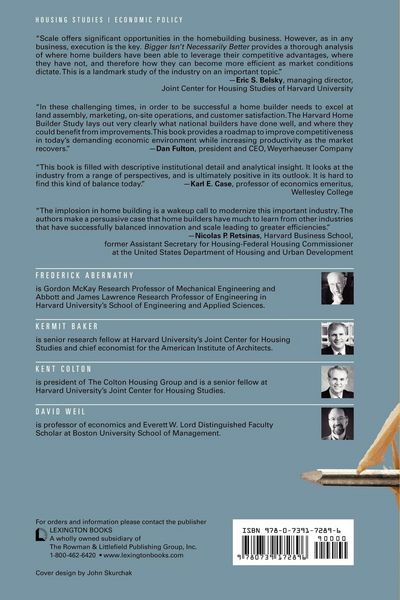
Bigger Isn't Necessarily Better Lessons from the Harvard Home Builder Study

69,99 €

inkl. gesetzl. MwSt., Versandkostenfrei


Beschreibung

Produktdetails

Einband

Taschenbuch

Erscheinungsdatum

30.11.2011

Verlag

Ingram Publishers Services

Seitenzahl

138

Maße (L/B/H)

22,9/15,2/0,7 cm

Gewicht

201 g

Sprache

Englisch

ISBN

978-0-7391-7289-6

Beschreibung

Produktdetails

Einband

Taschenbuch

Erscheinungsdatum

30.11.2011

Verlag

Ingram Publishers Services

Seitenzahl

138

Maße (L/B/H)

22,9/15,2/0,7 cm

Gewicht

201 g

Sprache

Englisch

ISBN

978-0-7391-7289-6

Herstelleradresse

Libri GmbH
Europaallee 1
36244 Bad Hersfeld
DE

Email: gpsr@libri.de

Kundinnen und Kunden meinen

0 Bewertungen

Informationen zu Bewertungen

Zur Abgabe einer Bewertung ist eine Anmeldung im Konto notwendig. Die Authentizität der Bewertungen wird von uns nicht überprüft. Wir behalten uns vor, Bewertungstexte, die unseren Richtlinien widersprechen, entsprechend zu kürzen oder zu löschen.

Die Bewertungen sind nach Format, Anzahl Sterne und Datum sortiert.

Verfassen Sie die erste Bewertung zu diesem Artikel

Helfen Sie anderen Kund*innen durch Ihre Meinung

Kundinnen und Kunden meinen

0 Bewertungen filtern

Die Leseprobe wird geladen.
  • Produktbild: Bigger Isn't Necessarily Better
  • Produktbild: Bigger Isn't Necessarily Better
  • Preface
    Chapter 1: Home Building-Is Bigger Better?
    The Home Building Boom
    The Seeds of Consolidation
    The Growing Dominance of Big Builders
    Conventional Wisdom about Scale
    The Virtuous Circle Hypothesis
    Organization of the Book
    Chapter 2: Studying the Home Building Industry
    Building the Machine for Living
    Focus on Entry-Level Homes
    Measuring Local Market Competition
    Survey Coverage and Content
    Structure of the Survey
    Chapter 3: Big Builders at the Corporate Level
    Builder Performance during the Boom
    Securing Capital for Expansion
    Land Assembly Strategies
    Corporate Branding and Customer Satisfaction
    Conclusion
    Chapter 4: Labor and Subcontracting Practices
    The Construction Manager Model
    Benefits and Costs of Improved Coordination
    Coordinating On-Site Activities
    Performance at the Construction Site
    Conclusion
    Chapter 5: Advanced Operational Practices
    Emergence of the Third Supply Channel
    Shifting Builder Priorities
    Implementation of Advanced Practices
    The Role of Local Market Conditions
    Market Characteristics and Builder Performance
    Conclusion
    Chapter 6: Information and Communication Technology
    ICT Background
    Communicating with Customers
    Home Builders and Technology Use in the Back Office
    Home Builders and Technology Use on the Site
    Using Technology to Estimate Costs
    Using Technology to Coordinate with Subcontractors and Suppliers
    The Importance of Sharing
    Factors Discouraging Greater Use of Technology
    Conclusion
    Chapter 7: Lessons about Builder Scale and Performance
    Challenges of Improving Operational Performance
    The Importance of Local Markets Revisited
    Disentangling the Effects of Size and Location
    Can Bigger Get Better?
    Chapter 8: Gaining Advantage from Scale
    Improve Subcontractor Coordination and Workforce Quality
    Increase Standardization and Preassembly of Components
    Leverage the Power of Information Technology
    Streamline Supply Chain Management and Logistics
    Managing Risk in the Twenty-First Century
    Appendix A Joint Center Advisory Panel for the Harvard Home Builder Study
    Appendix B Survey Responses to ICT Questions
    References
    Index