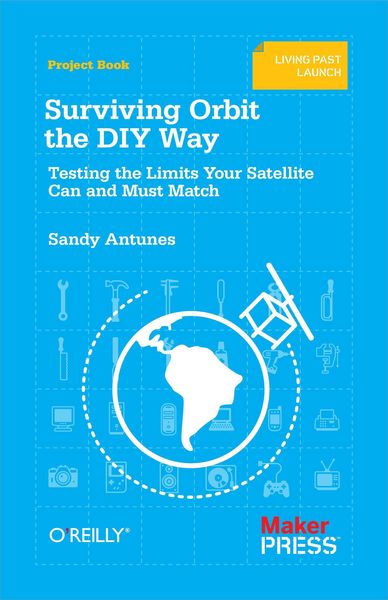
Surviving ORBIT the DIY Way Testing the Limits Your Satellite Can and Must Match
-
- Taschenbuch ausgewählt
- eBook
-
Sprache:Englisch
7,99 €
inkl. gesetzl. MwSt.,
- Kostenlose Lieferung ab 30 € Einkaufswert
- Versandkostenfrei für Bonuscard-Kund*innen
Beschreibung
Produktdetails
Einband
Taschenbuch
Erscheinungsdatum
09.10.2012
Verlag
O'Reilly MediaSeitenzahl
90
Maße (L/B/H)
21,6/14,1/1 cm
Gewicht
132 g
Sprache
Englisch
ISBN
978-1-4493-1062-2
The perfect follow-up to DIY Satellite Platforms (our primer for designing and building a picosatellite), this book also provides an overview of what space is like and how orbits work, enabling you to set up the launch and orbit support you’ll need.
* Go deep into the numbers that describe conditions your satellite will face
* Learn how to mitigate the risks of radiation in the ionosphere
* Pick up enough formal systems engineering to understand what the tests are all about
* Build a thermal vacuum chamber for mimicking environment of space
* Simulate the rocket launch by building and running a vibration shake test
* Use a homebuilt centrifuge to conduct high G-force tests
* Get guidelines on scheduling tests and choosing an appropriate lab or clean room
Noch keine Bewertungen vorhanden
Verfassen Sie die erste Bewertung zu diesem Artikel
Helfen Sie anderen Kundinnen und Kunden durch Ihre Meinung.
Kurze Frage zu unserer Seite
Vielen Dank für Ihr Feedback
Wir nutzen Ihr Feedback, um unsere Produktseiten zu verbessern. Bitte haben Sie Verständnis, dass wir Ihnen keine Rückmeldung geben können. Falls Sie Kontakt mit uns aufnehmen möchten, können Sie sich aber gerne an unseren Kund*innenservice wenden.
zum Kundenservice