Gutscheinbedingungen

**Gültig bis 15.06.2026 auf Spiele & Spielzeug online auf thalia.at, in der Thalia App ab einem Mindestbestellwert von 30€ und in allen Thalia Buchhandlungen in Österreich. In den Buchhandlungen nur gültig auf lagernde Ware. Einzelne Artikel können ausgeschlossen sein. Ausgenommen sind preisgebundene Artikel sowie online auf thalia.at und in der Thalia App einzelne Artikel von tonies®. Pro Einkauf einmal einlösbar. Nur gültig gegen Vorlage oder im Onlineshop hinterlegter Bonuscard. Infos zur Einlösung in der Buchhandlung sind auf der Bonuscard-Vorteilspreisseite zu finden. Click & Collect nur bei Onlinevorabzahlung möglich. Keine Einlösung bei Scan & Go-Bezahlung. Keine Barauszahlung. Nicht kombinierbar mit anderen Aktionen und Gutscheinen. Gutschein wird auf max. 500€ Bestellwert angerechnet. Nicht gültig für Geschenkkarten, Versandkosten und Services.

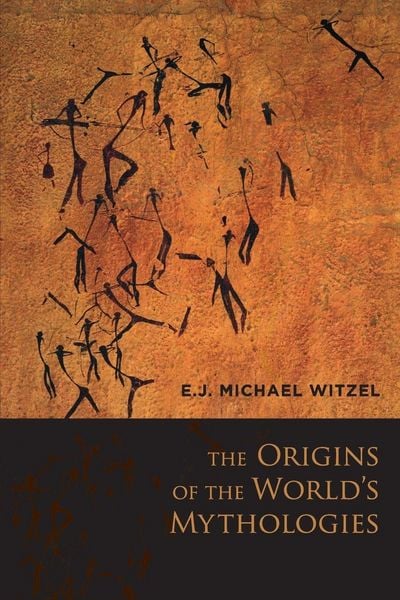
Produktbild: The Origins of the World's Mythologies

The Origins of the World's Mythologies

99,99 €

inkl. gesetzl. MwSt., Versandkostenfrei


Beschreibung

Produktdetails

Einband

Taschenbuch

Erscheinungsdatum

01.01.2013

Verlag

Oxford Academic

Seitenzahl

688

Maße (L/B/H)

23,4/15,6/4,1 cm

Gewicht

1039 g

Sprache

Englisch

ISBN

978-0-19-981285-1

Beschreibung

Zitat

indispensable G. J. Reece, CHOICE

Produktdetails

Einband

Taschenbuch

Erscheinungsdatum

01.01.2013

Verlag

Oxford Academic

Seitenzahl

688

Maße (L/B/H)

23,4/15,6/4,1 cm

Gewicht

1039 g

Sprache

Englisch

ISBN

978-0-19-981285-1

Herstelleradresse

Libri GmbH
Europaallee 1
36244 Bad Hersfeld
DE

Email: gpsr@libri.de

Kundinnen und Kunden meinen

0 Bewertungen

Informationen zu Bewertungen

Zur Abgabe einer Bewertung ist eine Anmeldung im Konto notwendig. Die Authentizität der Bewertungen wird von uns nicht überprüft. Wir behalten uns vor, Bewertungstexte, die unseren Richtlinien widersprechen, entsprechend zu kürzen oder zu löschen.

Die Bewertungen sind nach Format, Anzahl Sterne und Datum sortiert.

Verfassen Sie die erste Bewertung zu diesem Artikel

Helfen Sie anderen Kund*innen durch Ihre Meinung

Kundinnen und Kunden meinen

0 Bewertungen filtern

Die Leseprobe wird geladen.
  • Produktbild: The Origins of the World's Mythologies
    • Contents

    • 1 Introduction

    • 1.1 What is myth, how do we study and compare it?

    • 1.2 Definition; study of myth in the past

    • 1.3 Comparative mythology

    • 1.4 Laurasian mythology: establishing the common origin of the mythologies of Eurasia and the Americas

    • 1.5 Earlier explanations of myth

    • 1.6 Ur-forms, history, and archaeology

    • 1.7 Summary

    • 2 Comparison and Theory

    • 2.1 Theory and practice of comparisons

    • 2.2 Reconstructing Laurasian mythology

    • 2.2.1 Similarities

    • 2.2.2 Regular correspondences and establishment of a unified narrative scheme

    • 2.2.3 Oldest texts to be used

    • 2.2.4 Geographically dispersed items

    • 2.2.5 Reconstruction of the Laurasian common story line and individual myths

    • 2.3 Enhancing the reconstruction: local, regional, macro-regional, and subcontinental variations

    • 2.4 Reconstructing the Laurasian mythological system and inherent problems

    • 2.5 Structure and content in some macro-areas of Laurasian myth.

    • 2.5.1 Macro-areas

    • 2.5.2 The Four ages in the Eurasian and Meso-American macro-areas

    • 2.5.3 Later centers of innovations

    • 2.5.4 Late borrowings (diffusion)

    • 2.6 Some objections to the approach of historical comparative mythology

    • 2.7 Conclusion

    • 3 Creation Myths: The Laurasian Story Line, Our First Novel

    • 3.1 Primordial Creation

    • 1. Chaos and darkness 2. Water 3. Earth diver and floating earth 4. Giant 5. Bull 6. Egg 7. Combined versions

    • 3.2 Father Heaven, Mother Earth

    • 3.3 Separation of heaven and earth, the prop

    • 3.4. Creation of land

    • 3.5 The demiurge or trickster

    • 3.5.1 Creation of light

    • 3.5.2. The slaying of the dragon

    • 3.5.3 The theft of fire and of the heavenly drink

    • 3.6 Generations, Four Ages and five suns

    • 3.7 The creation of humans

    • 3.8 Descent of 'noble' lineages

    • 3.9 The flood

    • 3.10 Heroes

    • 3.11 The final destruction

    • 3.12 Summary

    • 4 The Contributions of Other Sciences: comparison of language, physical anthropology, genetics, archaeology

    • 4.1. Linguistics

    • 4.2 Physical anthropology

    • 4.3. Genetics

    • 4.3.1 Recent advances in human population genetics

    • 4.3.2 Overview of recent developments

    • 4.3.3 Out of Africa

    • 4.3.4 Movement northward after the last two Ice Ages

    • 4.3.5 Genetics, language and mythology

    • 4.3.6 Summary and outlook

    • 4.4. Archaeology

    • 4.4.1 Cave paintings and plastic art

    • 4.4.2 Sacrifice in Late Palaeolithic art

    • 4.4.3 Food production

    • 4.4.4 Domestic animals and pastoralism

    • 4.5 Other items of comparison: children's songs and games; ancient music and regional styles; use of colors; gestures and their regional variations.

    • 4.6. Conclusions resulting from the comparison of the sciences involved

    • 5 The Countercheck: Australia, Melanesia, sub-Saharan Africa

    • 5.1 Possible ways to countercheck

    • 5.1.1 Method

    • 5.1.2 Criteria for testing the theory

    • 5.1.3 Diffusion vs genetic relationship

    • 5.1.4 Later additions

    • 5.2 Beyond Laurasia: Gondwana mythology

    • 5.3. Gondwana mythologies

    • 5.3.1 Sub-Saharan Africa, the Andamans, New Guinea, Australia and Tasmania -- an overview

    • 5.3.2 Australia

    • 5.3.2.1 Tasmania

    • 5.3.3. Melanesia

    • 5.3.3.1 Negritos and other southern remnant populations

    • 5.3.4 Andaman Islands

    • 5.3.5 Africa

    • 5.3.5.1 Remnant populations: San and Pygmies

    • 5.3.5.2 Sub-Saharan Africa

    • 5.3.5.3 Northern influences: the western North-South highway

    • 5.3.5.4 The eastern North-South Highway

    • 5.3.6 Summary

    • 5.4. Individual Gondwana myth types and their common characteristics

    • 5.5 Secondary influences on Gondwana mythology

    • 5.6. Conflicting myths in Gondwanaland

    • 5.6.1 Gondwana element in Laurasian myth

    • 5.6.2 Laurasian elements in Gondwana myth

    • 5.7 Countercheck of Laurasian mythology based on Gondwana mythology

    • 5.7.1 Essential features of Gondwana and Laurasian mythology

    • 5.7.2 The flood myth in world wide perspective

    • 6 First Tales: Pan-Gaean Mythology

    • 6.1 Beyond Laurasia and Gondwana: common myths

    • 6.2 Our first tales

    • 7 Laurasian Mythology in Historical Development

    • 7.1 Late Palaeolithic religion

    • 7.1.1 Late Palaeolithic shamanism

    • 7.1.2 Sacrifice

    • 7.2. Changes from Palaeolithic to state societies

    • 7.3. Dating Gondwana and Laurasian mythology

    • 8 Outlook

    • 8.1 The meaning of Laurasian Mythology

    • 8.2 Beyond Laurasia, Gondwana and Pan-Gaia

    • 8.2.1 Persistence of myth

    • 8.2.2 Some reasons

    • 8.3 Epilogue