Gutscheinbedingungen

**Gültig bis 28.07.2026 auf Spielzeug, Schreibwaren, Filme, Geschenke & Trends, Musik, tolino eReader & Zubehör, Hörbücher und Hörbuch-Downloads (außer Abo), nicht preisgebundene Bücher und Kalender in der Thalia App. Einzelne Artikel können ausgeschlossen sein. Aufgrund der Buchpreisbindung sind deutschsprachige Bücher und eBooks ausgenommen. Zusätzlich ausgenommen sind preisgebundene Artikel, Abos & Flatrates, eBooks, Games, Geschenkkarten/-boxen, Shelfies, Software, Zeitschriften sowie einzelne Artikel von tonies®. Pro Einkauf einmal einlösbar. Click & Collect nur bei Onlinevorabzahlung möglich. Keine Barauszahlung. Nicht kombinierbar mit anderen Aktionen und Gutscheinen. Gutschein wird auf max. 500€ Bestellwert angerechnet. Nicht gültig für Versandkosten und Services.

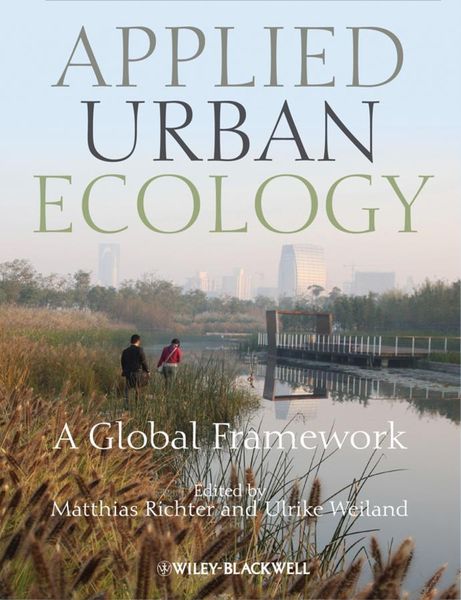
Produktbild: Applied Urban Ecology

Applied Urban Ecology A Global Framework

208,99 €

inkl. gesetzl. MwSt., Versandkostenfrei


Beschreibung

Produktdetails

Einband

Gebundene Ausgabe

Erscheinungsdatum

21.11.2011

Herausgeber

Matthias Richter + weitere

Verlag

John Wiley & Sons Inc

Seitenzahl

240

Maße (L/B/H)

24,9/19,1/1,8 cm

Gewicht

748 g

Auflage

1. Auflage

Sprache

Englisch

ISBN

978-1-4443-3339-8

Beschreibung

Rezension

"In return it broadens our perspective on the pathways we might follow in aiming to understand the complexities of urban environments, and ultimately learn how to shape their future and that of the majority of humanity." (Austral Ecology, 1 October 2013)
 
"This book provides a wealth of information . . . It is a book for the specialist rather than the generalist and is thus most relevant for advanced undergraduates and postgraduates of ecology, geography, environmental science and urban planning." (Bulletin of the British Ecological Society, 1 June 2012) "I am sure that anyone teaching in this area at undergraduate or postgraduate levels will want it on their bookshelf." (Elsevier's Biological Conservation, 1 January 2012)
 
"I highly recommend the very hands on and engaging book Applied Urban Ecology: A Global Framework edited by Matthias Richter and Ulrike Weiland, to any field researchers, scientists, practitioners, urban planners, policy makers in government, business leaders, educators, and students at all levels who are seeking a clear and understandable guide to urban ecology, its challenges, and its potential solutions. This book will transform the way decision makers approach urban ecological issues, and provide students with a firm foundation in applied urban ecology." (Blog Business World, 4 January 2012)
 
"Nevertheless, each chapter is worth reading and I am sure this book will become a primer for studies in urban ecology. I am sure that anyone teaching in this area at undergraduate or postgraduate levels will want it on their bookshelf." (Biological Conservation, 12 December 2011)

Produktdetails

Einband

Gebundene Ausgabe

Erscheinungsdatum

21.11.2011

Herausgeber

Verlag

John Wiley & Sons Inc

Seitenzahl

240

Maße (L/B/H)

24,9/19,1/1,8 cm

Gewicht

748 g

Auflage

1. Auflage

Sprache

Englisch

ISBN

978-1-4443-3339-8

Herstelleradresse

Libri GmbH
Europaallee 1
36244 Bad Hersfeld
DE

Email: GPSR Kontakt

Noch keine Bewertungen vorhanden

Verfassen Sie die erste Bewertung zu diesem Artikel

Helfen Sie anderen Kundinnen und Kunden durch Ihre Meinung.

Kundinnen und Kunden meinen

Bewertungen (0)

Die Leseprobe wird geladen.
  • Produktbild: Applied Urban Ecology
  • List of contributors xi
     
    Foreword xiii
     
    PART I: INTRODUCTION 1
     
    1. Urban ecology - brief history and present challenges 3
    Ulrike Weiland andMatthias Richter
     
    1.1 Introduction 3
     
    1.2 Brief history 3
     
    1.3 Recent and present challenges 5
     
    1.4 Purpose and structure of the book 7
     
    References 9
     
    PART II: URBAN ECOLOGY: RELATED DISCIPLINES AND METHODS 13
     
    2. Thematic-methodical approaches to applied urban ecology 15
    Matthias Richter and UlrikeWeiland
     
    3. Monitoring urban land use changes with remote sensing techniques 18
    Ellen Banzhaf andMaik Netzband
     
    3.1 Land use changes and their consequences for urban ecology 18
     
    3.2 Urban remote sensing (URS) and geographical information systems (GIS) for research in urban ecology 19
     
    3.3 Measuring physical characteristics of urban areas with remote sensing technology 21
     
    3.4 Global initiatives to measure urban expansion and land use change 24
     
    3.5 Regional urban monitoring activities 26
     
    3.6 Synthesis and outlook 29
     
    References 30
     
    PART III: SELECTED FIELDS OF URBAN ECOLOGY 33
     
    A. PATHWAYS OF THE ECOSYSTEM APPROACH.
     
    4. Quantifying spatiotemporal patterns and ecological effects of urbanization: a multiscale landscape approach 35
    Jianguo Wu, Alexander Buyantuyev, G. Darrel Jenerette, Jennifer Litteral, Kaesha Neil and Weijun Shen
     
    4.1 Introduction 35
     
    4.2 Characterizing the spatiotemporal pattern of urbanization 36
     
    4.3 Simulating spatiotemporal dynamics of urbanization 41
     
    4.4 Effects of urbanization on biodiversity and ecosystem processes: examples from CAP-LTER 43
     
    4.5 Concluding remarks 47
     
    Acknowledgments 49
     
    References 49
     
    5. Designing urban systems: ecological strategies with stocks and flows of energy and material 54
    Peter Baccini
     
    5.1 The challenge of a new urbanity 54
     
    5.2 Urban systems and their resource management 56
     
    5.3 Strategies of reconstruction 60
     
    5.4 Developing strategies for the design of urban systems 63
     
    References 65
     
    B. SOCIOENVIRONMENTAL THREATS.
     
    6. Environmental and ecological threats in Indian mega-cities 66
    Surinder Aggarwal and Carsten Butsch
     
    6.1 Urbanization dynamics and emergence of mega-cities 66
     
    6.2 Environmental threats 68
     
    6.3 Mega-social challenges 74
     
    6.4 Concluding remarks 78
     
    Acknowledgments 80
     
    References 80
     
    7. From wasteland to wilderness - aspects of a new form of urban nature 82
    Dieter Rink and Harriet Herbst
     
    7.1 Introduction 82
     
    7.2 Urban wilderness - some attempts at defining the term 83
     
    7.3 Wastelands as a source of urban wilderness 83
     
    7.4 Urban wilderness in planning 85
     
    7.5 On the ecology of urban wilderness 86
     
    7.6 Urban wilderness in a social context 87
     
    7.7 Educational value of urban wilderness 89
     
    7.8 Conclusions 90
     
    References 91
     
    C. FLOODING AND CLIMATE ADAPTATION.
     
    8. Multiscale flood risk assessment in urban areas - a geoinformatics approach 93
    Norman Kerle and Dinand Alkema
     
    8.1 Introduction 93
     
    8.2 Flood risk in the context of urban ecology 94
     
    8.3 Comprehensive flood risk assessment - Naga City, the Philippines 96
     
    8.4 The role of remote sensing in flood risk assessment and management 99
     
    8.5 Disaster risk in the context of urban ecology - an outlook 104
     
    References 104
     
    9. Urban open spaces and adaptation to climate change 106
    Marialena Nikolopoulou
     
    9.1 Cities, climate ch