Gutscheinbedingungen

**Gültig bis 24.09.2026 ab einem Mindestbestellwert von 30€ auf Spielzeug, Schreibwaren, Filme, Geschenke & Trends, Musik, tolino eReader & Zubehör, Hörbücher und Hörbuch-Downloads, nicht preisgebundene Bücher und Kalender online auf thalia.at und in der Thalia App. Einzelne Artikel können ausgeschlossen sein. Aufgrund der Buchpreisbindung sind deutschsprachige Bücher und eBooks ausgenommen. Zusätzlich ausgenommen sind Abos & Flatrates, Games, Geschenkkarten/-boxen, Shelfies, Software, Zeitschriften sowie einzelne Artikel von tonies®. Pro Einkauf einmal einlösbar. Click & Collect nur bei Onlinevorabzahlung möglich. Keine Barauszahlung. Nicht kombinierbar mit anderen Aktionen und Gutscheinen. Gutschein wird auf max. 500€ Bestellwert angerechnet. Nicht gültig für Versandkosten und Services. Preisgebundene Artikel sind vom Mindestbestellwert ausgeschlossen.

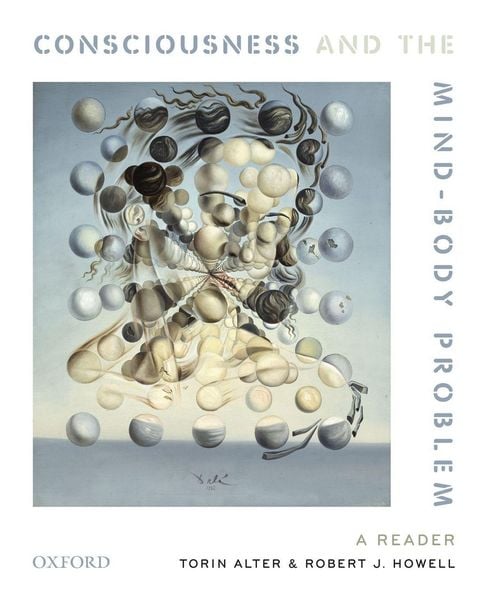
Produktbild: Consciousness and the Mind-Body Problem

Consciousness and the Mind-Body Problem A Reader

109,99 €

inkl. gesetzl. MwSt., Versandkostenfrei


Beschreibung

Produktdetails

Einband

Taschenbuch

Erscheinungsdatum

01.09.2011

Verlag

Oxford University Press

Seitenzahl

398

Maße (L/B/H)

23,5/19,1/2,1 cm

Gewicht

741 g

Sprache

Englisch

ISBN

978-0-19-973924-0

Beschreibung

Produktdetails

Einband

Taschenbuch

Erscheinungsdatum

01.09.2011

Verlag

Oxford University Press

Seitenzahl

398

Maße (L/B/H)

23,5/19,1/2,1 cm

Gewicht

741 g

Sprache

Englisch

ISBN

978-0-19-973924-0

Herstelleradresse

Libri GmbH
Europaallee 1
36244 Bad Hersfeld
DE

Email: gpsr@libri.de

Noch keine Bewertungen vorhanden

Verfassen Sie die erste Bewertung zu diesem Artikel

Helfen Sie anderen Kundinnen und Kunden durch Ihre Meinung.

Kundinnen und Kunden meinen

Bewertungen (0)

  • Produktbild: Consciousness and the Mind-Body Problem


    • Introduction


    • I. THE CHALLENGE FOR PHYSICALISM


    • 1. Saul Kripke, "Naming and Necessity" (excerpt)


    • 2. Thomas Nagel, "What Is It Like to Be a Bat?"


    • 3. Frank Jackson, "Epiphenomenal Qualia"; and "Postscript"


    • 4. Brie Gertler, "In Defense of Mind-Body Dualism"


    • 5. David J. Chalmers, "Consciousness and Its Place in Nature" (revised version)


    • II. PHYSICALIST RESPONSES


    • A. A priori Physicalism


    • 6. Terence Horgan, "Jackson on Physical Information and Qualia"


    • 7. David J. Chalmers, "Phenomenal Concepts and the Knowledge Argument" (excerpt)


    • 8. David K. Lewis, "Postscript to 'Mad Pain and Martian Pain'"


    • 9. William G. Lycan, "Ten Arguments against Nemirow and Lewis"


    • 10. Daniel C. Dennett, "What RoboMary Knows"


    • 11. Torin Alter, "Phenomenal Knowledge without Experience"


    • B. posteriori Physicalism


    • 12. Brian Loar, "Phenomenal States" (revised version, excerpt)


    • 13. David Papineau, "Phenomenal and Perceptual Concepts"


    • 14. David J. Chalmers, "Phenomenal Concepts and the Explanatory Gap" (revised version)


    • 15. Christopher Hill and Brian McLaughlin, "There are Fewer Things in Reality than are Dreamt of in Chalmers' Philosophy"


    • 16. Robert J. Howell, "The Ontology of Subjective Physicalism"


    • C. Representationalism


    • 17. Michael Tye, "Précis of Ten Problems of Consciousness"; and "Response to Discussants" (excerpt)


    • 18. Ned Block, "Is Experience just Representing?"


    • 19. Amy Kind, "What's so Transparent about Transparency?"


    • 20. Frank Jackson, "Mind and Illusion"


    • 21. Torin Alter, "Does Representationalism Undermine the Knowledge Argument?"


    • III. ALTERNATIVE RESPONSES


    • 22. Grover Maxwell, "Rigid Designators and Mind-Brain Identity" (excerpt)


    • 23. Galen Strawson, "Realistic Monism: Why Physicalism Entails Panpsychism"


    • 24. Philip Goff, "Experiences Don't Sum"


    • IV. THE SIGNIFICANCE OF IGNORANCE


    • 25. Colin McGinn, "Can We Solve The Mind-Body Problem?"


    • 26. Daniel Stoljar, "The Mysterian Version of The Epistemic View" (excerpt); and "Précis of Ignorance and Imagination"


    • 27. Derk Pereboom, "The Knowledge Argument and Introspective Inaccuracy"


    • 28. Barbara Montero, "Post-Physicalism"


    • 29. Robert J. Howell, "Physicalism, Old School"


    • V. MENTAL CAUSATION


    • 30. David Papineau, "The Case for Materialism" (excerpt)


    • 31. Jaegwon Kim, "The Rejection of Immaterial Minds: A Causal Argument"


    • 32. David J. Chalmers, "The Paradox of Phenomenal Judgment" (excerpt)


    • 33. Karen Bennett, "Exclusion Again" (excerpt)