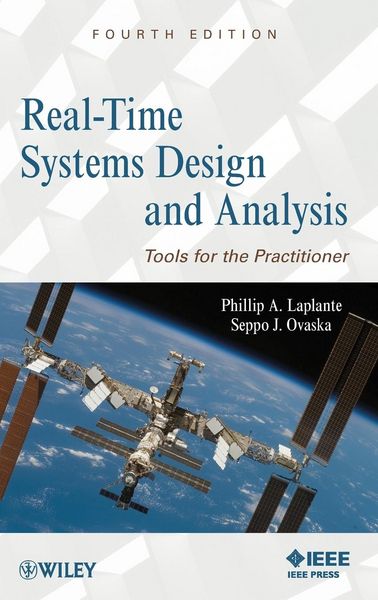
Beschreibung
Produktdetails
Einband
Gebundene Ausgabe
Erscheinungsdatum
04.11.2011
Abbildungen
Charts: 100 B&W, 0 Color; Photos: 100 B&W, 0 Color
Verlag
John Wiley & SonsSeitenzahl
584
Maße (L/B/H)
24/16,1/3,6 cm
Gewicht
1035 g
Auflage
4th edition
Sprache
Englisch
ISBN
978-0-470-76864-8
The leading text in the field explains step by step how to write software that responds in real time
From power plants to medicine to avionics, the world increasingly depends on computer systems that can compute and respond to various excitations in real time. The Fourth Edition of Real-Time Systems Design and Analysis gives software designers the knowledge and the tools needed to create real-time software using a holistic, systems-based approach. The text covers computer architecture and organization, operating systems, software engineering, programming languages, and compiler theory, all from the perspective of real-time systems design.
The Fourth Edition of this renowned text brings it thoroughly up to date with the latest technological advances and applications. This fully updated edition includes coverage of the following concepts:
* Multidisciplinary design challenges
* Time-triggered architectures
* Architectural advancements
* Automatic code generation
* Peripheral interfacing
* Life-cycle processes
The final chapter of the text offers an expert perspective on the future of real-time systems and their applications.
The text is self-contained, enabling instructors and readers to focus on the material that is most important to their needs and interests. Suggestions for additional readings guide readers to more in-depth discussions on each individual topic. In addition, each chapter features exercises ranging from simple to challenging to help readers progressively build and fine-tune their ability to design their own real-time software programs.
Now fully up to date with the latest technological advances and applications in the field, Real-Time Systems Design and Analysis remains the top choice for students and software engineers who want to design better and faster real-time systems at minimum cost.
From power plants to medicine to avionics, the world increasingly depends on computer systems that can compute and respond to various excitations in real time. The Fourth Edition of Real-Time Systems Design and Analysis gives software designers the knowledge and the tools needed to create real-time software using a holistic, systems-based approach. The text covers computer architecture and organization, operating systems, software engineering, programming languages, and compiler theory, all from the perspective of real-time systems design.
The Fourth Edition of this renowned text brings it thoroughly up to date with the latest technological advances and applications. This fully updated edition includes coverage of the following concepts:
* Multidisciplinary design challenges
* Time-triggered architectures
* Architectural advancements
* Automatic code generation
* Peripheral interfacing
* Life-cycle processes
The final chapter of the text offers an expert perspective on the future of real-time systems and their applications.
The text is self-contained, enabling instructors and readers to focus on the material that is most important to their needs and interests. Suggestions for additional readings guide readers to more in-depth discussions on each individual topic. In addition, each chapter features exercises ranging from simple to challenging to help readers progressively build and fine-tune their ability to design their own real-time software programs.
Now fully up to date with the latest technological advances and applications in the field, Real-Time Systems Design and Analysis remains the top choice for students and software engineers who want to design better and faster real-time systems at minimum cost.
Noch keine Bewertungen vorhanden
Verfassen Sie die erste Bewertung zu diesem Artikel
Helfen Sie anderen Kundinnen und Kunden durch Ihre Meinung.
Kurze Frage zu unserer Seite
Vielen Dank für Ihr Feedback
Wir nutzen Ihr Feedback, um unsere Produktseiten zu verbessern. Bitte haben Sie Verständnis, dass wir Ihnen keine Rückmeldung geben können. Falls Sie Kontakt mit uns aufnehmen möchten, können Sie sich aber gerne an unseren Kund*innenservice wenden.
zum Kundenservice