Gutscheinbedingungen

**Gültig bis 12.08.2026 auf fremdsprachige Bücher online auf thalia.at und in der Thalia App. Einzelne Artikel können ausgeschlossen sein. Ausgenommen sind preisgebundene Artikel & eBooks. Pro Einkauf einmal einlösbar. Click & Collect nur bei Onlinevorabzahlung möglich. Keine Barauszahlung. Nicht kombinierbar mit anderen Aktionen und Gutscheinen. Gutschein wird auf max. 500€ Bestellwert angerechnet. Nicht gültig für Geschenkkarten, Versandkosten und Services.

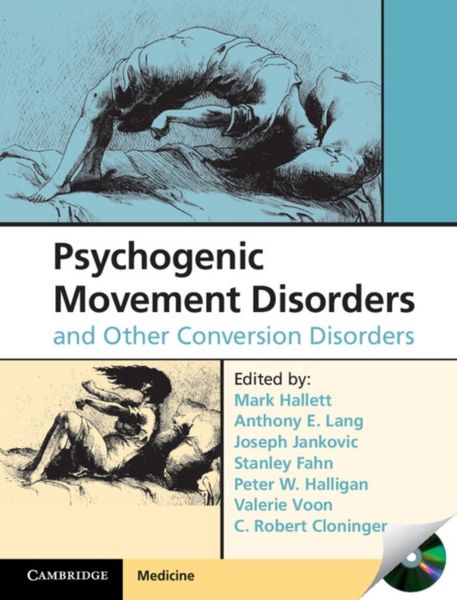
Produktbild: Psychogenic Movement Disorders and Other Conversion Disorders

Psychogenic Movement Disorders and Other Conversion Disorders

196,99 €

inkl. gesetzl. MwSt., Versandkostenfrei


Beschreibung

Produktdetails

Einband

Taschenbuch

Erscheinungsdatum

16.01.2012

Abbildungen

39 b/w illus. 12 colour illus.

Herausgeber

Mark Hallett + weitere

Verlag

Cambridge University Press

Seitenzahl

336

Maße (L/B/H)

26/20/2,3 cm

Gewicht

911 g

Sprache

Englisch

ISBN

978-1-107-00734-5

Beschreibung

Produktdetails

Einband

Taschenbuch

Erscheinungsdatum

16.01.2012

Abbildungen

39 b/w illus. 12 colour illus.

Herausgeber

Verlag

Cambridge University Press

Seitenzahl

336

Maße (L/B/H)

26/20/2,3 cm

Gewicht

911 g

Sprache

Englisch

ISBN

978-1-107-00734-5

Herstelleradresse

Libri GmbH
Europaallee 1
36244 Bad Hersfeld
DE

Email: GPSR Kontakt

Noch keine Bewertungen vorhanden

Verfassen Sie die erste Bewertung zu diesem Artikel

Helfen Sie anderen Kundinnen und Kunden durch Ihre Meinung.

Kundinnen und Kunden meinen

Bewertungen (0)

  • Produktbild: Psychogenic Movement Disorders and Other Conversion Disorders
  • Preface; Part I. Clinical Issues: 1. Introduction to the psychiatry of conversion disorders; 2. Phenomenology of psychogenic movement disorders; 3. Psychogenic parkinsonism; 4. Epidemiology and clinical impact of psychogenic movement disorders; 5. The Scottish neurological symptoms study: diagnosis and prognosis in 1144 new neurology outpatients with symptoms unexplained by disease; 6. Predisposition and issues of mixed etiology in psychogenic movement disorders; 7. Psychogenic movement disorders in children; 8. Childhood disorders: another perspective; 9. Clinical features and treatment outcome of conversion disorders in children and adolescents; 10. Somatoform disorders and psychogenic movement disorders; 11. Psychogenic non-epileptic seizures; 12. Hypochondriasis and its relationship to somatization; 13. Movement disorders in complex regional pain syndrome - the pain field perspective; 14. Psychogenic dystonia in psychogenic complex regional pain syndrome; 15. Latah and related syndromes; 16. Trauma and dissociation: clinical manifestations epidemiology, pathogenesis and treatment; 17. Psychogenic movement disorders: illness in search of disease?; 18. Possible genetic approaches to conversion; Part II. Physiology: 19. Functional brain imaging of psychogenic paralysis during conversion and hypnosis; 20. Action control in conversion paralysis: evidence from motor imagery; 21. Imaging in psychogenic movement disorders; 22. Imaging: hysterical, hypnotically suggested and malingered limb paralysis; 23. Functional imaging of psychogenic and feigned weakness; 24. An fMRI study of recall of causal life-events in conversion disorder: preliminary evidence of increased orbito-frontal and parietal activation; 25. Cortisol, trauma and threat vigilance in patients with psychogenic non-epileptic seizures; 26. Components of voluntary action; 27. Action selection in psychogenic movement disorders; 28. Insights from physiology: tremor and myoclonus; 29. Physiology of psychogenic dystonia; 30. Evoked potentials in the assessment of patients with suspected psychogenic sensory symptoms; 31. Characterizing and assessing the spectrum of volition in psychogenic movement disorders; Part III. Assessment: 32. Rating scales for psychogenic movement disorders; 33. Quality of life in psychogenic movement disorders: the cause not the effect; 34. Psychiatric testing; 35. Diagnostic considerations for the assessment of malingering within the context of psychogenic movement disorders; Part IV. Treatment: 36. Prognosis in patients with psychogenic movement disorders; 37. Presenting the diagnosis; 38. Patterns of practice [MDS Questionnaire report]; 39. Psychotherapy for psychogenic movement disorders; 40. Pharmacotherapy; 41. Suggestion; 42. Treating psychogenic movement disorders with suggestion; 43. In-patient therapy: trying to transcend pathological dissociation, dependence and disability; 44. Appendix: psychogenic movement disorders, video legends; Index.