KI-Beratung Beta

Gutscheinbedingungen

**Gültig am 25.11.2026 auf fremdsprachige Bücher online auf thalia.at und in der Thalia App. Einzelne Artikel können ausgeschlossen sein. Ausgenommen sind preisgebundene Artikel & eBooks. Pro Einkauf einmal einlösbar. Click & Collect nur bei Onlinevorabzahlung möglich. Keine Barauszahlung. Nicht kombinierbar mit anderen Aktionen und Gutscheinen. Gutschein wird auf max. 500€ Bestellwert angerechnet. Nicht gültig für Geschenkkarten, Versandkosten und Services.

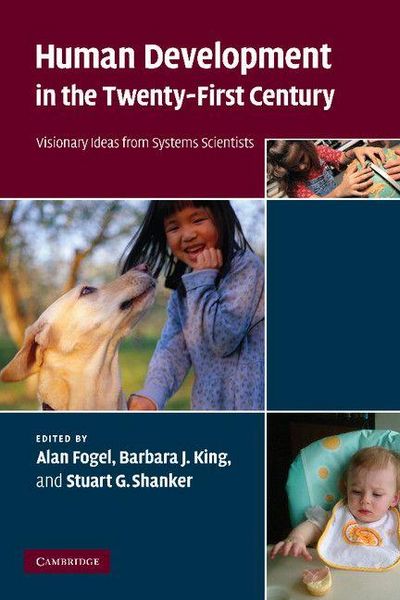
  • Produktbild: Human Development in the Twenty-First Century
  • Produktbild: Human Development in the Twenty-First Century

Human Development in the Twenty-First Century Visionary Ideas from Systems Scientists

64,99 €

inkl. gesetzl. MwSt., Versandkostenfrei


Beschreibung

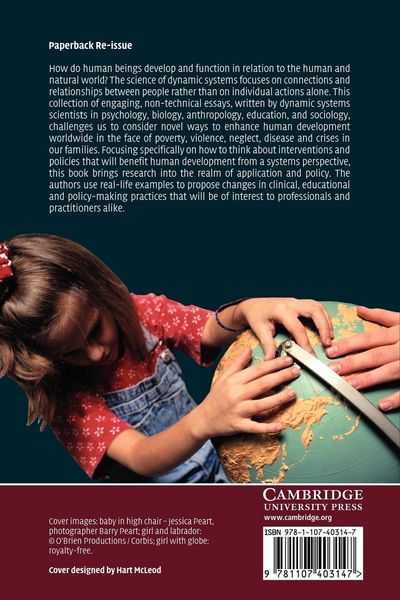
A dynamic group of systems scientists challenges us to reconsider how to enhance human development worldwide. The engaging, non-technical essays in this 2007 collection propose ways to deal with poverty, violence, neglect, disease and crises in our families and will be of interest to professionals and...

Beschreibung

A dynamic group of systems scientists challenges us to reconsider how to enhance human development worldwide. The engaging, non-technical essays in this 2007 collection propose ways to deal with poverty, violence, neglect, disease and crises in our families and will be of interest to professionals and practitioners alike.

Produktdetails

Einband

Taschenbuch

Erscheinungsdatum

07.09.2011

Herausgeber Fogel Alan + weitere
Verlag Cambridge Academic

Produktdetails

Einband

Taschenbuch

Erscheinungsdatum

07.09.2011

Herausgeber
Verlag Cambridge Academic
Seitenzahl

270

Maße (L/B/H)

22,9/15,2/1,5 cm

Gewicht

370 g

Sprache

Englisch

ISBN

978-1-107-40314-7

Herstelleradresse

Libri GmbH
Europaallee 1
36244 Bad Hersfeld
DE

Email: gpsr@libri.de

Noch keine Bewertungen vorhanden

Verfassen Sie die erste Bewertung zu diesem Artikel

Helfen Sie anderen Kundinnen und Kunden durch Ihre Meinung.

Kundinnen und Kunden meinen

Bewertungen (0)

  • Produktbild: Human Development in the Twenty-First Century
  • Produktbild: Human Development in the Twenty-First Century
  • Preface: the dynamic systems approach to fostering human development Alan Fogel, Barbara J. King and Stuart G. Shanker; Part I. Dynamic Relationships between Genetics and Environments: 1. Developmental dynamics: the new view from the life sciences Robert Lickliter; 2. Genes, experience and behaviour Timothy D. Johnston; 3. How dynamic systems have changed our minds Ken Richardson; 4. Individual development as a system of coactions: implications for research and policy Gilbert Gottlieb and Carolyn Tucker Halpern; 5. Gene-environment interactions and inter-individual differences in rhesus monkey behavioral and biological development Stephen J. Suomi; Part II. The Dynamic System of the Child in the Family: 6. Relationships that support human development Alan Fogel; 7. The impact of emotions and the emotional impact of a child's first words Stuart G. Shanker; 8. Emotional habits in brain and behaviour: a window on personality development Marc D. Lewis; 9. Creating family love: an evolutionary perspective Barbara J. King; Part III. The Dynamic System of the Child in Social and Physical Environment: 10. The tempest: anthropology and human development Peter Gow; 11. An anthropology of human development: what difference does it make? Christina Toren; 12. The social child Tim Ingold; 13. Learning about human development from a study of educational failure Gillian Evans; 14. Dynamic views of education Lynette Friedrich Cofer; 15. Embodied communication in non-human animals Barbara Smuts; 16. Children in the living world: why animals matter for children's development Gail F. Melson; Part IV. Dynamic Systems Approaches to Mental Health: 17. A dynamic developmental model of mental health and mental illness Stanley I. Greenspan; 18. Dyadic microanalysis of mother-infant communication informs clinical practice Beatrice Beebe and Joseph Jaffe; 19. Current problems of Japanese youth: some possible pathways for alleviating these problems from the perspective of dynamic systems theory Alan Fogel and Masatoshi Kawai; 20. A different way to help George Downing; 21. Why do siblings often turn out very differently? Michael E. Kerr; 22. A dynamic systems approach to understanding family and peer relationships: implications for effective interventions with aggressive youth Isabela Granic; 23. Prenatal substance exposure and human development Daniel S. Messinger and Barry M. Lester; Part V. Conclusions and Outlook: 24. Dynamic systems methods for the life sciences Alan Fogel, Stanley Greenspan, Barbara J. King, Robert Lickliter, Pedro Reygadas, Stuart G. Shanker and Christina Toren.