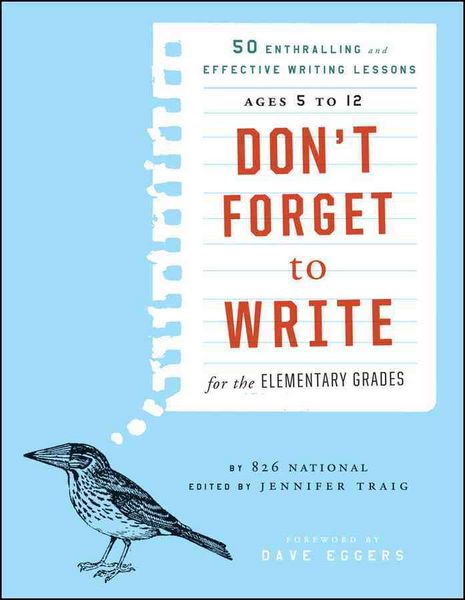
Produktbild: Don't Forget to Write for the Elementary Grades

Don't Forget to Write for the Elementary Grades 50 Enthralling and Effective Writing Lessons, Ages 5 to 12

24,99 €

inkl. gesetzl. MwSt., zzgl. Versandkosten


  • Kostenlose Lieferung ab 30 € Einkaufswert
  • Versandkostenfrei für Bonuscard-Kund*innen

Beschreibung

Produktdetails

Einband

Taschenbuch

Erscheinungsdatum

11.10.2011

Herausgeber

Jennifer Traig

Verlag

Wiley

Seitenzahl

288

Maße (L/B/H)

27,9/21,7/2 cm

Gewicht

821 g

Sprache

Englisch

ISBN

978-1-118-02431-7

Beschreibung

Produktdetails

Einband

Taschenbuch

Erscheinungsdatum

11.10.2011

Herausgeber

Jennifer Traig

Verlag

Wiley

Seitenzahl

288

Maße (L/B/H)

27,9/21,7/2 cm

Gewicht

821 g

Sprache

Englisch

ISBN

978-1-118-02431-7

Herstelleradresse

Libri GmbH
Europaallee 1
36244 Bad Hersfeld
DE

Email: gpsr@libri.de

Kundinnen und Kunden meinen

0 Bewertungen

Informationen zu Bewertungen

Zur Abgabe einer Bewertung ist eine Anmeldung im Konto notwendig. Die Authentizität der Bewertungen wird von uns nicht überprüft. Wir behalten uns vor, Bewertungstexte, die unseren Richtlinien widersprechen, entsprechend zu kürzen oder zu löschen.

Die Bewertungen sind nach Format, Anzahl Sterne und Datum sortiert.

Verfassen Sie die erste Bewertung zu diesem Artikel

Helfen Sie anderen Kund*innen durch Ihre Meinung

Kundinnen und Kunden meinen

0 Bewertungen filtern

Weitere Artikel finden Sie in

Die Leseprobe wird geladen.
  • Produktbild: Don't Forget to Write for the Elementary Grades
  • Foreword xv

    Acknowledgments xvii

    The Authors xix

    The Contributors xxiii

    1 Tragic Love Tales (by 6-Year-Olds) 1
    by joan kim and roberto carabeo

    Just what it sounds like.

    2 Writing For Pets 6
    by jennifer traig

    Students gain confidence in their language skills by writing a short story for a pet, then reading it to a pet audience. Ideal for very young writers, kindergarten through fourth grade.

    3 Fort Party! 9
    by maggie hanks

    In this workshop, students build forts using tables, couches, sheets, clamps, whatever you have around. They then go into the forts and do writing exercises. Best for grades two and up.

    4 Make-Believe Science 14
    by amie nenninger

    Facts take a backseat to fiction in this incredibly inventive workshop. Students compose their own wacky faux-science journal. A great way to get more science-minded students interested in creative writing. Ideal for students fifth grade and younger.

    5 Oh, You Shouldn't Have, Really (Or, How To Write A Jon Scieszka Picture Book) 22
    by jon scieszka

    Students learn how a master children's book author gets his ideas, and are invited to create their own. Great for grades two through four.

    6 Space Exploration for Beginners: What to Do When You Meet an Alien 29
    by moira cassidy

    Junior Space Explorers get the opportunity to "travel" to other worlds, record their experiences in their personal Space Exploration Logs, and make a scale model of one of the alien creatures they meet on their journey. NO SPACE TRAVEL EXPERIENCE NECESSARY. Ideal for grades two through four.

    7 Magic Realism 34
    by aimee bender

    What if sneezes brought good luck? What if you wrote about it? Our favorite magic realist invites students to imagine a world that's just slightly off Ideal for older writers, fifth grade and up.

    8 Recycled Elves: Fairy Tale Do-Overs 36
    by lucas gonzalez and chris molnar

    Rewriting fairy tales. Good for grades three to six.

    9 Creating a Guide to Modern Girlhood 40
    by meghan adler

    Learn how to write your autobiography, using a variety of techniques and styles popular in best-selling books for girls. We will do numerous drawing and writing activities. Best for grades five and up.

    10 How to Write a How-To 47
    by jory john

    Author Jory John teaches students how to write incredibly useful howtos, like "How to Avoid a Bath or Shower for as Long as Possible, and Maybe Even Longer." Ideal for grades four and up.

    11 Talking Trash! 51
    by holly mdunsworth and juliet weller dunsworth

    Students learn the basics of artifact/trash interpretation and create their own fascinating descriptions of found objects and "trash" artifacts. Neanderthals welcome. Ideal for grades three to six.

    12 Why did the chicken cross the lesson plan? Writing jokes and riddles 59
    by marcy zipke

    This introduction to writing jokes and puns encourages language play. Ideal for the very youngest writers-third grade and younger.

    13 Spy School 62
    by kate pavao and jennifer traig

    This intensive spy-training program encourages descriptive writing, code wordplay, and imaginative reporting. Best for slightly older writers, fourth grade through sixth.

    14 Literary Mash-Ups 72
    by susan voelker and susan meyer

    Kids write genre mash-ups (like a romantic horror story). Best for grades five and up.

    15 Brain Spelunking 76
    by scott beal

    Using Rorschach blots, picture prompts, and automatic writing techniques, we will plumb the inner depths of our minds and see what comes of it. Best for grades five and up.

    16 PJ Party 80
    by amy sumerton, jason depasquale, and chloe durkee

    Students learn to craft expert bedtime stories Trust us: wearing pajamas Helps Good for grades two through five.

    17 Any Which Way: Choosing Your Own Adventure 82
    by lindsey plait jones

    Students learn about the basic elements of telling a story, then create their own multichoice adventures. For grades two through six.

    18 Life-Size Board Game! 89
    by katherine fisher and jessica morton

    In this workshop, we use a life-size game board-where we are the moving pieces. We start off by creating the writing-inspired rules together. Once we've collectively thought up the most amazing board game that will soon sweep the nation, we play it together. Best for grades three and up.

    19 Brains! Or, Writing with Zombies 91
    by brad brubaker

    Students interview a real-life zombie, then use what they learn to write their own zombie stories BRAINS! Good for grades two through five.

    20 How to Write a Comic 95
    by todd pound and jennifer traig

    Students learn to tell stories in both written and visual media. Ideal for students who think they don't like to write. This class is designed for students in fourth grade and higher.

    21 The Meaning of Life (The Short Answer): Writing Big, Large, and Small! 105
    by elizabeth alexander and kathleen goldfarb

    In this workshop, we bravely identify our own big questions and explore them in stories that are both goofy and serious. Best for grades three and up.

    22 How to Survive Anything 108
    by rebecca wasley

    What do you tell your teacher when you forgot your homework? How can you get out of doing your chores? How do you stop aliens from taking over the planet? It's about time someone put together a book of how to survive absolutely anything-and that someone is you! Good for grades three and up.

    23 Vindicated Villains 112
    by nicholas decoulos

    Telling stories from the bad guy's point of view Good for grades three through five.

    24 Ono-Mato-What-Now? 114
    by katherine hunt and pardis parsa

    How do you capture the sound of a candy wrapper being torn open for the first time or your shiny new jacket rubbing against itself? In this lesson students explore everyday sounds to write a fabulous story. Best for grades three through five.

    25 All-Star Sports Stories 120
    by aaron devine and karen sama

    Students learn about underdogs, dramatic moments, and other factors that make sports and storytelling great. Good for grades four and up.

    26 I Wrote a Guidebook and All I Got Was This Lousy T-Shirt: Travel Writing 124
    by susie nadler and laura scholes

    The entire class collaborates to create a guidebook for their town and learn to observe and describe in the process. Good for grades five and up.

    27 Cooking For Cryptids: The Definitive Cryptozoological Cookbook 128
    by shannon digregorio

    Students carefully consider the palates of the wild unknown and cater to the likes of Bigfoot and the Chupacabra with an original short cookbook. Ideal for grades one through four.

    28 Science Club: Ice Cream! 131
    by elaine mpalucki

    In this workshop, students explore a scientific issue-here, the science of ice cream-then write about it. Ideal for grades one through four.

    29 Sticky Words 139
    by maya shugart and ryan smith

    Why should the ears have all the fun when it comes to poetry? Students write original poems and collage them into art for readers' eyes and ears to enjoy in harmony. Good for grades three through five.

    30 Maddening Mad Libs 142
    by dan gershman

    Students write their own Mad Libs and learn some grammar in the process.

    31 If I Were a King or Queen: Creating Your Own Country 147
    by jryan stradal and robert jury

    Imagination gets a thorough workout as students are invited to imagine their own country, from geography to government. Anything goes. Ideal for writers from second grade through sixth.

    32 How to Be a Detective 150
    by amie nenninger

    This dynamic lesson invites students to solve a real-life mystery, then write about it. Students really get into it. Best for fourth grade and older.

    33 Harry Potter Spider-Man vs. the Evil Zombie Ninjas 157
    by eric canosa

    Students learn the basics of conflict in a supernatural showdown between good guys and bad guys. Good for grades two and up.

    34 Out There: Drawing And Writing New Worlds: An Interdisciplinary Art and Writing Lesson 160
    by meghan mccook

    Create your own 2-D piece of artwork using lots of texture, shape, and color. Then write a description or "sketch" of the universe only YOU could imagine! Best for grades five and up.

    35 Whining Effectively; Or, How to Persuade Your Parents 163
    by taylor jacobson and abigail jacobs

    Students learn the basics of persuasive writing by writing about things they're really invested in-like later bedtimes. Best for slightly older writers, fifth and sixth grade.

    36 For the Birds! 167
    by scarlett stoppa

    Students work together to create never-before-discovered birds and create short adventures for their character through these feathered flights of fancy. Ideal for grades two through four.

    37 There's Poetry in an Atom: Writing Creatively about Science 170
    by nicole moore and ryan moore

    This class seeks to make the sciences less esoteric for those who like to write, and to make writing more manageable for those who love science. Best for grades four and up.

    38 Guerrilla Poetry 175
    by becky eidelman

    This lesson helps students find poems that speak to them and discover ways of inserting them, unexpectedly, into other peoples' lives. Ideal for grades four and up.

    39 Frankenfilms 177
    by lindsey robinson and jon zack

    In this lesson, students take some well-loved recent movies, write in new characters, and completely redo the endings. Best for grades four and up.

    40 The Rules of Magic 179
    by julius diaz panoriñgan

    This inventive lesson plan uses the conventions of fantasy and magic to guide some very creative storytelling. Best for fifth grade and up.

    41 And Now I Will Perform an Interpretive Dance: Kinetic Writing 182
    by angela hernandez

    This lesson translates physical storytelling to the page. Great for students who need to get up and move. Ideal for grades second through sixth.

    42 Note To Self: Writing Autobiography 184
    by tania ketenjian

    This workshop invites you to take a close look at yourself and share it with the world. Good for grades three and up.

    43 Smell This Story, Taste This Poem 186
    by gabriela pereira

    A story/poetry writing workshop that focuses on using the five senses for inspiration. Best for grades four and up.

    44 Grammarama: Homonym Stand-Off 198
    by margaret mason

    Can grammar be fun? Yes, it's an extreme grammar challenge. One will win! All will learn! For grades five and up.

    45 How to Be the Next President of the United States! Or, How to Write a Really, Really, Really Good Letter 204

    by jenny howard

    In this lesson plan inspired by the 826 book Thanks and Have Fun Running the Country: Kids' Letters to President Obama, students learn how to compose meaningful letters for the president and other people they admire. Good for grades three and up.

    46 Character Assassination! 208
    by eric canosa

    In this lesson, students learn to flesh out their characters with all the details that make them feel real. We start by killing them off (sort of), using a brief obituary to really figure out what's important in the character's life. Good for grades four and up.

    47 Sonnets with Superpowers 211
    by sarah green

    Do you want to write poems that can: see in the dark, travel invisibly, breathe underwater, or fly faster than light? In this workshop, we look at the basics of the sonnet form, and learn how to craft creative new sonnets the likes of which you've never seen. Best for grades four and up.

    48 Best Imaginary Vacation Ever! 214
    by micah pilkington

    Where would you go if you could go anywhere? What would you do? This lesson plan invites students to imagine their dream vacation and turn their fantasy into a compelling story. Good for any age, but especially for fifth grade and younger.

    49 What's the Scoop? How to Get the Real Story 218
    by mark de la viña

    In this lesson students learn the basics of journalism and try out their newly acquired interview skills. Best for grades five and up.

    50 The Illustrated Book Report 221
    by rebecca stern and brad wolfe

    In this inventive lesson plan, students respond to books through comic Panels. Best for grades four and up.

    Appendix

    Evaluation Rubric 225

    Self-Assessment Checklist 226

    Common Core Curriculum Standards 227

    826 Centers and Staff 255