KI-Beratung Beta

Gutscheinbedingungen

**Gültig bis 18.11.2026 auf englischsprachige Klassiker (klassiker-32728) online auf thalia.at und in der Thalia App. Einzelne Artikel können ausgeschlossen sein. Ausgenommen sind preisgebundene Artikel & eBooks. Pro Einkauf einmal einlösbar. Click & Collect nur bei Onlinevorabzahlung möglich. Keine Barauszahlung. Nicht kombinierbar mit anderen Aktionen und Gutscheinen. Gutschein wird auf max. 500€ Bestellwert angerechnet. Nicht gültig für Geschenkkarten, Versandkosten und Services.

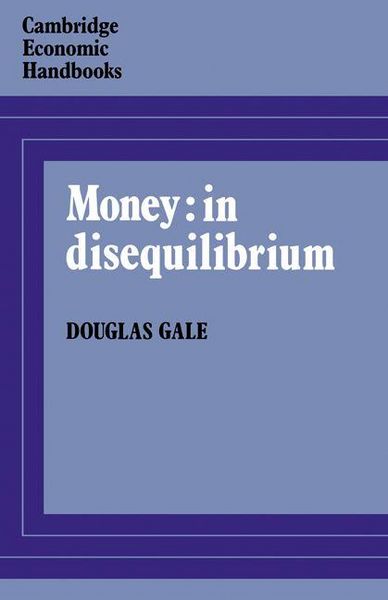
  • Produktbild: Money
  • Produktbild: Money

Money In Disequilibrium

63,99 €

inkl. gesetzl. MwSt., Versandkostenfrei


Beschreibung

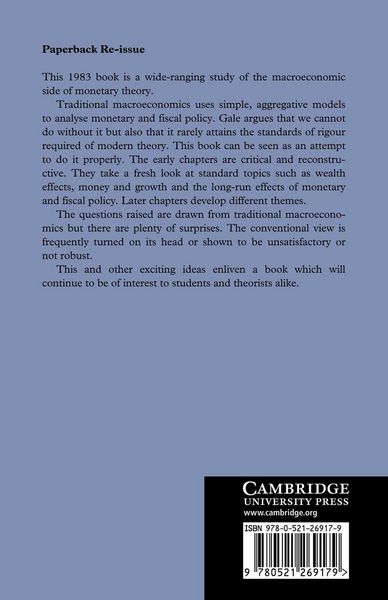
This 1983 book is a wide-ranging study of the macroeconomic side of monetary theory. Traditional macroeconomics uses simple, aggregative models to analyse monetary and fiscal policy, which we cannot do without but also rarely attains rigour required of modern theory. This book represents an attempt to...

Beschreibung

This 1983 book is a wide-ranging study of the macroeconomic side of monetary theory. Traditional macroeconomics uses simple, aggregative models to analyse monetary and fiscal policy, which we cannot do without but also rarely attains rigour required of modern theory. This book represents an attempt to do it properly.

Produktdetails

Einband

Taschenbuch

Erscheinungsdatum

25.03.2011

Herausgeber F. H. Hahn
Verlag Cambridge Academic

Produktdetails

Einband

Taschenbuch

Erscheinungsdatum

25.03.2011

Herausgeber F. H. Hahn
Verlag Cambridge Academic
Seitenzahl

382

Maße (L/B/H)

21,6/14/2,2 cm

Gewicht

490 g

Sprache

Englisch

ISBN

978-0-521-26917-9

Noch keine Bewertungen vorhanden

Verfassen Sie die erste Bewertung zu diesem Artikel

Helfen Sie anderen Kundinnen und Kunden durch Ihre Meinung.

Kundinnen und Kunden meinen

Bewertungen (0)

  • Produktbild: Money
  • Produktbild: Money
  • Introduction; Part I; Section 1. Disequilibrium Theory; Section 2. Wealth Effects; Part II; Section 1. Money and Growth; Section 2. An Exact, Transaction-Cost-Based Model of a Monetary Economy; Part III; Section 1. Investment and Saving; Section 2. Expectations and the Crowding-Out Effect; Part IV; Section 1. Liquidity-Constrained Equilibria; Section 2. Further Results on Liquidity-Constrained Equilibria; Part V. A 'Competitive' Theory of Unemployment; Part VI. The Balance of Payments; Mathematical appendix; Bibliographical notes; References; Index.