Gutscheinbedingungen

**Gültig bis 02.09.2026 auf fremdsprachige Bücher in der Thalia App. Einzelne Artikel können ausgeschlossen sein. Ausgenommen sind preisgebundene Artikel & eBooks. Pro Einkauf einmal einlösbar. Click & Collect nur bei Onlinevorabzahlung möglich. Keine Barauszahlung. Nicht kombinierbar mit anderen Aktionen und Gutscheinen. Gutschein wird auf max. 500€ Bestellwert angerechnet. Nicht gültig für Geschenkkarten, Versandkosten und Services.

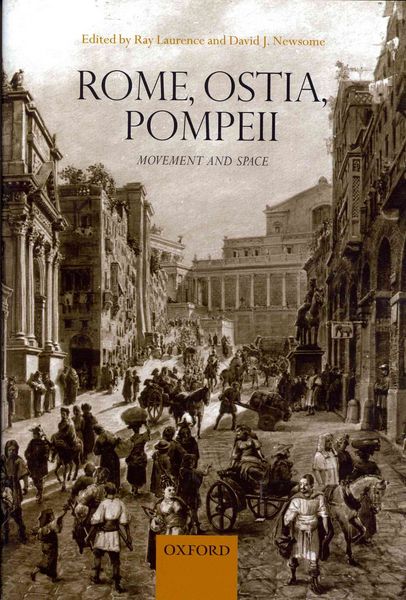
Produktbild: Rome, Ostia, Pompeii

Rome, Ostia, Pompeii Movement and Space

195,99 €

inkl. gesetzl. MwSt., Versandkostenfrei


Beschreibung

Produktdetails

Einband

Gebundene Ausgabe

Erscheinungsdatum

01.02.2012

Abbildungen

77 illustrations and 11 tables.

Herausgeber

Ray Laurence + weitere

Verlag

Oxford Academic

Seitenzahl

466

Maße (L/B/H)

24/16,1/2,9 cm

Gewicht

860 g

Sprache

Englisch

ISBN

978-0-19-958312-6

Beschreibung

Produktdetails

Einband

Gebundene Ausgabe

Erscheinungsdatum

01.02.2012

Abbildungen

77 illustrations and 11 tables.

Herausgeber

Verlag

Oxford Academic

Seitenzahl

466

Maße (L/B/H)

24/16,1/2,9 cm

Gewicht

860 g

Sprache

Englisch

ISBN

978-0-19-958312-6

Herstelleradresse

Libri GmbH
Europaallee 1
36244 Bad Hersfeld
DE

Email: gpsr@libri.de

Noch keine Bewertungen vorhanden

Verfassen Sie die erste Bewertung zu diesem Artikel

Helfen Sie anderen Kundinnen und Kunden durch Ihre Meinung.

Kundinnen und Kunden meinen

Bewertungen (0)

  • Produktbild: Rome, Ostia, Pompeii
    • Dedication
    • Table of contents
    • Preface
    • Acknowledgments
    • Notes on Contributors
    • Introduction
    • Making Movement Meaningful
    • Part I: Articulating Movement and Space
    • 1: Diana Spencer: Movement and the Linguistic Turn: Reading Varro s de Lingua Latina
    • 2: Ray Laurence: Literature and the Spatial Turn: Movement and Space in Martial s Epigrams
    • 3: Akkelies van Nes: Measuring spatial visibility, adjacency, permeability and degrees of street life in Pompeii
    • 4: Eleanor Betts: Towards a Multisensory Experience of Movement in the City of Rome
    • Part II: Movement in the Roman city: infrastructure and organisation
    • 5: Jeremy Hartnett: The Power of Nuisances on the Roman Street
    • 6: Steven Ellis: Pes dexter: Superstition and the state in the shaping of shop-fronts and street activity in the Roman world
    • 7: Alan Kaiser: Cart Traffic Flow in Pompeii and Rome
    • 8: Eric E. Poehler: Where to Park? Carts, Stables and the Economics of Transport in Pompeii
    • 9: Hanna Stöger: The Spatial Organisation of the Movement Economy: The Analysis of Ostia s scholae
    • Part III: Movement and the Metropolis
    • 10: Claire Holleran: The Street Life of Ancient Rome
    • 11: Elizabeth Macaulay-Lewis: The City in Motion: Walking for transport and leisure in the city of Rome
    • 12: David J. Newsome: Movement and Fora in Rome (the Late Republic to the first century CE)
    • 13: Francesco Trifilò: Movement, gaming and the use of space in the forum
    • 14: Diane Favro: Construction Traffic in Imperial Rome: Building the Arch of Septimius Severus
    • 15: Simon Malmberg and Hans Bjur: Movement and urban development at two city gates in Rome: the Porta Esquilina and Porta Tiburtina
    • Endpiece
    • From Movement to Mobility: Future Directions
    • Bibliography