Gutscheinbedingungen

**Gültig bis 06.07.2026 auf fremdsprachige Bücher online auf thalia.at, in der Thalia App ab einem Mindestbestellwert von 30€ und in allen Thalia Buchhandlungen in Österreich. In den Buchhandlungen nur gültig auf lagernde Ware. Einzelne Artikel können ausgeschlossen sein. Ausgenommen sind preisgebundene Artikel & eBooks. Pro Einkauf einmal einlösbar. Nur gültig gegen Vorlage oder im Onlineshop hinterlegter Bonuscard. Infos zur Einlösung in der Buchhandlung sind auf der Bonuscard-Vorteilspreisseite zu finden. Click & Collect nur bei Onlinevorabzahlung möglich. Keine Einlösung bei Scan & Go-Bezahlung. Keine Barauszahlung. Nicht kombinierbar mit anderen Aktionen und Gutscheinen. Gutschein wird auf max. 500€ Bestellwert angerechnet. Nicht gültig für Versandkosten und Services.

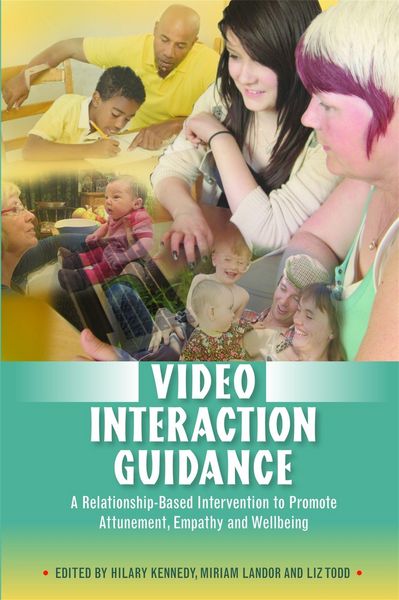
Produktbild: Video Interaction Guidance

Video Interaction Guidance A Relationship-Based Intervention to Promote Attunement, Empathy and Wellbeing

69,99 €

inkl. gesetzl. MwSt., Versandkostenfrei


Beschreibung

Produktdetails

Einband

Taschenbuch

Erscheinungsdatum

15.08.2011

Herausgeber

Miriam Landor + weitere

Verlag

Jessica Kingsley Publications

Seitenzahl

336

Maße (L/B/H)

23,6/15,6/2,5 cm

Gewicht

486 g

Sprache

Englisch

ISBN

978-1-84905-180-4

Beschreibung

Produktdetails

Einband

Taschenbuch

Erscheinungsdatum

15.08.2011

Herausgeber

Verlag

Jessica Kingsley Publications

Seitenzahl

336

Maße (L/B/H)

23,6/15,6/2,5 cm

Gewicht

486 g

Sprache

Englisch

ISBN

978-1-84905-180-4

Herstelleradresse

Libri GmbH
Europaallee 1
36244 Bad Hersfeld
DE

Email: gpsr@libri.de

Noch keine Bewertungen vorhanden

Verfassen Sie die erste Bewertung zu diesem Artikel

Helfen Sie anderen Kundinnen und Kunden durch Ihre Meinung.

Kundinnen und Kunden meinen

Bewertungen (0)

Die Leseprobe wird geladen.
  • Produktbild: Video Interaction Guidance
  • Preface. Hilary Kennedy, Educational Psychologist and Co-founder of the VEROC Centre, University of Dundee, UK. Part 1. Video Interaction Guidance. 1.What is Video Interaction Guidance (VIG)? Hilary Kennedy. 2. VIG and the Supervision Process. Kateøina Šilhánová, SPIN, Czech Republic and Michelle Sancho, Senior Educational Psychologist, West Berkshire Council and Honorary Lecturer, University College London, UK. 3. How and Why Does VIG Work? Jenny Cross, Freelance Educational Psychologist, VIG Supervisor and Coach, UK and Hilary Kennedy. 4. What is the Evidence that VIG is Effective? Ruben Fukkink, Researcher, University of Amsterdam, The Netherlands, Hilary Kennedy and Liz Todd, Professor of Educational Inclusion, Newcastle University, UK. Part 2. Applications of VIG. 5. VIG as a Method to Promote Sensitive Parent-Child Interaction in Infancy. Mariska Klein Velderman, TNO (Netherlands Organisation for Applied Scientific Research) Quality of Life, The Netherlands. 6. Supporting Vulnerable Families to Change through VIG. Maria V. Doria, Post-doctoral Researcher, University of Lisbon, Portugal and Honorary Research Fellow, University of East Anglia, UK, Calum Strathie, VIGuk Supervisor, UK and Sandra Strathie, VIGuk Supervisor and Social Worker, UK. 7. Use of VIG in Schools. David Gavine, formerly Principal Educational Psychologist, Dundee City Council, UK and Penny Forsyth, Senior Educational Psychologist, Dundee City Council and Co-founder of the VEROC Centre, University of Dundee, UK. 8. VIG when Working with Children and Adults on the Autistic Continuum. Penny Forsyth and Heather Sked, Educational Psychologist, The Highland Council, UK. 9. How VIG can Develop Partnerships with Parents/Educators in the Context of Childhood Hearing Impairment. Deborah James, National Institute of Health Research, Biomedical Research Unit in Hearing, Nottingham University, UK. 10. Video Enhanced Reflective Practice. Sandra Strathie, Calum Strathie and Hilary Kennedy. 11. Enhancing Teacher and Student Interactions in Higher Education through Video-Enhanced Reflection on Practice. Ruth Cave, Lecturer, University of Dundee, UK, Angela Roger, Senior Lecturer, University of Dundee, UK, and Richard Young, Professional Development Manager, Newcastle University, UK. Part 3. Connections. 12. Confirming Companionship in Interests, Intentions and Emotions: How VIG Works. Colwyn Trevarthen, Department of Psychology, University of Edinburgh, UK. 13. VIG and Attachment: Theory, Practice and Research. Jenny Jarvis, Chartered Counselling Psychologist and VIG Supervisor, South Lowestoft Children's Centres, UK and Nelleke Polderman, Founder and Director of Basic Trust, The Netherlands. 14. Video Feedforward: Towards a Preferred Future. Miriam Landor, Educational Psychologist, West Lothian Council and Lecturer, University of Dundee, UK and Calum Strathie. 15. Reflecting on VIG Practice from a Relational Systemic Perspective. Carole S. Chasle, Senior Educational Psychologist, Derbyshire County Council, UK. 16. Narrative Therapy and VIG: Windows into Preferred Identities. Denise McCartan, Stockton-on-Tees Educational Psychology Service, UK and Liz Todd. 17. Mindfulness, Attunement and VIG: Being Fully Present while Communicating. Henk Vermeulen, Mental Health Psychologist, Max Ernst GGZ, The Netherlands, Jacqueline Bristow, Chartered Educational Psychologist, UK, and Miriam Landor. 18. Beyond Therapy: Supporting a Culture of Relational Democracy. Wilma Barrow, Newcastle University and Scottish Borders Council, UK and Liz Todd. Glossary. References. The Contributors.