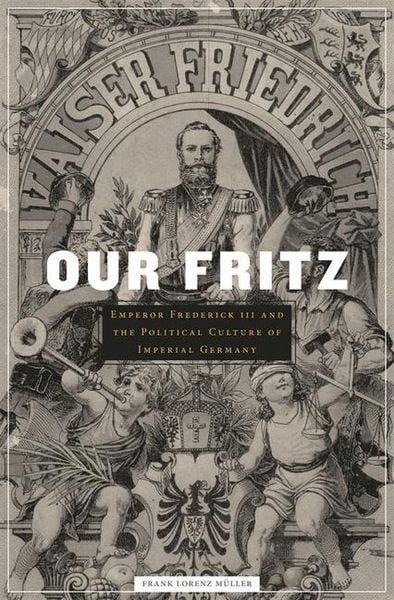
I found this one of the most readable, enjoyable, and wise studies on Imperial Germany to have appeared in the past decade. The title Our Fritz illustrates how Müller is able to avoid writing a hagiography of a tragic king. Instead, he weaves the threads of affection -- given and received, not given and not received -- into a fabric that envelops a nuclear family, a dynasty, and a nation. A mature scholarly assessment and first-rate writing make the story of Frederick come alive and offer something genuinely new. I highly recommend it.
-- James Retallack, University of Toronto
A gripping biographical study of a fascinating and important figure. Müller presents a number of bracingly revisionist arguments in a thorough, rigorous, and compelling way, anchored in a witty and humane portrayal of the central actors. My enthusiasm for this book is not only for its historical acuity, breadth of compass, and evidentiary depth, but for the memorable portrait it paints of a gifted, privileged, melancholy, and doomed individual.
-- Christopher Clark, author of Iron Kingdom: The Rise and Downfall of Prussia, 1600-1947
[A] thought-provoking, highly informed biography.
-- Martin Rubin Wall Street Journal
Effective, well-grounded and thoughtful...This is an important work, particularly notable for its discussion of political myths, and especially as a political resource. It is to be hoped that comparable work can be produced for several other contemporary rulers.
-- Jeremy Black Times Higher Education
How many times have I told a class that if only William I had died earlier, the history of Europe would have been different? Frank Lorenz Müller has made me less certain of that. His excellent biography of Frederick William--one part biography, one part revisionism and one part cultural histor--offers a subtler, more nuanced and less emotional account of "Our Fritz."
-- Jonathan Steinberg London Review of Books
A concise, vivid and unfailingly interesting portrait of one of the nineteenth century's most appealing and most unhappy rulers.
-- James J. Sheehan Times Literary Supplement