
KI-Beratung Beta

Gutscheinbedingungen

**Gültig am 25.11.2026 auf fremdsprachige Bücher online auf thalia.at und in der Thalia App. Einzelne Artikel können ausgeschlossen sein. Ausgenommen sind preisgebundene Artikel & eBooks. Pro Einkauf einmal einlösbar. Click & Collect nur bei Onlinevorabzahlung möglich. Keine Barauszahlung. Nicht kombinierbar mit anderen Aktionen und Gutscheinen. Gutschein wird auf max. 500€ Bestellwert angerechnet. Nicht gültig für Geschenkkarten, Versandkosten und Services.

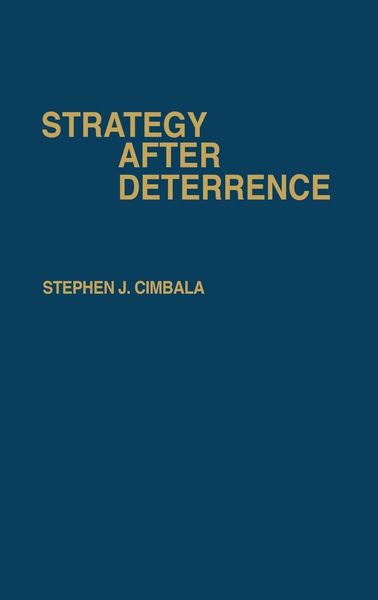
  • Produktbild: Strategy After Deterrence
  • Produktbild: Strategy After Deterrence

Strategy After Deterrence

78,99 €

inkl. gesetzl. MwSt., Versandkostenfrei


Beschreibung

The profound political changes in the USSR and Eastern Europe during 1989 have forced the United States and its Western European allies to reevaluate both their long held military strategy of nuclear deterrence and the traditional role of NATO in European affairs. In this volume, Stephen Cimbala considers...

Beschreibung

The profound political changes in the USSR and Eastern Europe during 1989 have forced the United States and its Western European allies to reevaluate both their long held military strategy of nuclear deterrence and the traditional role of NATO in European affairs. In this volume, Stephen Cimbala considers the ways in which American military priorities will have to change now that the tangible threat to Europe has been removed, exploring the options available to America and NATO given the new political and economic realities in Europe and the Soviet Union. Drawing upon a rich literature of Soviet and American defense strategy, Cimbala examines the structure and effectiveness of deterrence as a military strategy, the relationship between conventional and nuclear weapons, the likely course of future conflicts, and alternative military strategies.
Following an introductory chapter which defines the concepts of deterrence and dissuasion and offers an overview of the changing character of European politics, Cimbala reviews the political context for the development of military strategy in Europe. Subsequent chapters consider the relationship between military stability and the likelihood of winning wars in their initial stages, analyze the issue of deterrence during war, discuss the potential for atypical wars in the future, and investigate the linkages between deception and deterrence. A separate chapter addresses the attempt to substitute non-nuclear dissuasion for nuclear deterrence, in the form of anti-nuclear strategic defenses which could defeat nuclear offenses. In the final chapter, Cimbala summarizes his conclusions and makes some additional observations about the implications of our new view of NATO and deterrence. Students of international relations, foreign policy, and military studies will find Cimbala's work enlightening and provocative reading.

Produktdetails

Einband

Gebundene Ausgabe

Altersempfehlung

7 - 17 Jahr(e)

Erscheinungsdatum

30.01.1991

Verlag Bloomsbury Academic

Produktdetails

Einband

Gebundene Ausgabe

Altersempfehlung

7 - 17 Jahr(e)

Erscheinungsdatum

30.01.1991

Verlag Bloomsbury Academic
Seitenzahl

286

Maße (L/B/H)

24/16,1/2 cm

Gewicht

546 g

Sprache

Englisch

ISBN

978-0-275-93741-6

Herstelleradresse

Libri GmbH
Europaallee 1
36244 Bad Hersfeld
DE

Email: gpsr@libri.de

Noch keine Bewertungen vorhanden

Verfassen Sie die erste Bewertung zu diesem Artikel

Helfen Sie anderen Kundinnen und Kunden durch Ihre Meinung.

Kundinnen und Kunden meinen

Bewertungen (0)

  • Produktbild: Strategy After Deterrence
  • Produktbild: Strategy After Deterrence
  • Introduction
    Removing the Nuclear Shadow: Political Context
    Temptation to Attack The Initial Period of War
    Limiting War: On the Extension of Deterrence into Military Conflict
    Atypical Wars: Beyond Deterrence?
    Military Deception and Deterrence
    Escaping the Nuclear Revolution: Anti-Nuclear Defenses and Deterrence
    Strategy After Deterrence: Concluding Observations
    Selected Bibliography
    Index