Gutscheinbedingungen

**Gültig bis 06.07.2026 auf fremdsprachige Bücher online auf thalia.at, in der Thalia App ab einem Mindestbestellwert von 30€ und in allen Thalia Buchhandlungen in Österreich. In den Buchhandlungen nur gültig auf lagernde Ware. Einzelne Artikel können ausgeschlossen sein. Ausgenommen sind preisgebundene Artikel & eBooks. Pro Einkauf einmal einlösbar. Nur gültig gegen Vorlage oder im Onlineshop hinterlegter Bonuscard. Infos zur Einlösung in der Buchhandlung sind auf der Bonuscard-Vorteilspreisseite zu finden. Click & Collect nur bei Onlinevorabzahlung möglich. Keine Einlösung bei Scan & Go-Bezahlung. Keine Barauszahlung. Nicht kombinierbar mit anderen Aktionen und Gutscheinen. Gutschein wird auf max. 500€ Bestellwert angerechnet. Nicht gültig für Versandkosten und Services.

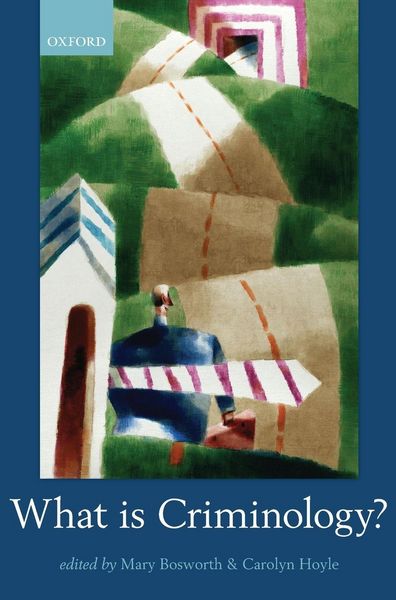
  • Produktbild: What Is Criminology C
  • Produktbild: What Is Criminology C

What Is Criminology C

208,99 €

inkl. gesetzl. MwSt., Versandkostenfrei


Beschreibung

Produktdetails

Einband

Gebundene Ausgabe

Erscheinungsdatum

27.01.2011

Herausgeber

Mary Bosworth + weitere

Verlag

Oxford Academic

Seitenzahl

588

Maße (L/B/H)

25/17,5/3,6 cm

Gewicht

1168 g

Sprache

Englisch

ISBN

978-0-19-957182-6

Beschreibung

Produktdetails

Einband

Gebundene Ausgabe

Erscheinungsdatum

27.01.2011

Herausgeber

Verlag

Oxford Academic

Seitenzahl

588

Maße (L/B/H)

25/17,5/3,6 cm

Gewicht

1168 g

Sprache

Englisch

ISBN

978-0-19-957182-6

Herstelleradresse

Libri GmbH
Europaallee 1
36244 Bad Hersfeld
DE

Email: gpsr@libri.de

Noch keine Bewertungen vorhanden

Verfassen Sie die erste Bewertung zu diesem Artikel

Helfen Sie anderen Kundinnen und Kunden durch Ihre Meinung.

Kundinnen und Kunden meinen

Bewertungen (0)

Die Leseprobe wird geladen.
  • Produktbild: What Is Criminology C
  • Produktbild: What Is Criminology C
    • Preface: John Braithwaite

    • Introduction

    • PART I Criminology and its Constituencies

    • 1. Conceptual allegiances: whose side are you on?

    • 1: Ian Loader and Richard Sparks: Criminology's Public Roles: A Drama in Six Acts

    • 2: Michael R. Gottfredson: Some Advantages of a Crime-Free Criminology

    • 3: Eugene McLaughlin: Critical Criminology: The Renewal of Theory Politics and Practice

    • 4: Jeff Ferrell: Disciplinarity and Drift

    • 5: David Brown: The Global Financial Crisis: Neo-Liberalism, Social Democracy and Criminology

    • 6: Pat Carlen: Against Evangelism in Academic Criminology: For Criminology as a Scientific Art

    • 2. Methodological allegiances: how should criminology be done?

    • 7: Kathleen Daly: Shake it up Baby: Practicing Rock 'n' Roll Criminology

    • 8: Clifford Shearing and Monique Marks: Criminology's Disney World: The Ethnographer's Ride of South African Criminal Justice

    • 9: Nicole Rafter: Origins of Criminology

    • 10: Linda G. Mills: He was a Woman: Pitfalls and Possibilities of Popular Audiences

    • 11: Marcus Felson: Sort Crimes, Not Criminals

    • 12: Paternoster and Shawn Bushway: Studying Desistance from Crime: Where Quantitative Meets Qualitative Methods

    • 13: Mike Hough: Criminology and the Role of Experimental Research

    • 3. Political allegiances: what is criminology for?

    • 14: Beth E. Richie: Criminology and Social Justice: Expanding the Intellectual Commitment

    • 15: Thomas Mathiesen and Ole Kristian Hjemdal: A New Look at Victim and Offender - An Abolitionist Approach

    • 16: Natalie J. Sokoloff and Amanda Burgess-Proctor: Remembering Criminology's 'Forgotten Theme': Seeking Justice in U.S. Crime Policy Using an Intersectional Approach

    • 17: Chris Cunneen: Postcolonial Perspectives for Criminology

    • PART II Criminology and its Borders

    • 1. The limits of the discipline: where do we draw the line?

    • 18: Lucia Zedner: Putting Crime Back on the Criminological Agenda

    • 19: Aaron Doyle, Janet Chan, and Kevin D. Haggerty: Transcending the Boundaries of Criminology: The Example of Richard Ericson

    • 20: David Garland: Criminology's Place in the Academic Field

    • 21: Shadd Maruna and Charles Barber: Why Can't Criminology Be More Like Medical Research?: Be Careful What You Wish For

    • 22: Andrew Ashworth: Criminal Justice, Not Criminology?

    • 23: William A. Schabas: Criminology, Accountability and International Justice

    • 2. The limits of geography: does criminology travel?

    • 24: Ben Bowling: Transnational Criminology and the Globalization of Harm Production

    • 25: Stephan Parmentier: The Missing Link: Criminological Perspectives on Dealing with the Past

    • 26: David Nelken: Why Compare Criminal Justice?

    • 27: Katja Franko Aas: Visions of Global Control: Cosmopolitan Aspirations in a World of Friction

    • 3. The limits of the academy: what is the impact of criminology?

    • 28: Lawrence W. Sherman: Criminology as Invention

    • 29: Kelly Hannah-Moffat: Criminological Cliques: Narrowing Dialogues, Institutional Protectionism, and the Next Generation

    • 30: Tim Hope: Official Criminology and the New Crime Sciences

    • 31: Alfred Blumstein: Criminology: Science and Policy Analysis

    • 32: Ian O'Donnell: Criminology, Bureaucracy and Unfinished Business

    • 33: Tim Newburn: Criminology and Government: Some reflections on Recent Developments in England

    • 34: Alison Liebling: Being a Criminologist: Investigation as a Lifestyle and Living

    • Conclusion