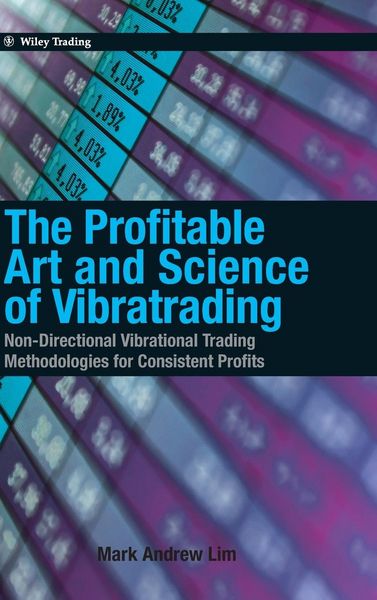
The Profitable Art and Science of Vibratrading Non-Directional Vibrational Trading Methodologies for Consistent Profits
Aus der Reihe
Wiley Trading Series
61,99 €
inkl. gesetzl. MwSt.,
Beschreibung
Produktdetails
Einband
Gebundene Ausgabe
Erscheinungsdatum
30.08.2011
Verlag
John Wiley & Sons IncSeitenzahl
264
Maße (L/B/H)
23,5/15,7/1,9 cm
Gewicht
540 g
Auflage
1. Auflage
Sprache
Englisch
ISBN
978-0-470-82874-8
Enter the world of vibration trading with a new methodology for making more money, more safely
What if you could enter the markets and know, in advance, the exact value of trades needed to sustain a losing streak, by knowing their Martingale limits, to finally ensure a win? With Vibratrading you can. Applying the principles of "Boundedness" in conjunction with powerful stock/ETF diversification techniques, Vibratrading(TM) allows you to accomplish what most traders and investors previously thought impossible, giving you an unfair advantage in any market situation.
A new and revolutionary perspective on trading and investing, Vibratrading provides a powerful methodology for extracting profit. Non-directional, it is designed to appeal greatly to the vast number of directional traders consistently struggling to keep from losing their trading accounts. Providing a better, safer way to participate in the markets to make consistent profits, it is the only book you need to gain a crucial competitive edge.
* Presents a radical new trading strategy, Vibratrading(TM), that the market cannot move adversely against
* Demonstrates how a scale trader can enter the market at any level, without being restricted to entry at the "conventional lower end" of the instrument's historical range
* Teaches traders and investors the important techniques of securitizing and monetizing profits with emphasis on risk free vibrational share accumulation
Presenting a truly non-directional methodology, Vibratrading is the book you need to make more money, more safely.
What if you could enter the markets and know, in advance, the exact value of trades needed to sustain a losing streak, by knowing their Martingale limits, to finally ensure a win? With Vibratrading you can. Applying the principles of "Boundedness" in conjunction with powerful stock/ETF diversification techniques, Vibratrading(TM) allows you to accomplish what most traders and investors previously thought impossible, giving you an unfair advantage in any market situation.
A new and revolutionary perspective on trading and investing, Vibratrading provides a powerful methodology for extracting profit. Non-directional, it is designed to appeal greatly to the vast number of directional traders consistently struggling to keep from losing their trading accounts. Providing a better, safer way to participate in the markets to make consistent profits, it is the only book you need to gain a crucial competitive edge.
* Presents a radical new trading strategy, Vibratrading(TM), that the market cannot move adversely against
* Demonstrates how a scale trader can enter the market at any level, without being restricted to entry at the "conventional lower end" of the instrument's historical range
* Teaches traders and investors the important techniques of securitizing and monetizing profits with emphasis on risk free vibrational share accumulation
Presenting a truly non-directional methodology, Vibratrading is the book you need to make more money, more safely.
Kundinnen und Kunden meinen
Verfassen Sie die erste Bewertung zu diesem Artikel
Helfen Sie anderen Kund*innen durch Ihre Meinung
Kurze Frage zu unserer Seite
Vielen Dank für Ihr Feedback
Wir nutzen Ihr Feedback, um unsere Produktseiten zu verbessern. Bitte haben Sie Verständnis, dass wir Ihnen keine Rückmeldung geben können. Falls Sie Kontakt mit uns aufnehmen möchten, können Sie sich aber gerne an unseren Kund*innenservice wenden.
zum Kundenservice