Gutscheinbedingungen

**Gültig bis 24.09.2026 ab einem Mindestbestellwert von 30€ auf Spielzeug, Schreibwaren, Filme, Geschenke & Trends, Musik, tolino eReader & Zubehör, Hörbücher und Hörbuch-Downloads, nicht preisgebundene Bücher und Kalender online auf thalia.at und in der Thalia App. Einzelne Artikel können ausgeschlossen sein. Aufgrund der Buchpreisbindung sind deutschsprachige Bücher und eBooks ausgenommen. Zusätzlich ausgenommen sind Abos & Flatrates, Games, Geschenkkarten/-boxen, Shelfies, Software, Zeitschriften sowie einzelne Artikel von tonies®. Pro Einkauf einmal einlösbar. Click & Collect nur bei Onlinevorabzahlung möglich. Keine Barauszahlung. Nicht kombinierbar mit anderen Aktionen und Gutscheinen. Gutschein wird auf max. 500€ Bestellwert angerechnet. Nicht gültig für Versandkosten und Services. Preisgebundene Artikel sind vom Mindestbestellwert ausgeschlossen.

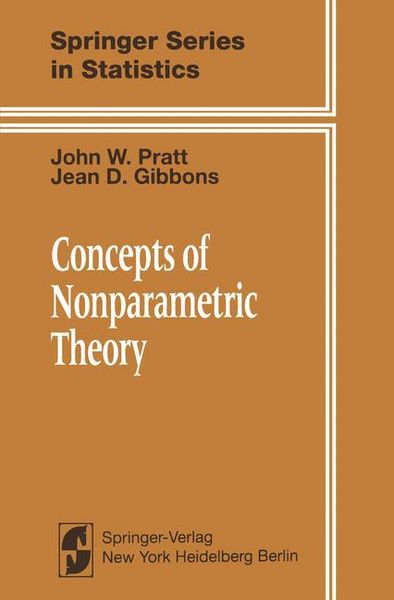
Produktbild: Concepts of Nonparametric Theory
- 11%

Concepts of Nonparametric Theory

11% sparen

77,99 € UVP 88,00 €

inkl. gesetzl. MwSt., Versandkostenfrei


Beschreibung

Produktdetails

Einband

Gebundene Ausgabe

Erscheinungsdatum

01.12.1981

Verlag

Springer New York

Seitenzahl

462

Maße (L/B/H)

1/1/1 cm

Gewicht

835 g

Auflage

1981.

Sprache

Englisch

ISBN

978-0-387-90582-2

Beschreibung

Produktdetails

Einband

Gebundene Ausgabe

Erscheinungsdatum

01.12.1981

Verlag

Springer New York

Seitenzahl

462

Maße (L/B/H)

1/1/1 cm

Gewicht

835 g

Auflage

1981.

Sprache

Englisch

ISBN

978-0-387-90582-2

Herstelleradresse

Springer Heidelberg
Tiergartenstr. 17
69121 Heidelberg
DE
buchhandel-buch@springer.com

Noch keine Bewertungen vorhanden

Verfassen Sie die erste Bewertung zu diesem Artikel

Helfen Sie anderen Kundinnen und Kunden durch Ihre Meinung.

Kundinnen und Kunden meinen

Bewertungen (0)

  • Produktbild: Concepts of Nonparametric Theory
  • 1 Concepts of Statistical Inference and the Binomial Distribution.- 1 Introduction.- 2 Probability Distributions.- 3 Estimators and their Properties.- 3.1 Unbiasedness and Variance.- 3.2 Consistency.- 3.3 Sufficiency.- 3.4 Minimum Variance.- 4 Hypothesis Testing.- 4.1 Tests and their Interpretation.- 4.2 Errors.- 4.3 One-Tailed Binomial Tests.- P-values.- 4.5 Two-Tailed Test Procedures and P-values.- 4.6 Other Conclusions in Two-Tailed Tests.- 5 Randomized Test Procedures.- 5.1 Introduction: Motivation and Examples.- 5.2 Randomized Tests: Definitions.- 5.3 Nonrandomized Tests Equivalent to Randomized Tests.- 5.4 Usefulness of Randomized Tests in Theory and Practice.- 5.5 ?Randomized P-values.- 6 Confidence Regions.- 6.1 Definition and Construction in the Binomial Case.- 6.2 Definition of Confidence Regions and Relationship to Tests in the General Case.- 6.3 Interpretation of Confidence Regions.- 6.4 True Confidence Level.- 6.5 Including False Values and the Size of Confidence Regions.- 6.6 ?Randomized Confidence Regions.- 7 Properties of One-Tailed Procedures.- 7.1 Uniformly Most Powerful One-Tailed Tests.- 7.2 ?Admissibility and Completeness of One-Tailed Tests.- 7.3 Confidence Procedures.- 7.4 ?Proofs.- 8 Choice of Two-Tailed Procedures and their Properties.- 8.1 Test Procedures.- 8.2 Confidence Procedures.- 8.3 ?Completeness and Admissibility of Two-Conclusion Two-Tailed Tests.- 8.4 ?Completeness and Admissibility of Three-Conclusion Two-Tailed Tests.- 9 Appendices to Chapter 1.- A Limits of the Binomial Distribution.- A.1 Ordinary Poisson Approximation and Limit.- A.2 Ordinary Normal Approximation and Limit.- ? Convergence in Distribution and Asymptotic Distributions.- B.1 Convergence of Frequency Functions and Densities.- B.2 Convergence in Distribution.- B.3 Two Central Limit Theorems.- Problems.- 2 One-Sample and Paired-Sample Inferences Based on the Binomial Distribution.- 1 Introduction.- 2 Quantile Values.- 3 The One-Sample Sign Test for Quantile Values.- 3.1 Test Procedures.- 3.2 “Optimum” Properties.- 3.3 ?Proofs.- 4 Confidence Procedures Based on the Sign Test.- 5 Interpolation between Attainable Levels.- 6 The Sign Test with Zero Differences.- 6.1 Discussion of Procedures.- 6.2 Conditional Properties of Conditional Sign Tests.- 6.3 Unconditional Properties of Conditional Sign Tests.- 6.4 ?Proof for One-Sided Alternatives.- 6.5 ?Prooffor Two-Sided Alternatives.- 7 Paired Observations.- 8 Comparing Proportions using Paired Observations.- 8.1 Test Procedure.- 8.2 Alternative Presentations.- 8.3 Example.- 8.4 Interpretation of the Test Results.- 8.5 Properties of the Test.- 8.6 Other Inferences.- 8.7 Cox Model.- 9 Tolerance Regions.- 9.1 Definition.- 9.2 Practical Uses.- 9.3 Construction of Tolerance Regions: Wilks’ Method.- 9.4 Tolerance Regions for Description.- 9.5 Tolerance Regions for Prediction.- 9.6 More General Construction Procedures.- Problems.- 3 One-Sample and Paired-Sample Inferences Based on Signed Ranks.- 1 Introduction.- 2 The Symmetry Assumption or Hypothesis.- 3 The Wilcoxon Signed-Rank Test.- 3.1 Test Procedure and Exact Null Distribution Theory.- 3.2 Asymptotic Null Distribution Theory.- 3.3 Large Sample Power.- 3.4 Consistency.- 3.5 Weakening the Assumptions.- 4 Confidence Procedures Based on the Wilcoxon Signed-Rank Test.- 5 A Modified Wilcoxon Procedure.- 6 Zeros and Ties.- 6.1 Introduction.- 6.2 Obtaining the Signed Ranks.- 6.3 Test Procedures.- 6.4 Warnings and Anomalies: Examples.- 6.5 Comparison of Procedures.- 7 Other Signed-Rank Procedures.- 7.1 Sums of Signed Constants.- 7.2 Signed Ranks and Walsh Averages.- 7.3 Confidence Bounds Corresponding to Signed-Rank Tests.- 7.4 Procedures Involving a Small Number of Walsh Averages.- 8 Invariance and Signed-Rank Procedures.- 8.1 Permutation Invariance.- 8.2 Invariance under Increasing, Odd Transformations.- 9 Locally Most Powerful Signed-Rank Tests 181 Problems.- 4 One-Sample and Paired-Sample Inferences Based on the Method of Randomization.- 1 Introduction.- 2 Randomization Procedures Based on the Sample Mean and Equivalent Criteria.- 2.1 Tests.- 2.2 Weakening the Assumptions.- 2.3 Related Confidence Procedures.- 2.4 Properties of the Exact Randomization Distribution.- 2.5 Modifications and Approximations to the Exact Randomization Procedure.- 3 The General Class of One-Sample Randomization Tests.- 3.1 Definition.- 3.2 Properties.- 4 Most Powerful Randomization Tests.- 4.1 General Case.- 4.2 One-Sided Normal Alternatives.- 4.3 Two-Sided Normal Alternatives.- 5 Obervation-Randomization versus Rank-Randomization Tests.- Problems.- 5 Two-Sample Rank Procedures for Location.- 1 Introduction.- 2 The Shift Assumption.- 3 The Median Test, Other Two-Sample Sign Tests, and Related Confidence Procedures.- 3.1 Reduction of Data to a 2 × 2 Table.- 3.2 Fisher’s Exact Test for 2 × 2 Tables.- 3.3 Ties.- 3.4 Corresponding Confidence Procedures.- 3.5 Power.- 3.6 Consistency.- 3.7 “Optimum” Properties.- 3.8 Weakening the Assumptions.- 4 Procedures Based on Sums of Ranks.- 4.1 The Rank Sum Test Procedure.- 4.2 Null Distribution of the Rank Sum Statistics.- 4.3 Corresponding Confidence Procedures.- 4.4 Approximate Power.- 4.5 Consistency.- 4.6 Weakening the Assumptions.- 4.7 Ties.- 4.8 Point and Confidence Interval Estimation of P(X > Y).- 5 Procedures Based on Sums of Scores.- 6 Two-Sample Rank Tests and the Y — X Differences.- 7 Invariance and Two-Sample Rank Procedures.- 8 Locally Most Powerful Rank Tests.- 8.1 Most Powerful and Locally Most Powerful Rank Tests Against Given Alternatives.- 8.2 The Class of Locally Most Powerful Rank Tests.- Problems.- 6 Two-Sample Inferences Based on the Method of Randomization.- 1 Introduction.- 2 Randomization Procedures Based on the Difference Between Sample Means and Equivalent Criteria.- 2.1 Tests.- 2.2 Weakening the Assumptions.- 2.3 Related Confidence Procedures.- 2.4 Properties of the Exact Randomization Distribution.- 2.5 Approximations to the Exact Randomization Distribution.- 3 The Class of Two-Sample Randomization Tests.- 3.1 Definition.- 3.2 Properties.- 4 Most Powerful Randomization Tests.- 4.1 General Case.- 4.2 One-Sided Normal Alternatives.- 4.3 Two-Sided Normal Alternatives.- Problems.- 7 Kolmogorov-Smirnov Two-Sample Tests.- 1 Introduction.- 2 Empirical Distribution Function.- 3 Two-Sample Kolmogorov-Smirnov Statistics.- 4 Null Distribution Theory.- 4.1 An Algorithm for the Exact Null Distribution.- 4.2 Relation Between One-Tailed and Two-Tailed Procedures.- 4.3 Exact Formulas for Equal Sample Sizes.- 4.4 Asymptotic Null Distributions.- 5 Ties.- 6 Performance.- 7 One-Sample Kolmogorov-Smirnov Statistics.- Problems.- 8 Asymptotic Relative Efficiency.- 1 Introduction.- 2 Asymptotic Behavior of Tests: Heuristic Discussion.- 2.1 Asymptotic Power of a Test.- 2.2 Nuisance Parameters.- 2.3 Asymptotic Relative Efficiency of Two Tests.- 3 Asymptotic Behavior of Point Estimators: Heuristic Discussion.- 3.1 Estimators of the Same Quantity.- 3.2 Relation of Estimators and Tests.- 3.3 Estimators of Different Quantities.- 4 Asymptotic Behavior of Confidence Bounds.- 5 Example.- 6 Definitions of Asymptotic Relative Efficiency.- 6.1 Introduction.- 6.2 Tests.- 6.3 Estimators.- 6.4 Confidence Bounds.- 6.5 Confidence Intervals.- 6.6 Summary.- 7 Pitman’s Formula.- 8 Asymptotic Relative Efficiencies of One-Sample Procedures for Shift Families.- 8.1 The Shift Model.- 8.2 Asymptotic Relative Efficiencies for Specific Shift Families.- 8.3 Bounds on Asymptotic Relative Efficiencies for Shift Families.- 8.4 ?Asymptotically Efficient Signed-Rank Procedures.- 9 Asymptotic Relative Efficiency of Procedures for Matched Pairs.- 9.1 Assumptions.- 9.2 Bounds for Asymptotic Efficiencies for Matched Pairs.- 10 Asymptotic Relative Efficiency of Two-Sample Procedures for Shift Families.- 11 Asymptotic Efficiency of Kolmogorov-Smirnov Procedures.- 11.1 One-Sided Tests.- 11.2 Two-Sided Tests.- Problems.- Tables.- Table A Cumulative Standard Normal Distribution.- Table B Cumulative Binomial Distribution.- Table C Binomial Confidence Limits.- Table D Cumulative Probabilities for Wilcoxon Signed-Rank Statistic.- Table E Cumulative Probabilities for Hypergeometric Distribution.- Table F Cumulative Probabilities for Wilcoxon Rank Sum Statistic.- Table G Kolmogorov-Smirnov Two-Sample Statistic.