• Produktbild: Controlling Institutions
  • Produktbild: Controlling Institutions

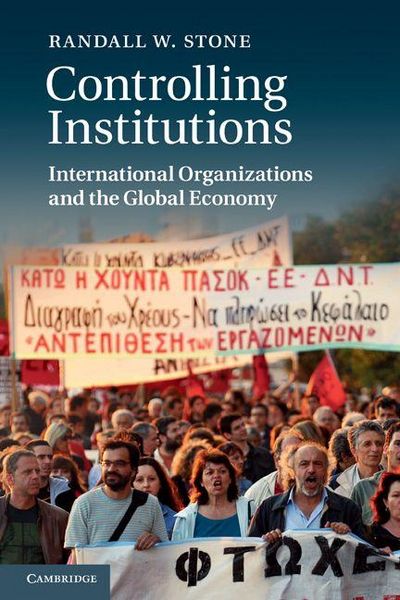
Controlling Institutions International Organizations and the Global Economy, Ausgezeichnet: Chadwick F. Alger Prize, International Studies Association 2012

58,99 €

inkl. gesetzl. MwSt., Versandkostenfrei


Beschreibung

Produktdetails

Einband

Taschenbuch

Erscheinungsdatum

22.02.2013

Verlag

Cambridge University Press

Seitenzahl

274

Maße (L/B/H)

22,9/15,2/1,6 cm

Gewicht

410 g

Sprache

Englisch

ISBN

978-0-521-18306-2

Beschreibung

Zitat

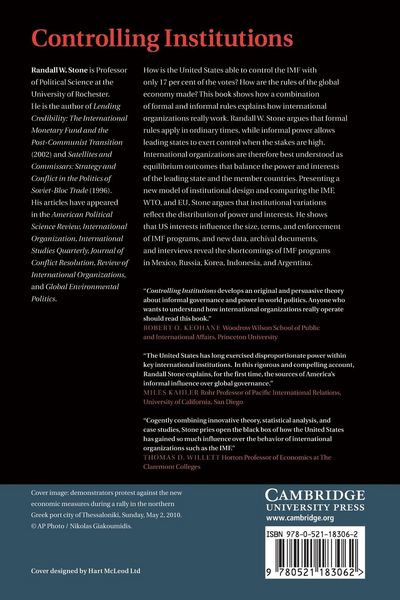
'Controlling Institutions develops an original and persuasive theory about informal governance and power in world politics. Anyone who wants to understand how international organizations really operate should read this book.' Robert O. Keohane, Princeton University 'The United States has long exercised disproportionate power within key international institutions. In this rigorous and compelling account, Randall Stone explains, for the first time, the sources of America's informal influence over global governance.' Miles Kahler, Rohr Professor of Pacific International Relations, University of California, San Diego 'Cogently combining innovative theory, statistical analysis, and case studies, Stone pries open the black box of how the United States has gained so much influence over the behavior of international organizations such as the IMF.' Thomas D. Willett, Horton Professor of Economics at The Claremont Colleges

Produktdetails

Einband

Taschenbuch

Erscheinungsdatum

22.02.2013

Verlag

Cambridge University Press

Seitenzahl

274

Maße (L/B/H)

22,9/15,2/1,6 cm

Gewicht

410 g

Sprache

Englisch

ISBN

978-0-521-18306-2

Noch keine Bewertungen vorhanden

Verfassen Sie die erste Bewertung zu diesem Artikel

Helfen Sie anderen Kundinnen und Kunden durch Ihre Meinung.

Kundinnen und Kunden meinen

Bewertungen (0)

Weitere Artikel finden Sie in

  • Produktbild: Controlling Institutions
  • Produktbild: Controlling Institutions
  • 1. Introduction: international organization and US power; Part I. Theory: 2. A theory of international organization; 3. A model of informal governance; Part II. Cases: 4. Informal governance in the IMF; 5. The World Trade Organization; 6. The European Union; Part III. Hypotheses: 7. Access to IMF resources; 8. Conditionality under IMF programs; 9. Enforcement; 10. Conclusions.