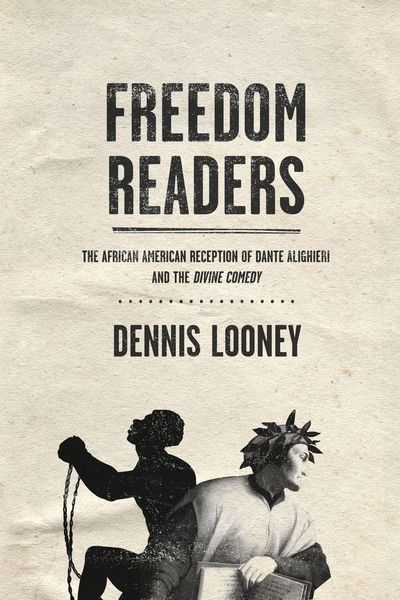
Freedom Readers The African American Reception of Dante Alighieri and the Divine Comedy
-
- Hardcover
- Taschenbuch ausgewählt
- eBook
-
Sprache:Englisch
47,99 €
inkl. gesetzl. MwSt.,
Beschreibung
Produktdetails
Einband
Taschenbuch
Erscheinungsdatum
11.03.2011
Verlag
University Of Notre Dame PressSeitenzahl
296
Maße (L/B/H)
22,9/15,2/1,8 cm
Gewicht
484 g
Sprache
Englisch
ISBN
978-0-268-03386-6
Freedom Readers: The African American Reception of Dante Alighieri and the Divine Comedy is a literary-historical study of the many surprising ways in which Dante Alighieri and the Divine Comedy have assumed a position of importance in African American culture. Dennis Looney examines how African American authors have read, interpreted, and responded to Dante and his work from the late 1820s to the present. In many ways, the African American reception of Dante follows a recognizable narrative of reception: the Romantic rehabilitation of the author; the late-nineteenth-century glorification of Dante as a radical writer of reform; the twentieth-century modernist rewriting; and the adaptation of the Divine Comedy into the prose of the contemporary novel. But surely it is unique to African American rewritings of Dante to suggest that the Divine Comedy is itself a kind of slave narrative. Only African American "translations" of Dante use the medieval author to comment on segregation, migration, and integration. While many authors over the centuries have learned to articulate a new kind of poetry from Dante's example, for African American authors attuned to the complexities of Dante's hybrid vernacular, his poetic language becomes a model for creative expression that juxtaposes and blends classical notes and the vernacular counterpoint in striking ways. Looney demonstrates this appropriation of Dante as a locus for black agency in the creative work of such authors as William Wells Brown, the poet H. Cordelia Ray, Richard Wright, Ralph Ellison, Amiri Baraka, Gloria Naylor, Toni Morrison, and the filmmaker Spencer Williams. Looney fruitfully suggests that we read Dante's Divine Comedy with its African American rewritings in mind, to assess their effect on our interpretation of the Comedy and, in turn, on our understanding of African American culture.
Noch keine Bewertungen vorhanden
Verfassen Sie die erste Bewertung zu diesem Artikel
Helfen Sie anderen Kundinnen und Kunden durch Ihre Meinung.
Kurze Frage zu unserer Seite
Vielen Dank für Ihr Feedback
Wir nutzen Ihr Feedback, um unsere Produktseiten zu verbessern. Bitte haben Sie Verständnis, dass wir Ihnen keine Rückmeldung geben können. Falls Sie Kontakt mit uns aufnehmen möchten, können Sie sich aber gerne an unseren Kund*innenservice wenden.
zum Kundenservice