Cold War Kitchen Americanization, Technology, and European Users
-
- Englisch ausgewählt
29,99 €
inkl. gesetzl. MwSt.,
- Kostenlose Lieferung ab 30 € Einkaufswert
- Versandkostenfrei für Bonuscard-Kund*innen
Beschreibung
Produktdetails
Einband
Taschenbuch
Erscheinungsdatum
21.01.2011
Herausgeber
Ruth Oldenziel + weitereVerlag
Mit PressSeitenzahl
430
Maße (L/B/H)
22,9/17,8/2,3 cm
Gewicht
725 g
Sprache
Englisch
ISBN
978-0-262-51613-6
The kitchen as political symbol and material reality in the cold war years.
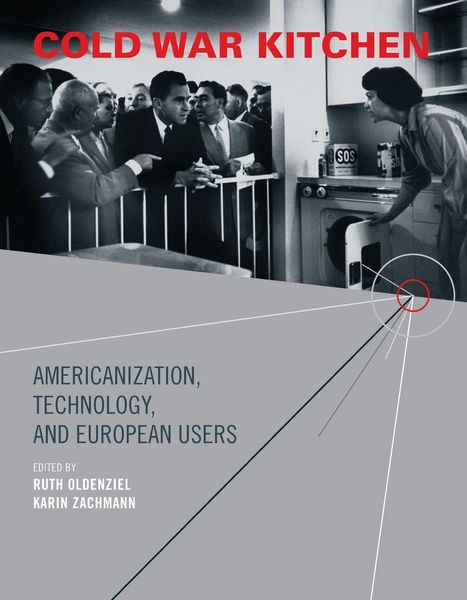
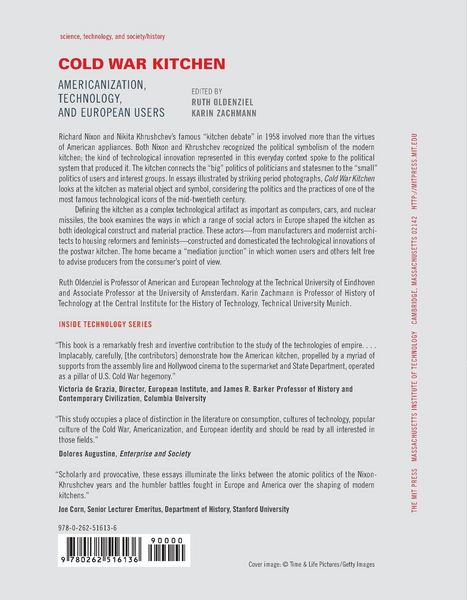
Richard Nixon and Nikita Khrushchev's famous “kitchen debate” in 1958 involved more than the virtues of American appliances. Both Nixon and Khrushchev recognized the political symbolism of the modern kitchen; the kind of technological innovation represented in this everyday context spoke to the political system that produced it. The kitchen connects the “big” politics of politicians and statesmen to the “small” politics of users and interest groups. Cold War Kitchen looks at the kitchen as material object and symbol, considering the politics and the practices of one of the most famous technological icons of the twentieth century. Defining the kitchen as a complex technological artifact as important as computers, cars, and nuclear missiles, the book examines the ways in which a range of social actors in Europe shaped the kitchen as both ideological construct and material practice. These actors—from manufacturers and modernist architects to housing reformers and feminists—constructed and domesticated the technological innovations of the postwar kitchen. The home became a “mediation junction” in which women users and others felt free to advise producers from the consumer's point of view. In essays illustrated by striking period photographs, the contributors to Cold War Kitchen consider such topics as Soviet consumers' ambivalent responses to the American dream kitchen argued over by Nixon and Khrushchev; the Frankfurter Küche, a European modernist kitchen of the interwar period (and its export to Turkey when its designer fled the Nazis); and the British state-subsidized kitchen design so innovative that it was mistaken for a luxury American product. The concluding essays challenge the received wisdom of past interpretations of the kitchen debate.
Noch keine Bewertungen vorhanden
Verfassen Sie die erste Bewertung zu diesem Artikel
Helfen Sie anderen Kundinnen und Kunden durch Ihre Meinung.
Kurze Frage zu unserer Seite
Vielen Dank für Ihr Feedback
Wir nutzen Ihr Feedback, um unsere Produktseiten zu verbessern. Bitte haben Sie Verständnis, dass wir Ihnen keine Rückmeldung geben können. Falls Sie Kontakt mit uns aufnehmen möchten, können Sie sich aber gerne an unseren Kund*innenservice wenden.
zum Kundenservice