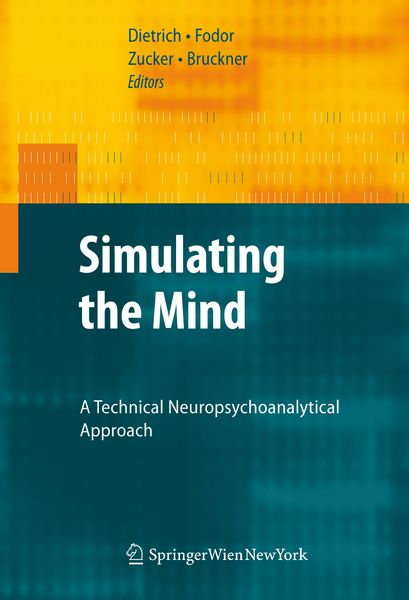
Simulating the Mind A Technical Neuropsychoanalytical Approach
-
- Hardcover
- Taschenbuch ausgewählt
-
Sprache:Englisch
148,99 €
inkl. gesetzl. MwSt.,
Beschreibung
Produktdetails
Einband
Taschenbuch
Erscheinungsdatum
13.10.2010
Abbildungen
XVII, 436 p. 63 illus.
Herausgeber
Dietmar Dietrich + weitereVerlag
Springer WienSeitenzahl
436
Maße (L/B/H)
23,5/15,5/2,5 cm
Gewicht
686 g
Auflage
Softcover reprint of hardcover 1st ed. 2009
Sprache
Englisch
ISBN
978-3-211-99869-4
Can psychoanalysis offer a new computer model? Can computer designers help psychoanalysts to understand their theory better?In contemporary publications human psyche is often related to neural networks. Why? The wiring in computers can also be related to application software. But does this really make sense?
Artificial Intelligence has tried to implement functions of human psyche. The reached achievements are remarkable; however, the goal to get a functional model of the mental apparatus was not reached. Was the selected direction incorrect?The editors are convinced: yes, and they try to give answers here. If one accepts that the brain is an information processing system, then one also has to accept that computer theories can be applied to the brain’s functions, the human mental apparatus.
The contributors of this book - Solms, Panksepp, Sloman and many others who are all experts in computer design, psychoanalysis and neurology are united in one goal: finding synergy in their interdisciplinary fields.
Noch keine Bewertungen vorhanden
Verfassen Sie die erste Bewertung zu diesem Artikel
Helfen Sie anderen Kundinnen und Kunden durch Ihre Meinung.
Kurze Frage zu unserer Seite
Vielen Dank für Ihr Feedback
Wir nutzen Ihr Feedback, um unsere Produktseiten zu verbessern. Bitte haben Sie Verständnis, dass wir Ihnen keine Rückmeldung geben können. Falls Sie Kontakt mit uns aufnehmen möchten, können Sie sich aber gerne an unseren Kund*innenservice wenden.
zum Kundenservice