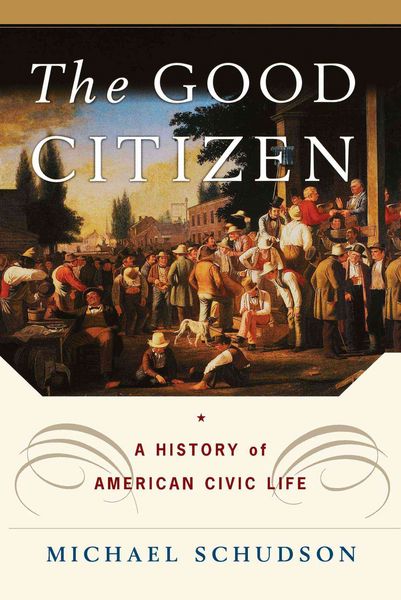
The Good Citizen A History of American Civic Life
-
- Englisch ausgewählt
29,99 €
inkl. gesetzl. MwSt.,
- Kostenlose Lieferung ab 30 € Einkaufswert
- Versandkostenfrei für Bonuscard-Kund*innen
Beschreibung
Produktdetails
Einband
Taschenbuch
Erscheinungsdatum
30.11.2010
Verlag
Simon & Schuster N.Y.Seitenzahl
402
Maße (L/B/H)
22,9/15,2/2,4 cm
Gewicht
650 g
Sprache
Englisch
ISBN
978-1-4516-3162-3
Not necessarily, argues Michael Schudson in this provocative and unprecedented history of citizenship in America. Measuring voter turnout or attitudes is a poor approximation of citizenship. The meaning of voting -- and what counts as politics -- has changed dramatically over the course of our history. We have passed through three distinct eras in the definition and demonstration of good citizenship, and we are now struggling to find a footing in a fourth.
When the nation was founded, being a citizen meant little more than for property-owning white males to delegate authority to a local gentleman -- and accept his complimentary glass of rum on election day. This "politics of assent" gave way early in the nineteenth century to a "politics of parties." Parties conducted elaborate campaigns of torchlight processions and monster meetings; voting day was filled with banter, banners, fighting, and drinking. Party ticket peddlers handed voters preprinted tickets to place in the ballot box before stepping over to the tavern for a few dollars' reward from the party. We now call this corruption. At the time, it was called loyalty.
The third model of citizenship, ushered in by Progressive reformers, was a "politics of information." Campaigning became less emotional and more educational. Voting was by secret ballot. With civil-service reform, parties were limited in the rewards they could bestow. This was the era of the "informed voter." Under this scheme, the twentieth century has been ruled by everyone, and no one, all at once.
Today, after the rights revolution, political participation takes place in schools, at home, at work, and in the courts. We have made "informed citizenship" an overwhelming task. Schudson argues that it is time for a new model, in which we stop expecting everyone to do everything. The new citizenship must rest on citizens who are monitors of political danger rather than walking encyclopedias of governmental news. This fascinating tour of the past makes it possible to imagine a very different -- and much more satisfying -- future.
Noch keine Bewertungen vorhanden
Verfassen Sie die erste Bewertung zu diesem Artikel
Helfen Sie anderen Kundinnen und Kunden durch Ihre Meinung.
Kurze Frage zu unserer Seite
Vielen Dank für Ihr Feedback
Wir nutzen Ihr Feedback, um unsere Produktseiten zu verbessern. Bitte haben Sie Verständnis, dass wir Ihnen keine Rückmeldung geben können. Falls Sie Kontakt mit uns aufnehmen möchten, können Sie sich aber gerne an unseren Kund*innenservice wenden.
zum Kundenservice