Gutscheinbedingungen

**Gültig nur für Bestellungen an die Wunsch-Poststation bis 10.06.2026 auf Spielzeug, Schreibwaren, Filme, Geschenke & Trends, Musik, tolino eReader & Zubehör, Hörbücher und Hörbuch-Downloads (außer Abo), nicht preisgebundene Bücher und Kalender online auf thalia.at und in der Thalia App. Einzelne Artikel können ausgeschlossen sein. Aufgrund der Buchpreisbindung sind deutschsprachige Bücher und eBooks ausgenommen. Zusätzlich ausgenommen sind preisgebundene Artikel, Abos & Flatrates, eBooks, Games, Geschenkkarten/-boxen, Shelfies, Software, Zeitschriften sowie einzelne Artikel von tonies®. Pro Einkauf einmal einlösbar. Kein Click & Collect möglich. Keine Barauszahlung. Nicht kombinierbar mit anderen Aktionen und Gutscheinen. Gutschein wird auf max. 500€ Bestellwert angerechnet. Nicht gültig für Versandkosten und Services.

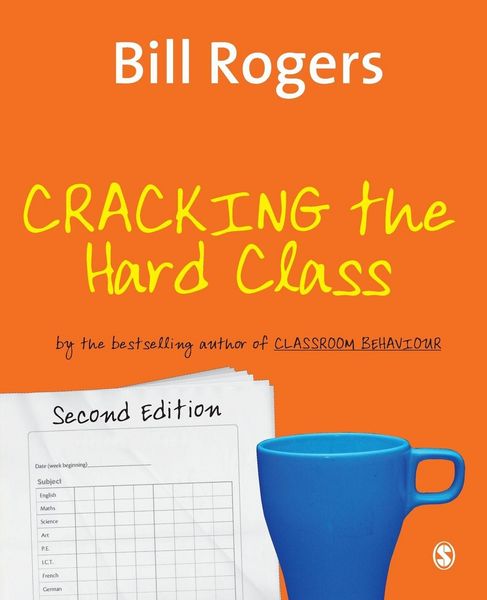
  • Produktbild: Cracking the Hard Class
  • Produktbild: Cracking the Hard Class

Cracking the Hard Class Strategies for Managing the Harder Than Average Class

42,99 €

inkl. gesetzl. MwSt., Versandkostenfrei


Beschreibung

Produktdetails

Einband

Taschenbuch

Erscheinungsdatum

31.10.2006

Verlag

Sage Publications

Seitenzahl

224

Maße (L/B/H)

23,5/19,1/1,3 cm

Gewicht

431 g

Auflage

2. Auflage

Sprache

Englisch

ISBN

978-1-4129-2356-9

Beschreibung

Rezension

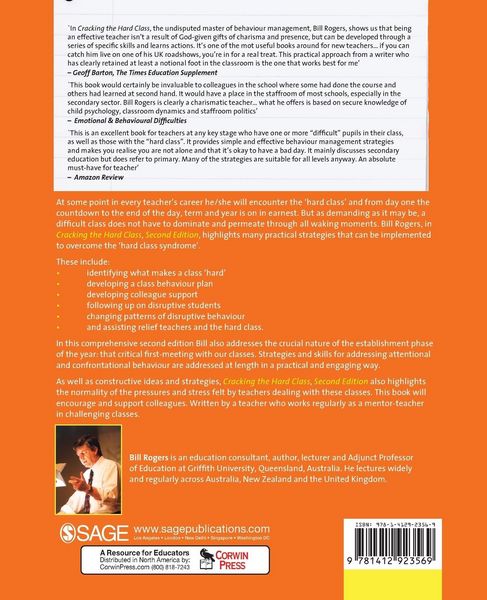
'The book offers a very practical approach to building specific skills that will give teachers confidence in dealing with their toughest customers' - Debate

'Teachers struggling to manage "difficult" pupils may be relieved to learn that the author, along with many other educationalists, believes that effective teaching can be developed by acquiring the necessary skills - you don't have to be born with them! This book is full of those skills and how to put them into practice. With stress levels apparently rising amongst teachers, Bill Rogers' calm approach to tackling even the most extreme behavioural problems in the classroom, to create a "more positive working environment", will come as a relief to many teachers' - Youthinmind

Produktdetails

Einband

Taschenbuch

Erscheinungsdatum

31.10.2006

Verlag

Sage Publications

Seitenzahl

224

Maße (L/B/H)

23,5/19,1/1,3 cm

Gewicht

431 g

Auflage

2. Auflage

Sprache

Englisch

ISBN

978-1-4129-2356-9

EU-Ansprechpartner

Zeitfracht Medien GmbH
Ferdinand-Jühlke-Straße 7|99095|Erfurt|DE

Herstelleradresse

SAGE Publications
1 Oliver's Yard 55 City Road|EC1Y 1SP|London|GB

Kundinnen und Kunden meinen

0 Bewertungen

Informationen zu Bewertungen

Zur Abgabe einer Bewertung ist eine Anmeldung im Konto notwendig. Die Authentizität der Bewertungen wird von uns nicht überprüft. Wir behalten uns vor, Bewertungstexte, die unseren Richtlinien widersprechen, entsprechend zu kürzen oder zu löschen.

Die Bewertungen sind nach Format, Anzahl Sterne und Datum sortiert.

Verfassen Sie die erste Bewertung zu diesem Artikel

Helfen Sie anderen Kund*innen durch Ihre Meinung

Kundinnen und Kunden meinen

0 Bewertungen filtern

  • Produktbild: Cracking the Hard Class
  • Produktbild: Cracking the Hard Class
  • Introduction
    Habituation
    Support-Not Blame
    Habituation and ¿Distribution of Behaviour¿
    Credibility by ¿Proxy¿
    Bad Day Notwithstanding
    PART ONE: WHAT MAKES A CLASS ¿HARD¿?
    What Is A Hard Class?
    Common Factors in Hard-To-Manage-Classes
    Put Them All In One Class?
    Labelling the Class
    Shouting a Class Down (Or Up)
    Classes That Aren¿t Listening
    Short-Term Colleague Support (Safety Valve)
    Making Changes
    A Healthy Whinge
    Action Planning
    Tracking Students across Classes
    Changing the Seating Plan
    The Repairer and Rebuilder
    PART TWO: CLASSROOM MEETINGS
    Holding a Classroom Meeting
    Open Meetings
    Closed Meetings
    Mini-Class Meetings
    Meetings to Deal with Put-Downs
    Put-Downs and Teasing In Class
    A Class Meeting To Deal with Negative Language and Put-Downs
    Class Meeting and Group Establishment
    PART THREE: DEVELOPING A CLASSROOM BEHAVIOUR AGREEMENT
    Basic Steps in Developing Behaviour
    Agreement
    Rights
    Basic Responsibilities
    Class Rules
    Consequences
    Support for Behaviour Change
    The Consequential Chain
    PART FOUR: DEVELOPING A CLASS BEHAVIOUR PLAN USING GROUP REINFORCEMENT
    Introduction
    The Process
    Preparation
    Presenting the Programme
    Formation of Groups
    The ¿Reward¿ System
    The Process in Operation
    Behaviour Modification at Lower Primary Level
    Maintaining the Program
    Support from Colleagues
    Students in Co-Operative Working Teams
    PART FIVE: ESTABLISHING A CLASS AT THE OUTSET
    Introduction
    ¿Lining Up¿ and Entry to Class
    Positional Placing (In Whole-Class Teaching Time)
    Communicating Calmness
    Clarifying Cues for Questions, Discussion, Attention and Help
    Calling Out In Class
    Tactical Pausing
    Cues for On-Task Teacher Assistance
    The Teacher-Help Board
    Planning For Transitions
    Students without Equipment
    Helpful Hints
    Gaining Attention
    Monitoring ¿Working Noise¿
    Dealing with Disruptive Behaviour
    In the Whole-Class/Instructional Phase of the Lesson
    Corrective Language in Behaviour Management
    Discipline in the On-Task Phase of the Lesson
    Closing the Lesson
    Encouraging the Individual and the Class
    Motivation
    Core Routines
    Being ¿Overly Friendly¿ With A New Class
    PART SIX: FOLLOWING UP WITH DISRUPTIVE STUDENTS
    Guidelines for Follow-Up
    Mirroring Behaviour
    The 4W Form
    Managing a Crisis Situation: Time-Out
    Time-Out Practices
    A Time-Out Room
    Staff Survey: Exit/Time-Out Policy Review
    Classroom Rotation
    Follow-Up and Three-Way Facilitation
    Students Who Refuse To Stay Back After Class
    Apologies
    Detentions
    Suspension and Expulsion
    Expulsion
    PART SEVEN: PATTERNS OF BEHAVIOUR AND CHANGING BEHAVIOUR
    First Principles of Behaviour Management
    Case Study
    Developing an Individual Behaviour Management Plan with Students Who Present With Behaviour Disorders
    Behaviour Profile
    Case-Management (Adult-Mentoring)
    Context for Behaviour Planning
    Sessions Covering Behaviour, Behaviour Skills
    Evaluating the Program-A Case Study
    Subsequent Sessions
    Goal-Directed Behaviours
    Key Questions
    Completing the Goal Disclosure
    Behaviours Associated With Attention Deficit Disorder
    Case Example
    PART EIGHT: RELIEF TEACHERS AND THE HARD CLASS
    Challenges Facing Relief Teachers
    Colleague Support
    Supporting Relief Teachers
    A Brief Word to Supply/Relief Teachers
    When Your Class Has Given a Relief Teacher a Hard Time
    Thoughts of Three Relief Teachers
    PART NINE: SUPPORTING COLLEAGUES
    Offering Support
    Supporting Colleagues Who Struggle With a Hard Class
    Shared Struggle Case Study
    Developing Skills of Confidence
    Developing Skills: Key Questions
    Organisational Factors
    Teacher Beliefs, Attitudes and Change
    Skills and Self-Talk
    Bullying (Students Who Bully Teachers)
    Case Study
    Individual and Group Bullying
    Dealing With the Bullying Of Teachers
    Addressing Bullying/Harassment: A Whole-School Approach
    PART TEN: CONCLUSION
    APPENDICES
    Colleague Support-Staff Questionnaire
    The 3W Form
    Stop/Start Behaviour Plan
    The 4W Form
    No Put Down Zone
    We All Have a Right to Learn
    We All Have a Right to Respect
    BIBLIOGRAPHY