KI-Beratung Beta

Gutscheinbedingungen

**Gültig bis 18.11.2026 auf englischsprachige Klassiker (klassiker-32728) online auf thalia.at und in der Thalia App. Einzelne Artikel können ausgeschlossen sein. Ausgenommen sind preisgebundene Artikel & eBooks. Pro Einkauf einmal einlösbar. Click & Collect nur bei Onlinevorabzahlung möglich. Keine Barauszahlung. Nicht kombinierbar mit anderen Aktionen und Gutscheinen. Gutschein wird auf max. 500€ Bestellwert angerechnet. Nicht gültig für Geschenkkarten, Versandkosten und Services.

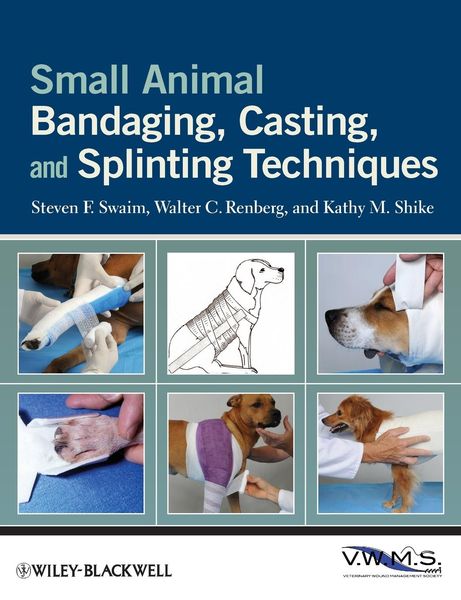
Produktbild: Small Animal Bandaging, Casting, and Splinting Techniques

Small Animal Bandaging, Casting, and Splinting Techniques

73,99 €

inkl. gesetzl. MwSt., Versandkostenfrei


Beschreibung

Small Animal Bandaging, Casting and Splinting Techniques is a well-illustrated how-to manual covering common bandaging methods used to support and manage both soft tissue and orthopedic conditions in small animal patients. This very practical book offers step-by-step procedures with accompanying photographs...

Beschreibung

Small Animal Bandaging, Casting and Splinting Techniques is a well-illustrated how-to manual covering common bandaging methods used to support and manage both soft tissue and orthopedic conditions in small animal patients. This very practical book offers step-by-step procedures with accompanying photographs to aid in the secure and effective application of bandages, casts, and splints. Coverage includes indications, aftercare, advantages, and potential complications for each technique.
Small Animal Bandaging, Casting and Splinting Techniques is an indispensable guide for busy veterinary technicians and nurses, as well as veterinarians and veterinary students.
Key features
Provides a practical how-to reference for effectively using bandages, casts, and splints on small animals
Illustrates proper techniques through step-by-step photographs
Covers indications, aftercare, advantages, and potential complications
Includes both soft tissue and orthopedic considerations

Rezension

"The real mainstay of this book comes in educating those inexperienced in bandage application and I believe it to be indispensable to those studying towards a veterinary nursing or veterinary undergraduate degree." (VN Times Veterinary Nursing Times, 1 October 2012) "This book is a must have for veterinary nurses and technicians." (Tomorrow's Vets, 1 January 2012)
"The chapter on extremity bandaging is excellent . . . Also illustrated are body, hip, shoulder, abdomen, and head bandages. All of them clever and innovative by their design." (Vin Book Reviews, 2011)
 
"This is a concise and complete bandaging reference for small animal practitioners. The figures and descriptions provide clear and easy to understand instructions on bandaging, casting, and splinting the small animal patient. In addition to clear written descriptions, the book contains excellent quality step-by-step photographic depictions of bandage placement. When compared to surgery books such as the Textbook of Small Animal Surgery, 3rd edition Slatter (Elsevier, 2003), or Small Animal Surgery, 3rd edition, Fossum et al. (Elsevier, 2007), this one provides better stepwise instruction on use of both simple and more complex bandages. The quality of its photographic instructions is far superior to that of these other books." (Doody's Reviews, May 2011)

Produktdetails

Einband

Taschenbuch

Erscheinungsdatum

22.02.2011

Verlag John Wiley & Sons
Seitenzahl

160

Produktdetails

Einband

Taschenbuch

Erscheinungsdatum

22.02.2011

Verlag John Wiley & Sons
Seitenzahl

160

Maße (L/B/H)

24,6/18,9/0,8 cm

Gewicht

298 g

Auflage

1. Auflage

Sprache

Englisch

ISBN

978-0-8138-1962-4

Herstelleradresse

Libri GmbH
Europaallee 1
36244 Bad Hersfeld
DE

Email: gpsr@libri.de

Noch keine Bewertungen vorhanden

Verfassen Sie die erste Bewertung zu diesem Artikel

Helfen Sie anderen Kundinnen und Kunden durch Ihre Meinung.

Kundinnen und Kunden meinen

Bewertungen (0)

Die Leseprobe wird geladen.
  • Produktbild: Small Animal Bandaging, Casting, and Splinting Techniques
  • Mission Statement.
     
    Foreword.
     
    Preface.
     
    Acknowledgments.
     
    Chapter 1 - Basics of Bandaging, Casting, and Splinting.
     
    Bandaging.
     
    Purpose and functions of a bandage.
     
    Components of a bandage.
     
    Primary-contact layer.
     
    Highly absorptive dressings.
     
    Gauze dressings.
     
    Hypertonic saline dressings.
     
    Calcium alginate dressings.
     
    Copolymer starch dressings.
     
    Moisture-retentive dressings.
     
    Polyurethane foam dressings.
     
    Polyurethane film dressings.
     
    Hydrogel dressings.
     
    Hydrocolloid dressings.
     
    Nonadherent semiocclusive dressings.
     
    Antimicrobial dressings.
     
    Extracellular matrix bioscaffold dressings.
     
    Secondary-intermediate layer.
     
    Tertiary-outer layer.
     
    Special considerations in bandaging, casting, and splinting.
     
    Frequency of changes.
     
    Security.
     
    Pressure relief.
     
    Joint immobilization.
     
    Maceration and excoriation.
     
    Need for sedation or anesthesia during bandage change.
     
    Casts and splints.
     
    General information.
     
    Purposes and functions of casts and splints.
     
    Materials.
     
    Splint rods.
     
    Commercial splints.
     
    Plastic splinting material.
     
    Stockinette.
     
    Casting tapes.
     
    Chapter 2 - Head and Ear Bandages.
     
    Emergency ear bandage.
     
    Indications.
     
    Technique.
     
    Aftercare.
     
    Advantages and complications.
     
    Basic head and ear bandage.
     
    Indications.
     
    Technique.
     
    Aftercare.
     
    Advantages and complications.
     
    Chapter 3 - Thoracic, Abdominal, and Pelvic Bandages.
     
    Thoracic, abdominal bandages.
     
    Circumferential thoracic, abdominal bandage.
     
    Indications.
     
    Technique.
     
    Aftercare.
     
    Advantages and complications.
     
    Windowed thoracic, abdominal bandage.
     
    Indications.
     
    Technique.
     
    Aftercare.
     
    Advantages and complications.
     
    Thoracic, abdominal tie-over bandage.
     
    Indications.
     
    Technique.
     
    Aftercare.
     
    Advantages and complications.
     
    Pelvic bandages.
     
    Circumferential pelvic bandage.
     
    Indications.
     
    Technique.
     
    Aftercare.
     
    Advantages and complications.
     
    Windowed pelvic bandage.
     
    Indications.
     
    Technique.
     
    Aftercare.
     
    Advantages and complications.
     
    Pelvic tie-over bandage.
     
    Indications.
     
    Technique.
     
    Aftercare.
     
    Advantages and complications.
     
    Pelvic extension splints.
     
    Indications.
     
    Technique.
     
    Aftercare.
     
    Advantages and complications.
     
    Chapter 4 - Extremity Bandages, Casts, and Splints.
     
    Tail bandages.
     
    Indications.
     
    Technique.
     
    Aftercare.
     
    Advantages and complications.
     
    Forelimb bandages, casts, and splints.
     
    Basic soft padded limb bandage.
     
    Indications.
     
    Technique.
     
    Aftercare.
     
    Bandage removal.
     
    Bandage replacement.
     
    Advantages and complications.
     
    Interdigital and interpad areas.
     
    Primary bandage layer.
     
    Secondary bandage layer.
     
    Tertiary bandage layer.
     
    Basic paw and distal limb bandage.
     
    Indications.
     
    Technique.
     
    Interdigital/interpad areas.
     
    Primary bandage layer, "donut